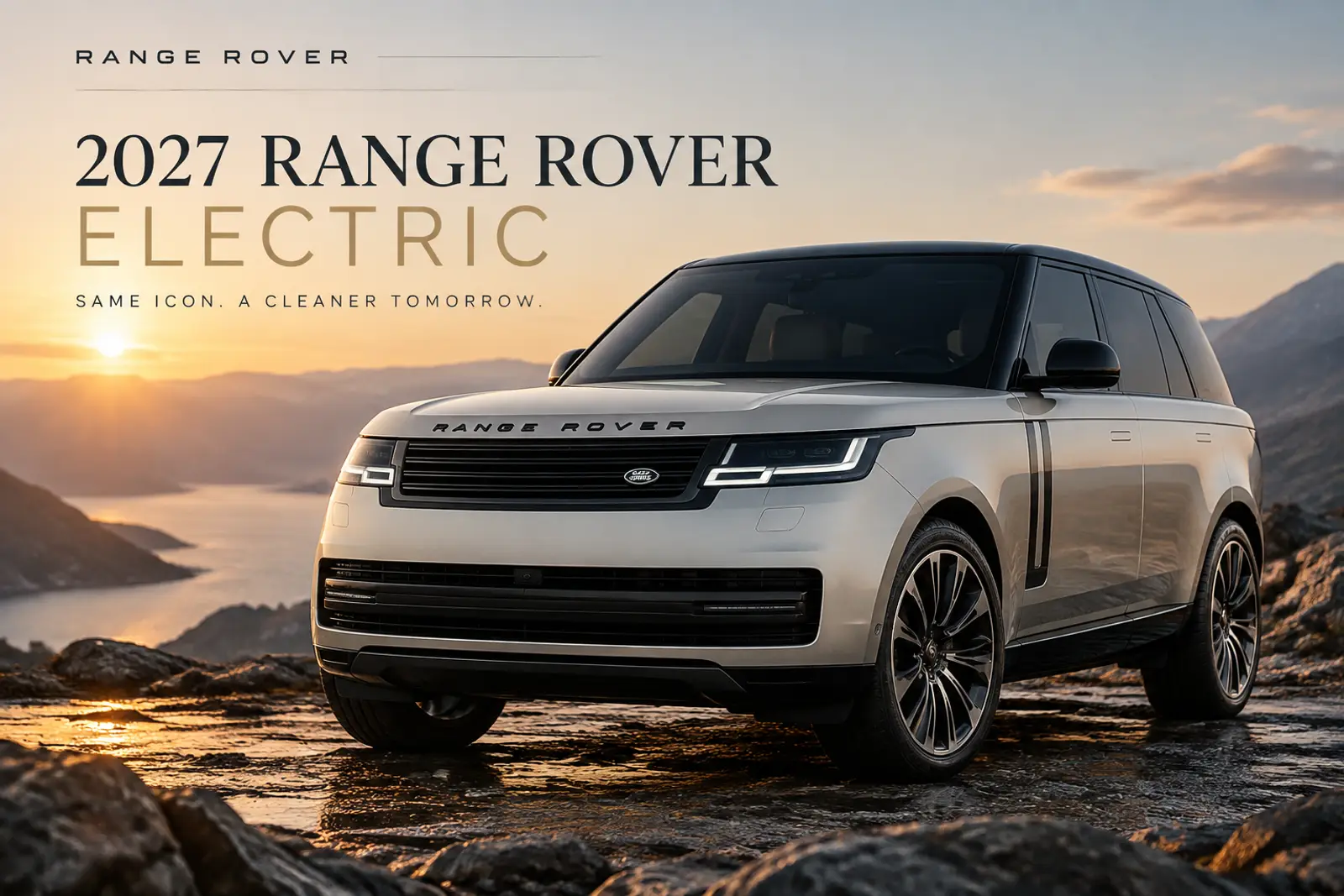
The automotive landscape is undergoing a profound shift as legacy luxury brands transition their flagship nameplates to battery power without sacrificing the craftsmanship and capability expected by discerning buyers. JLR has officially pulled the cover off the 2027 Range Rover Electric, representing a watershed moment for both the Land Rover and Range Rover stables as their very first fully electric production vehicle. Following extensive development trials that pushed back an initial 2024 rollout, this long-awaited luxury sport utility vehicle has finally opened for orders. As high-end automotive segments navigate shifting consumer preferences, the debut of an electric flagship carrying such legendary heritage provides a crucial test for whether zero-emission propulsion can truly match the prestige of traditional internal combustion.
Engineering Powertrain Performance and Battery Architecture
Beneath its familiar exterior styling, the 2027 Range Rover Electric packs an advanced technical specification designed to rival or exceed its V8 predecessors. The vehicle is propelled by dual 260-kilowatt electric motors that together generate 542 horsepower and 850 newton-meters of torque. This robust output enables the heavy luxury cruiser to accelerate from zero to 60 mph in a swift 4.3 seconds, delivering immediate throttle response paired with refined power delivery. JLR engineers have incorporated silicon-carbide inverters alongside copper-hairpin motor windings, achieving a design that the manufacturer claims is 24 percent more efficient than previous propulsion units.
Energy storage is handled by an 118.5 kWh net double-stacked battery pack utilizing nickel-manganese-cobalt chemistry sourced from AESC. Operating on an 800-volt electrical architecture, the battery system supports rapid DC fast charging at up to 350 kW. This capability allows drivers to replenish between 125 and 137 miles of driving range in a mere 10 minutes, or complete a 10-to-80 percent charge cycle in approximately 22 minutes. Under strict Worldwide Harmonised Light Vehicle Test Procedure standards, the vehicle achieves a maximum estimated range of 372 miles, while real-world distance estimates under United States Environmental Protection Agency testing anticipate around 333 miles per charge. Furthermore, an innovative ThermAssist heat management system captures waste energy to boost overall driving range by 7 percent while reducing cabin heating energy consumption.
Maintaining Off-Road Capability and Structural Rigidity
Transitioning a vehicle famed for its mud-plugging prowess into a battery-electric platform presented unique engineering challenges, particularly regarding weight management and chassis dynamics. By positioning the massive double-stacked battery pack securely within the floor structure, engineers achieved a chassis that is 56 percent stiffer than traditional variants while lowering the vehicle center of gravity by 3.4 inches compared to the V8-powered model. This balanced weight distribution enhances both on-road stability and agile cornering behavior.
Crucially, JLR has ensured that electrification does not dilute the vehicle's legendary all-terrain credentials. The Range Rover Electric maintains a certified 900-millimeter water wading capability, sophisticated single-pedal driving modes tailored for steep 45-degree inclines, and advanced traction control systems that react within 50 milliseconds—operating up to 100 times faster than conventional mechanical powertrains. The vehicle also features vehicle-to-load functionality capable of supplying up to 3.6 kW of external alternating current power, alongside provisions for future vehicle-to-grid integration.
Market Positioning and Pricing Realities
This technical sophistication commands a substantial financial investment from prospective buyers entering the high-end electric market. In the United States, pricing for the entry-level SE specification begins at approximately $138,000 before destination charges, while higher-tier models available in the United Kingdom, such as the Autobiography and SV Black editions, command prices stretching from £154,070 to over £225,240, roughly translating to between $208,000 and $304,000. These figures place the flagship EV squarely against competing ultra-luxury battery-powered haulers.
The launch arrives during a period of relative cooling across the broader high-end electric vehicle sector, where rival luxury offerings have occasionally encountered sluggish consumer adoption and shifting demand curves. To reassure prospective buyers amidst this hesitation, JLR has subjected the platform to grueling physical and virtual durability testing equivalent to circumnavigating the globe 38 times, while backing the sophisticated machinery with a comprehensive eight-year or 100,000-mile battery warranty.
Production Rollout and Customer Deliveries
With order books now officially open, attention turns to how rapidly manufacturing facilities can scale output to meet global demand without compromising build quality. JLR will need to demonstrate that its extensive prototype testing translates seamlessly into reliable assembly-line production, particularly as international markets absorb the first wave of customer vehicles. Observing how real-world drivers interact with native North American Charging Standard compatibility and high-speed public charging networks will provide the ultimate litmus test for the brand's electric future.