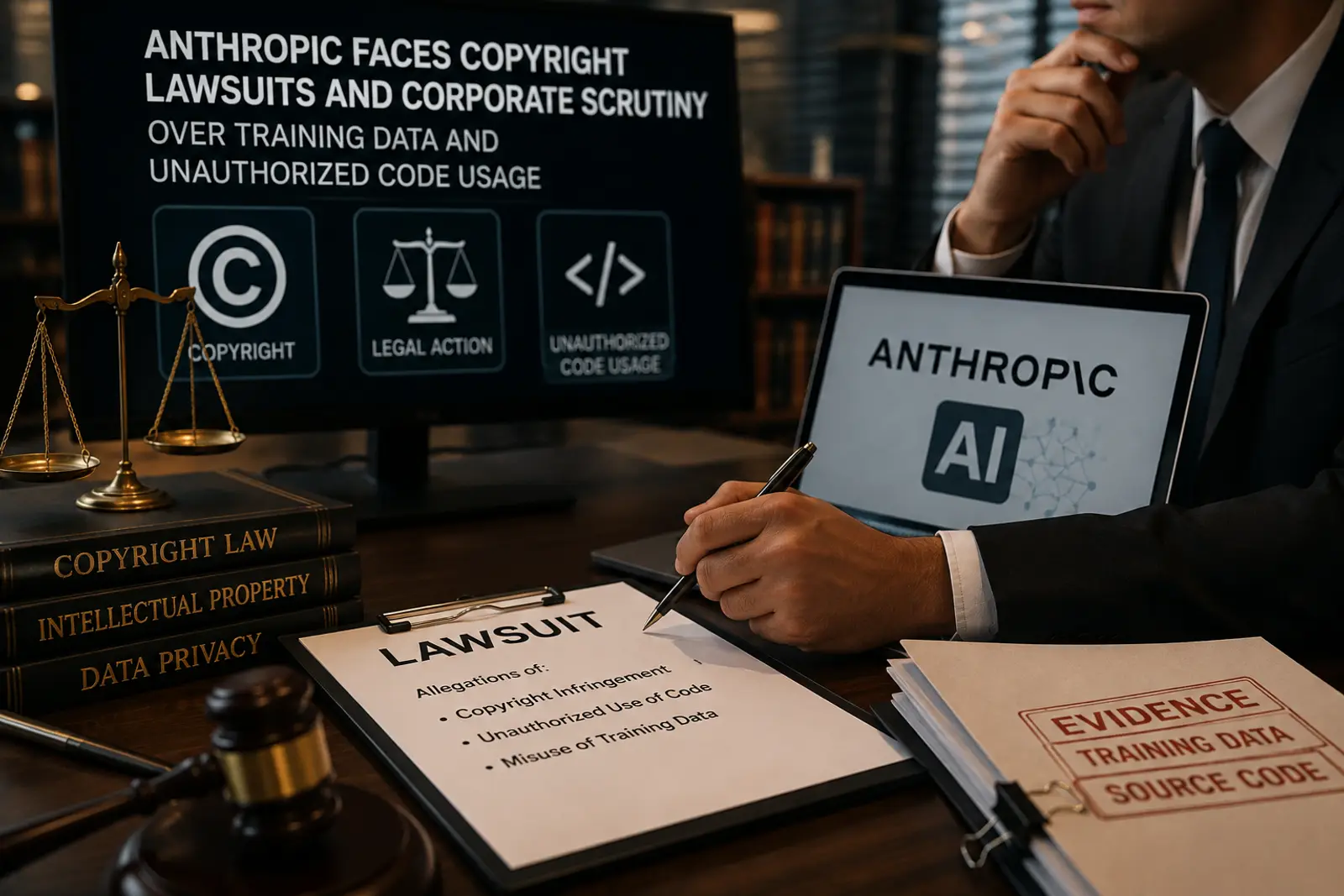
The artificial intelligence industry faces an escalating legal reckoning over data acquisition methods as major entertainment conglomerates target foundational technology laboratories. Recent litigation filed against prominent AI firms highlights a growing corporate and judicial intolerance for unverified sourcing practices, shifting the debate from abstract fair use arguments to direct allegations of digital piracy. This development matters because it deepens the ongoing legal battle over how commercial models source training data, potentially reshaping the economic models of generative AI development and forcing technology companies to radically alter their compliance protocols.
Federal Lawsuit Filed by Sony Music Publishing and Warner Chappell Music in Northern California
Intensifying this regulatory pressure, Sony Music Publishing and Warner Chappell Music initiated formal legal action against Anthropic and its co-founders in a federal court located in Northern California. The 48-page complaint accuses the artificial intelligence firm of unlawfully downloading, scraping, and torrenting more than 20,000 copyrighted musical works and associated lyrics to train its Claude family of AI models. Prominent tracks cited in the filing range from Mariah Carey's iconic holiday anthem All I Want for Christmas Is You to Bon Jovi's energetic rock staple Livin' on a Prayer. By naming chief executive Dario Amodei and co-founder Benjamin Mann alongside the corporate entity, the plaintiffs have signaled an aggressive strategy aimed at holding company leadership personally responsible for data sourcing decisions.
Statutory Damages and Allegations of Mass Piracy in AI Training
The legal challenge details extensive reliance on unauthorized repositories to build commercial conversational agents. Specifically, the music publishers assert that Anthropic bypassed legitimate licensing channels by acquiring materials from questionable online sources, demanding heavy financial remedies. The lawsuit seeks statutory damages of up to 150,000 dollars for each pirated copy of a musical work, alongside an additional 25,000 dollars for every instance where copyright management information was allegedly altered or stripped away. These steep financial demands reflect a broader push by creative industries to impose severe penalties on technology developers that utilize copyrighted intellectual property without explicit consent or financial compensation.
Corporate Defense Strategies and Disagreements Over Transformative Fair Use
In response to the mounting legal pressure, Anthropic has publicly rejected the allegations leveled by the music publishers, characterizing the complaint as a recycled legal action managed by familiar counsel and vowing a robust defense in court. The core disagreement centers on the boundaries of fair use within machine learning, pitting the technology sector's assertion that training models on public internet data constitutes transformative fair use against the creative sector's argument that mass scraping from pirate repositories constitutes straight infringement. Furthermore, concurrent corporate security worries have emerged regarding unowned code being installed within enterprise networks by various coding assistants, adding an extra layer of operational and compliance risk for organizations deploying these large language models.
Upcoming Judicial Milestones and Uncertainties in the Tech Sector
As the litigation proceeds, significant uncertainties remain regarding how federal courts will ultimately weigh fair use defenses against unauthorized acquisition methods, particularly given prior judicial rulings penalizing companies for sourcing information from illicit sites. Observers are closely watching to see whether additional major music publishers, independent copyright holders, or creative guilds decide to join the active litigation or file parallel complaints. The path forward will likely depend on upcoming scheduling conferences in the Northern California federal court, potential motions to dismiss filed by Anthropic's defense team, and whether the dispute results in historic settlements or proceeds toward a landmark jury trial that could establish binding precedent for the entire technology landscape.