A new benchmark for AI agents
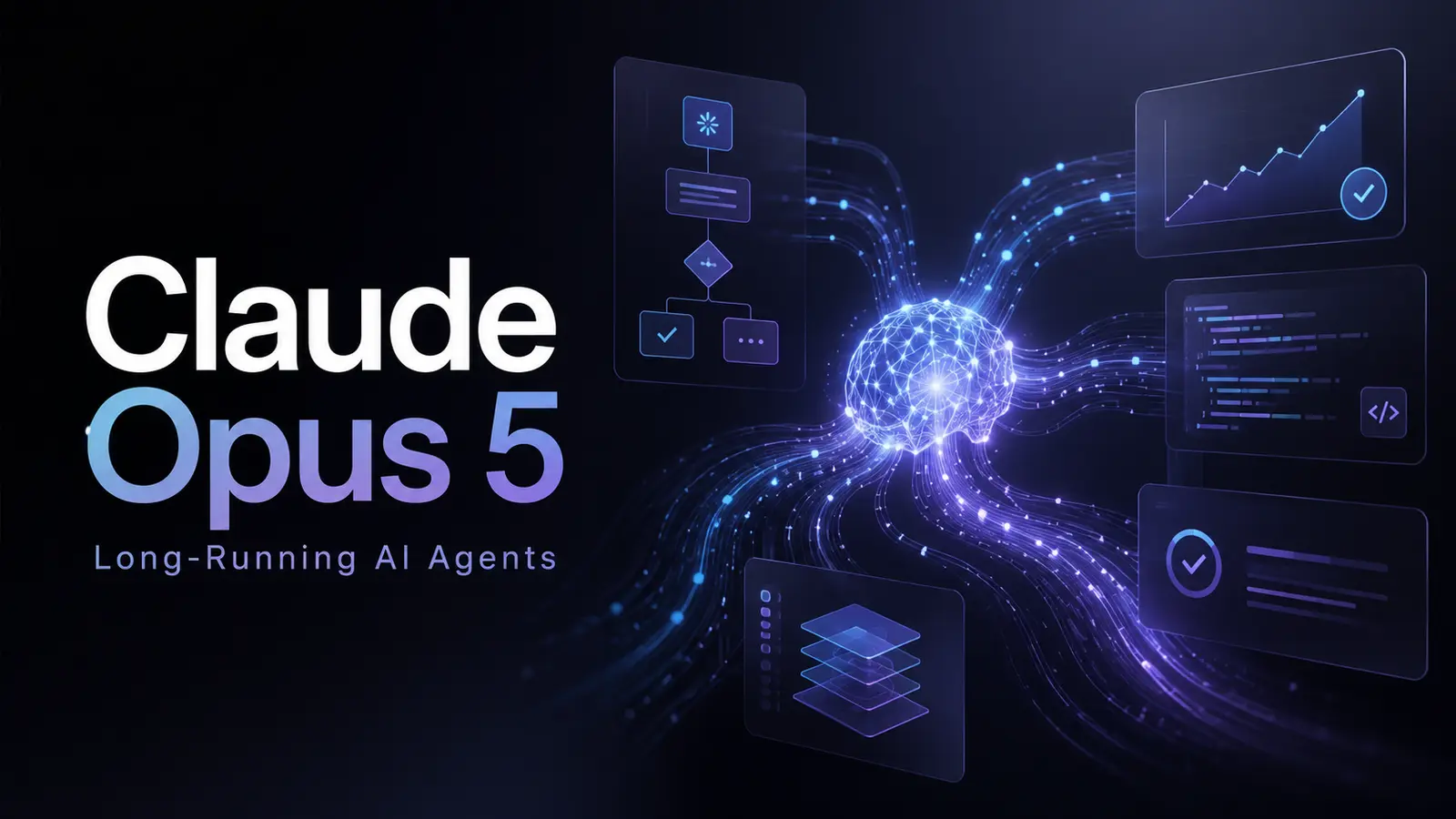
Anthropic’s latest release, Claude Opus 5, is positioned as a “step‑change” improvement for the company’s Opus tier, which underpins long‑running AI agents. The announcement stresses that the model not only accelerates complex, multi‑step tasks but also tightens safety controls, making it more reliable and easier to steer. For organisations that depend on AI to automate extended workflows—whether in software development, data analysis or customer‑facing operations—these upgrades could translate into faster delivery times, lower supervision costs and a reduced risk of unintended behaviour.
Enhanced reliability and interpretability
Reliability has long been a stumbling block for agents that need to persist across many interactions. Anthropic claims Opus 5 narrows the gap between research‑grade performance and production‑grade stability. The model incorporates refinements that make its internal reasoning pathways more transparent, allowing developers to audit decision‑making in real time. This interpretability is a core part of Anthropic’s safety‑first ethos: by exposing how a model arrives at a conclusion, engineers can spot drift or bias earlier, curbing the likelihood of harmful outputs.
Coding and professional work at scale
A headline feature of Opus 5 is its heightened capability in coding assistance. Anthropic reports that the model now handles larger codebases, resolves more intricate dependency graphs and offers higher‑fidelity suggestions for refactoring and optimisation. Early adopters note that the agent can maintain context over prolonged development sessions, effectively acting as a persistent pair‑programmer. Beyond software, the model is also tuned for professional tasks such as drafting reports, analysing financial data and synthesising regulatory documents, where accuracy and consistency are paramount.
Steering and safety mechanisms
Steerability— the ability to guide an AI’s behaviour without extensive re‑training—has become a focal point for responsible AI deployment. Opus 5 introduces a refined prompting interface that lets users specify constraints and priorities more precisely. Coupled with Anthropic’s internal safety‑layer, the model can reject or re‑frame queries that stray into disallowed territory, a capability that is especially valuable for agents operating autonomously over long periods.
Industry implications and future direction
The launch of Opus 5 arrives as enterprises increasingly seek AI that can run unattended for hours or days, handling tasks that would otherwise demand continuous human oversight. By delivering a model that balances performance with interpretability and safety, Anthropic positions itself as a credible alternative to larger, less transparent offerings from rival firms. The company’s broader agenda—such as its public invitation for “hard questions” about AI and collaborative work on jailbreak‑severity scoring—suggests that Opus 5 will be continually evaluated against emerging safety standards.
Looking ahead
Anthropic’s commitment to open dialogue and incremental safety research means Opus 5 is unlikely to be a static product. Future updates are expected to tighten its interpretability tools, expand domain‑specific knowledge, and refine steering mechanisms based on community feedback. For organisations, the immediate takeaway is clear: Opus 5 offers a more dependable, controllable AI partner for complex, long‑running tasks, while the longer‑term promise lies in a development roadmap that foregrounds transparency and responsible deployment.