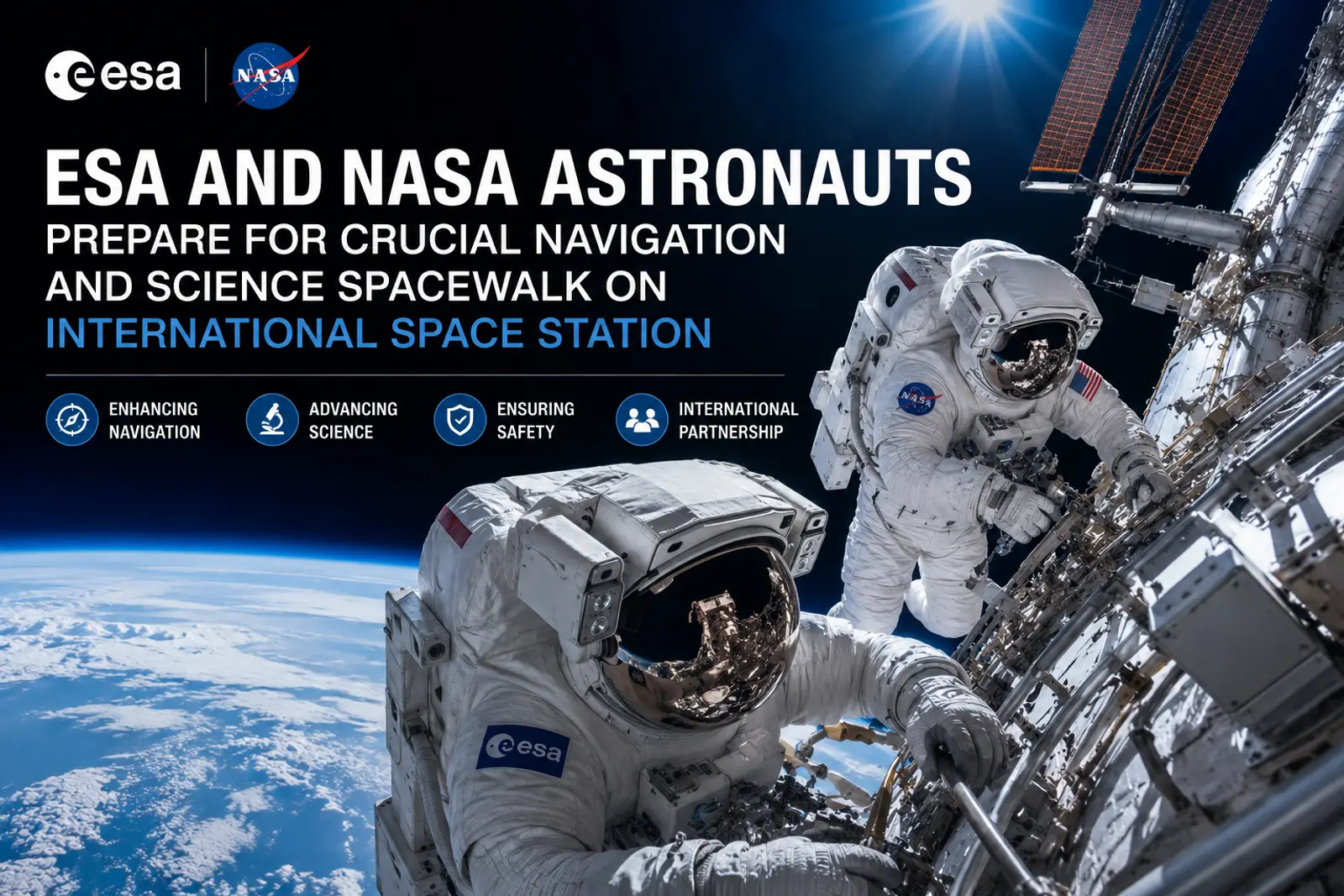
Mission Preparation and Crew Roles for International Space Station Spacewalk
Astronauts aboard the International Space Station are preparing for a complex orbital excursion designed to upgrade critical navigation and scientific infrastructure. A spacewalk involving European Space Agency astronaut Sophie Adenot and NASA astronaut Jessica Meir is scheduled to begin at approximately 8:30 a.m. EDT and last about six and a half hours. Live streaming coverage of the event provides global audiences with direct insight into the meticulous preparations required for modern human spaceflight. This operation marks a significant milestone as the 284th spacewalk dedicated directly to space station assembly, routine upkeep, and structural enhancement since the inception of the orbital outpost.
Executing such complex tasks demands clear delegation and strict adherence to safety protocols. Sophie Adenot serves as spacewalk crew member 1 and wears a suit with red stripes, while Jessica Meir serves as crew member 2 in an unmarked suit. For Adenot, this excursion represents her third career spacewalk, adding vital practical experience to her operational repertoire. Meir brings extensive expertise to the team as well, undertaking her seventh career spacewalk. Their combined experience is essential for navigating the precise operational requirements and potential microgravity challenges associated with working outside the protective hull of the station.
Replacing Orbital Hardware and Upgrading Data Relay Systems
The primary technical objective of the spacewalk involves the astronauts exiting the station’s Quest airlock to replace a retroreflector on the forward port of the Harmony module. This specialized optical device plays an instrumental role in supporting spacecraft navigation, ensuring safe and precise rendezvous and docking procedures for visiting vehicles arriving at the orbital complex. Maintaining the accuracy of these docking ports remains vital for the continuous flow of cargo, scientific supplies, and crew rotation vehicles.
Beyond the retroreflector replacement, the mission agenda incorporates several other vital infrastructure updates. The crew will also install jumper cables for data-relay systems, prepare the Alpha Magnetic Spectrometer’s radiator for future maintenance, and replace a high-definition camera on the station’s truss. These updates ensure that flight controllers maintain sharp visual oversight of ongoing exterior operations and robotic arm maneuvers, while also strengthening communication reliability across the orbital modules.
Operational Realities and Contingency Planning During Extravehicular Activities
While mission profiles are meticulously scripted down to the minute, extravehicular activities in low Earth orbit inherently involve operational uncertainties. Exact timelines can shift due to minor hardware snags, thermal adjustments, or unexpected resistance when working with rigid connectors in bulky pressurized gloves. Flight control teams on the ground maintain continuous communication with the crew, standing ready to adjust the operational sequence of tasks if minor contingencies arise. These flexible response strategies ensure that crew safety remains the absolute priority throughout the duration of the excursion.
The demanding nature of these operations highlights the constant vigilance required to sustain human infrastructure in space. Even routine upgrades carry inherent complexities when performed in a vacuum and extreme temperature fluctuations. The meticulous planning behind every bolt, cable, and optical reflector reflects decades of accumulated aerospace engineering knowledge. By addressing wear and tear before it compromises core systems, space agencies safeguard the longevity of the orbital laboratory and protect the continuous stream of scientific research conducted on board.
Future Maintenance Milestones and International Collaboration in Orbit
Looking forward, the successful completion of this maintenance outing paves the way for upcoming assembly and science tasks scheduled later in the expedition. As the International Space Station continues its decades-long tenure in low Earth orbit, coordinated efforts between international partners remain the cornerstone of its operational success. Observers and researchers can follow future developments, crew debriefings, and upcoming station activities through official agency broadcasts, mission blogs, and associated digital channels as orbital maintenance marches steadily forward.