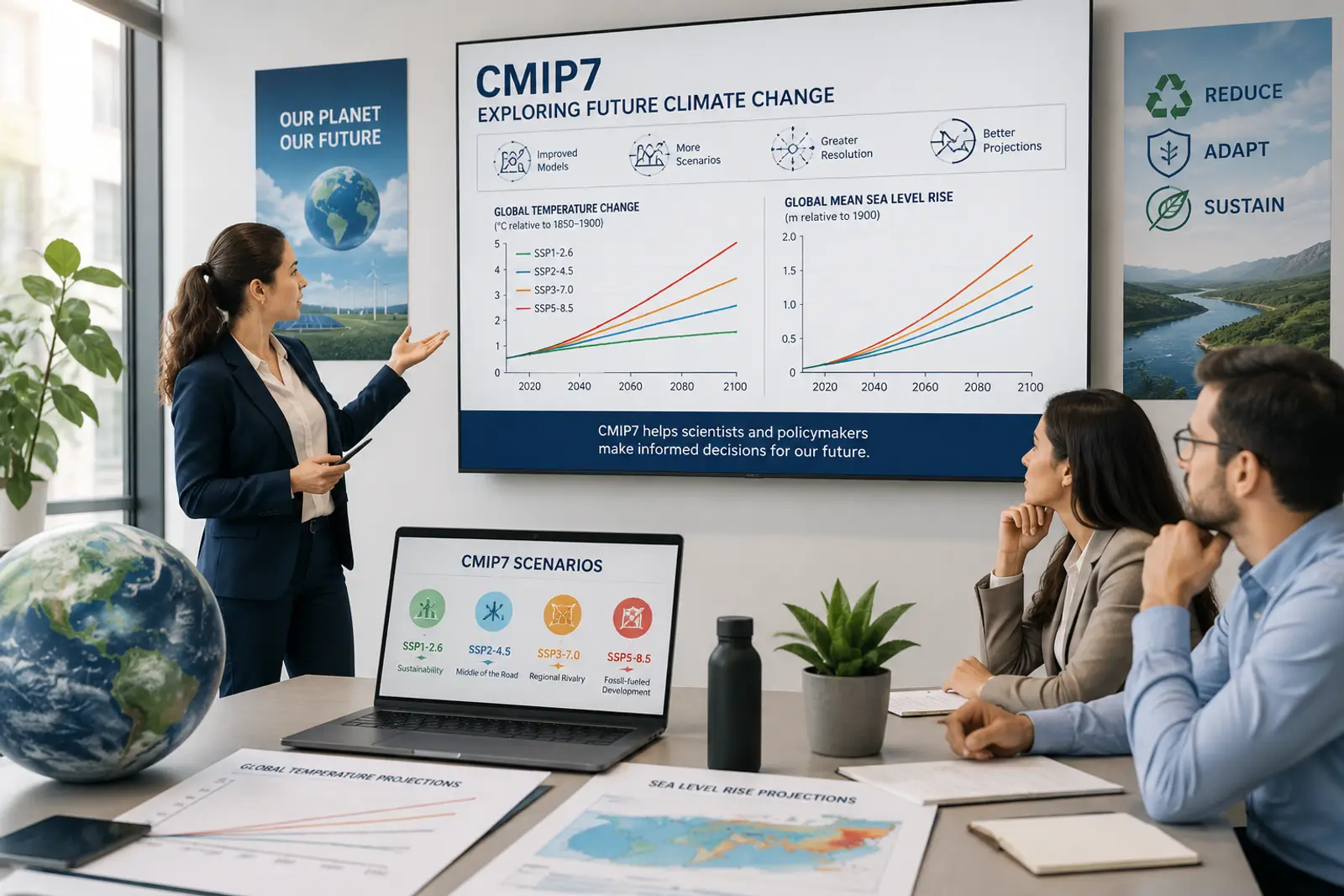
A new architectural framework for global climate projections has been unveiled, fundamentally altering how researchers model coming decades of environmental change. Released ahead of the upcoming assessment cycle by the Intergovernmental Panel on Climate Change, the seventh phase of the Coupled Model Intercomparison Project establishes a completely revised set of baseline emissions scenarios. These new pathways replace the shared socioeconomic pathways utilized during the previous generation of modelling, introducing a restructured perspective on global trajectory tracking, policy evaluations, and long-term temperature outcomes.
Structural shifts in the seventh phase of the Coupled Model Intercomparison Project
The newly published framework abandons the enigmatic radiative forcing level naming conventions of earlier assessment cycles in favour of direct emissions trajectory classifications. Running from low-to-negative profiles through to high emissions scenarios, the updated pathways discard obsolete no-climate-policy baseline worlds that assumed unchecked fossil fuel exploitation. Instead, the models evaluate the realistic implications of current global policies continuing on their present path, being strengthened through aggressive interventions, or weakening under political and economic pressures. This methodological pivot allows scientists to align simulated futures more closely with actual policy trajectories observed across international jurisdictions.
Furthermore, the framework aggressively revises high-end future emissions downward for the first time in four generations of climate modelling. Researchers acknowledge that a twenty-first century dominated by extensive coal use is no longer a plausible baseline assumption. Consequently, the upper bound of projected global warming for the year 2100 has contracted significantly. While previous shared socioeconomic pathway predecessors projected a wide temperature range spanning from 1.5 degrees Celsius to 4.7 degrees Celsius above pre-industrial levels, the seven new pathways project a much narrower band between 1.6 degrees Celsius and 3.3 degrees Celsius.
Refined temperature bands and emissions projections for 2100
The highest scenario within the updated matrix reaches a peak global warming level of 3.3 degrees Celsius by the end of the century, accompanied by roughly half of the cumulative carbon dioxide emissions calculated in prior high-end projections. Meanwhile, the medium scenario that directly reflects the continuation of current global policies settles at 2.9 degrees Celsius by 2100. This middle-of-the-road projection crosses the critical 2-degree threshold around the year 2050 and breaches 3 degrees Celsius near 2110, alongside a distinct one-in-four statistical chance of exceeding 4 degrees Celsius by 2150.
At the opposite end of the spectrum, the lowest emissions scenario shifts upwards relative to previous assessment iterations. This adjustment accounts for the scientific consensus that at least some temporary overshoot of the Paris Agreement aspirational target of 1.5 degrees Celsius is now unavoidable. Consequently, this lowest pathway peaks at approximately 1.8 degrees Celsius during the middle of the century before gradually declining back toward 1.5 degrees Celsius by 2100. These calibrated trajectories provide policymakers with a granular understanding of mitigation realities, balancing the necessity of aggressive decarbonisation against the inertia of the global energy system.
Regional vulnerabilities and immediate hydrological crises in the Caribbean
While long-term modelling recalibrates global expectations, immediate climate vulnerabilities continue to manifest across regional ecosystems and human settlements. A rapid analysis conducted by the World Weather Attribution network revealed that a severe drought parching the Caribbean since May 2026 was directly intensified by human-induced climate change. Rising global temperatures reduced early wet season rainfall between May and July by approximately 6 percent in Jamaica and 9 percent in Puerto Rico, elevating the statistical likelihood of extreme dry spells by 40 percent in Jamaica and 30 percent in Puerto Rico relative to a pre-industrial climate that was 1.4 degrees Celsius cooler.
This three-month precipitation deficit materialized as a roughly one-in-fifty-year event in Puerto Rico and a one-in-thirty-year occurrence in Jamaica. San Juan International Airport recorded its driest April-to-August period in seven decades, with precipitation levels dropping 64 percent below historical averages. The resulting water shortage forced local authorities to implement forty-eight-hour rotating water rationing policies affecting 180,000 customers across the capital region, while Jamaica placed seven administrative parishes under strict water prohibition orders. Analysts note that these acute climate shocks are exacerbated by systemic infrastructure challenges, including regional water grid leakages averaging 46 percent and peaking at 60 percent in Puerto Rico.
Implementation milestones and full Earth-system model simulations
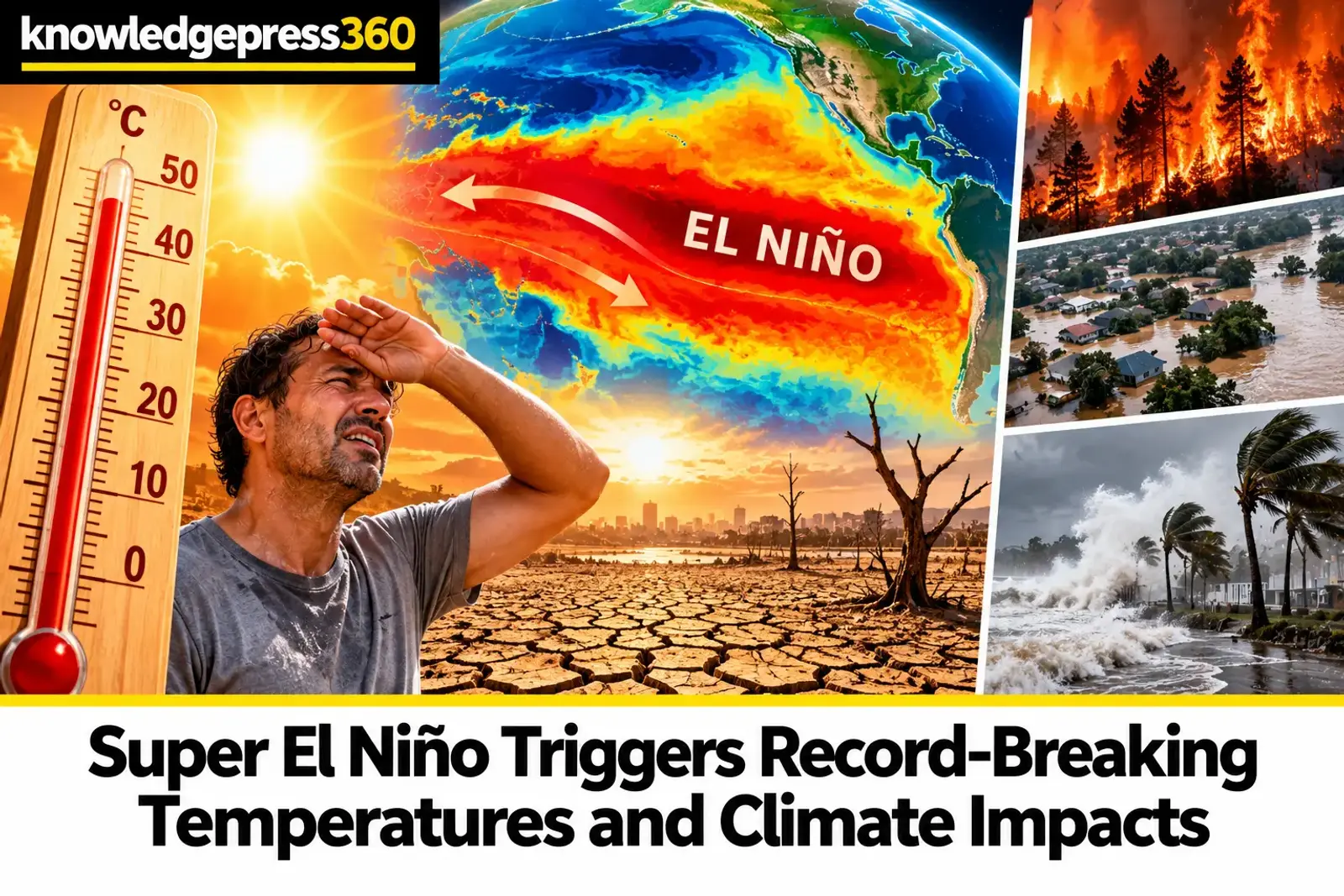
The transition to the new modelling architecture now enters a critical operational phase as international research consortia begin executing full Earth-system model simulations. Observers and climate scientists are closely monitoring how different modelling groups implement these updated scenarios and whether unforeseen systemic feedbacks emerge within complex ocean-atmosphere interactions. The exact trajectory of cyclical phenomena such as El Niño and its regional drying influences will heavily dictate how these theoretical pathways translate into localized environmental stress.
As upcoming assessment reports begin synthesising these long-term projections alongside mounting regional adaptation pressures, the scientific community faces the dual challenge of refining global mitigation models while addressing immediate infrastructure deficits. The success of the current modelling phase will ultimately depend on how effectively these newly calibrated emissions pathways inform tangible policy decisions in an era defined by accelerating climatic transitions.