Global marine environments have entered a period of thermal stress, culminating in record-breaking sea surface temperatures across the planet's extra-polar regions. As climate researchers examine incoming data from meteorological agencies, the convergence of long-term global heating and emerging cyclical weather patterns has drawn widespread attention. Understanding the magnitude of these temperature anomalies requires examining both oceanic shifts and their concurrent repercussions across adjacent landmasses, where compounding meteorological factors are amplifying environmental and regional pressures.
Unprecedented Marine Temperatures and El Niño Drivers
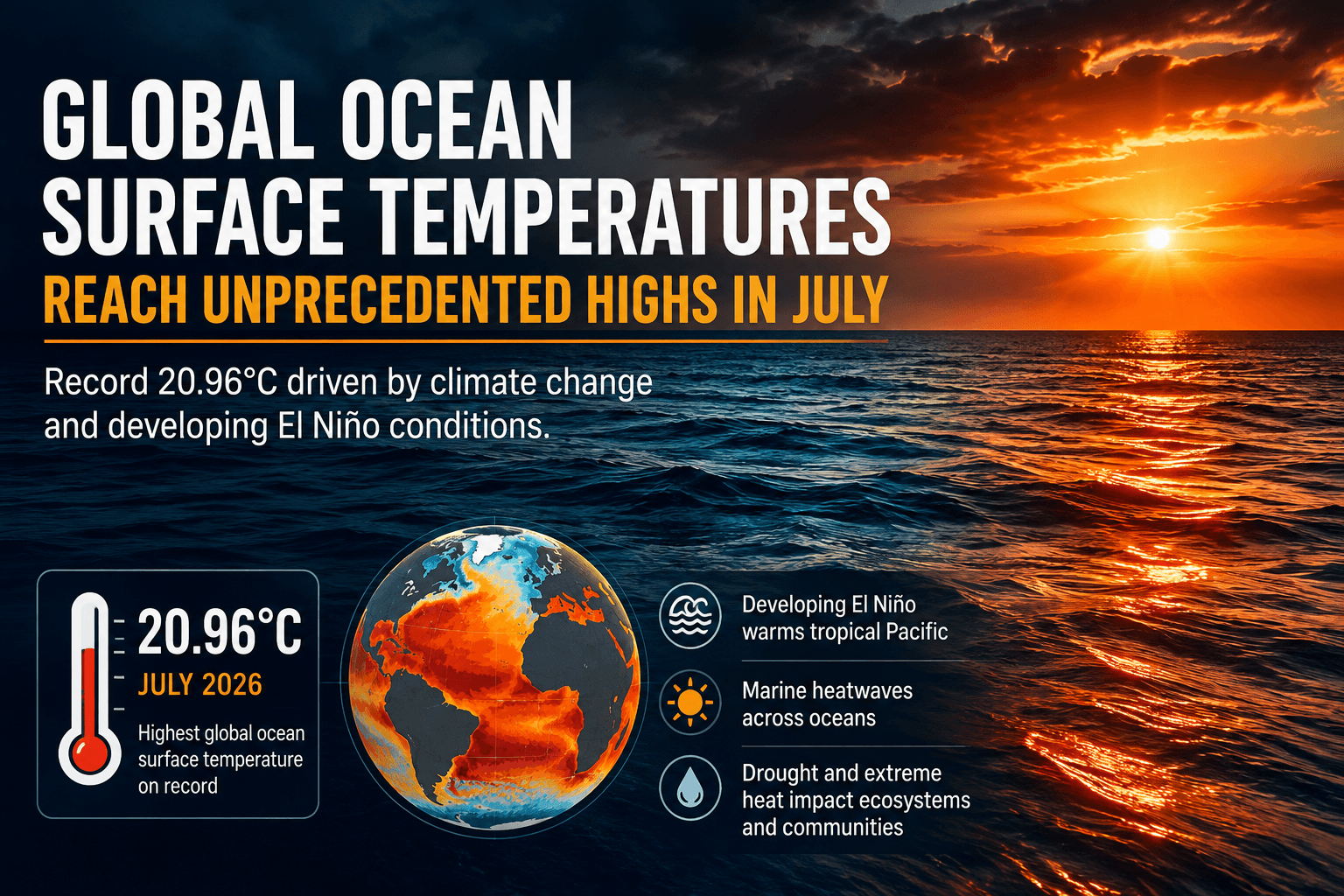
Data released by the European Union’s Copernicus Climate Change Service indicate that the average sea surface temperature across extra-polar oceans, spanning latitudes between 60 degrees south and 60 degrees north, climbed to 20.96 degrees Celsius in July. This figure surpasses the previous high mark of 20.89 degrees Celsius set during the same month in 2023. A primary factor behind this thermal surge is the developing El Niño pattern in the tropical Pacific, where exceptionally warm waters have begun to accumulate and strengthen.
These rising temperatures are not confined to the tropical Pacific. Widespread and severe marine heatwaves have taken hold across the Atlantic coast and the western Mediterranean, creating difficult conditions for marine life. As ocean waters absorb excess greenhouse gas emissions, their capacity to act as Earth's primary thermal regulator is highlighted. Researchers note that while the broad trajectory of ocean warming aligns with long-term climate observations, the speed at which these regional marine heatwaves have intensified underscores the complex dynamics operating within the global climate system.
Compounding Heat Extremes and Drought Across Europe
While marine ecosystems grapple with elevated heat, western Europe has simultaneously experienced an exceptional climatic phase. The region recorded its hottest June-July period in observational history, posting an average temperature of 21.62 degrees Celsius, which sits 2.79 degrees Celsius above the 1991-2020 average. Persistent high-pressure atmospheric systems have anchored themselves over parts of the continent, trapping heat and influencing regional weather patterns.
This atmospheric blocking pattern has been accompanied by depleted soil moisture levels. Dry soils reduce natural cooling typically achieved through evaporation, allowing ambient temperatures to rise during successive heatwaves. The resulting hydrological stress has contributed to reduced river flows across major European waterways, including the Seine, Rhine, and Danube basins. These diminished water levels place strain on agricultural irrigation, regional energy production, river transport, and municipal water supplies, affecting local communities throughout the affected river catchments.