U.S.–Iran Tensions Escalate
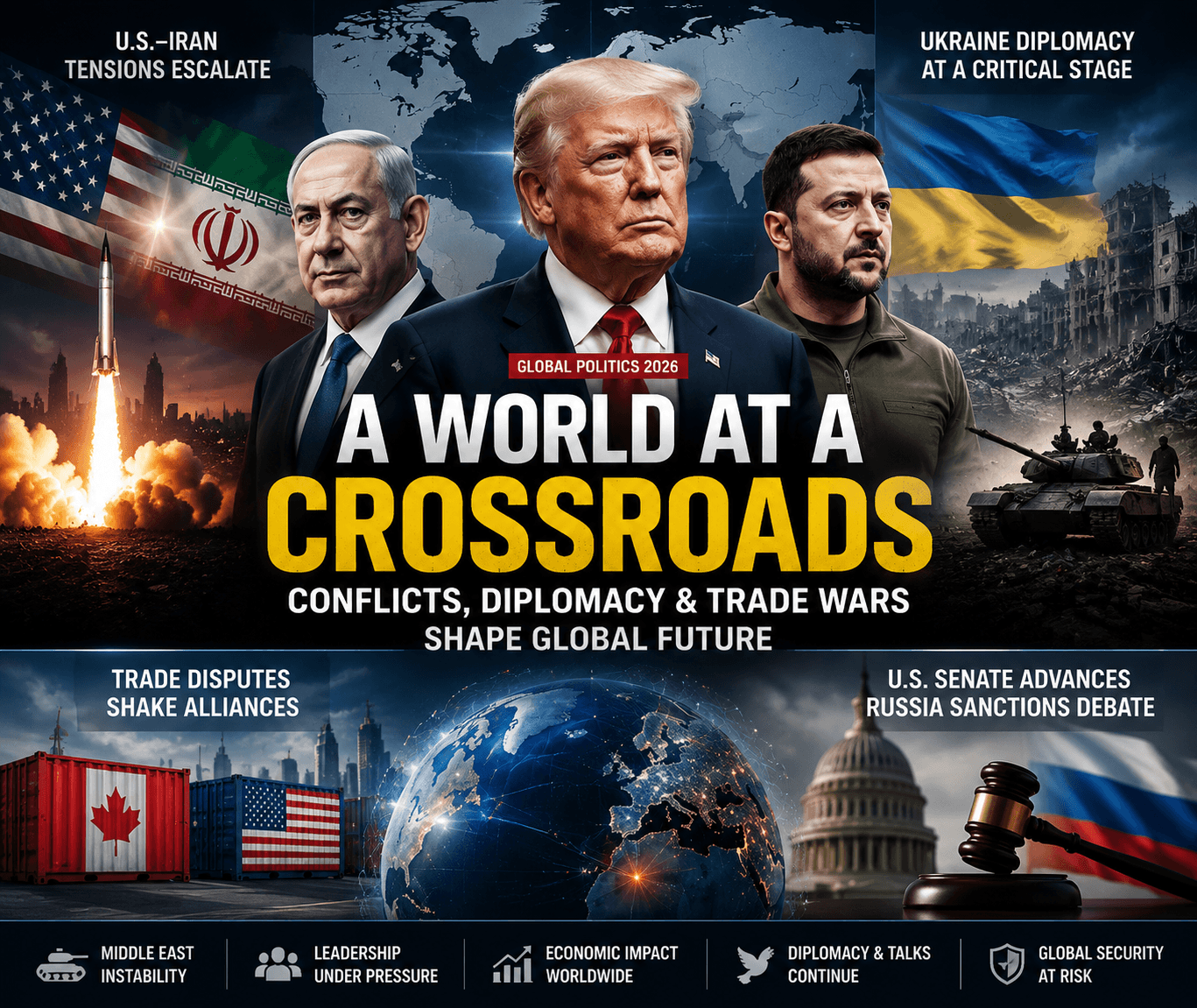
One of the most significant developments in global politics is the worsening relationship between the United States and Iran. Recent military exchanges involving Iranian forces and U.S. interests in the Middle East have increased concerns about a wider regional conflict. Reports indicate that tensions intensified after attacks involving U.S. forces and subsequent military responses against Iran-backed groups in Iraq.
The crisis has also affected global markets, particularly energy prices. Analysts warn that instability in the Middle East could create further uncertainty for oil supplies and international trade routes, especially if tensions affect strategically important areas such as the Strait of Hormuz.
Trump’s Foreign Policy Faces International Pressure
U.S. President Donald Trump remains at the centre of several major diplomatic challenges. His administration is balancing military pressure with attempts at negotiation, particularly regarding Iran and broader Middle East security issues.
Trump recently held discussions with Israeli Prime Minister Benjamin Netanyahu and Ukrainian President Volodymyr Zelenskyy, highlighting the interconnected nature of current global conflicts. The meetings focused on regional security, Iran, and continued support for Ukraine.
Relations between Washington and Jerusalem have also attracted attention, with reports suggesting differences between Trump and Netanyahu over approaches toward Iran and regional strategy.
Ukraine’s Leadership Faces Domestic Challenges
While Ukraine continues its struggle against Russia, President Volodymyr Zelenskyy is facing increasing domestic political pressure. Although his international position remains strong due to continued diplomatic support from Western allies, internal debates over government decisions and reforms have created challenges for his administration.
The situation highlights the difficult balance faced by wartime leaders: maintaining international partnerships while responding to public concerns at home.
U.S. Senate Moves Forward With Russia Sanctions Debate
In Washington, lawmakers have advanced discussions on new measures targeting Russia. The proposed sanctions package aims to increase economic pressure on Moscow, while also raising debates about presidential authority and the ability of the executive branch to impose trade-related actions.
Supporters argue stronger sanctions could pressure Russia to reconsider its foreign policy, while critics warn that expanding executive powers could create long-term political consequences.