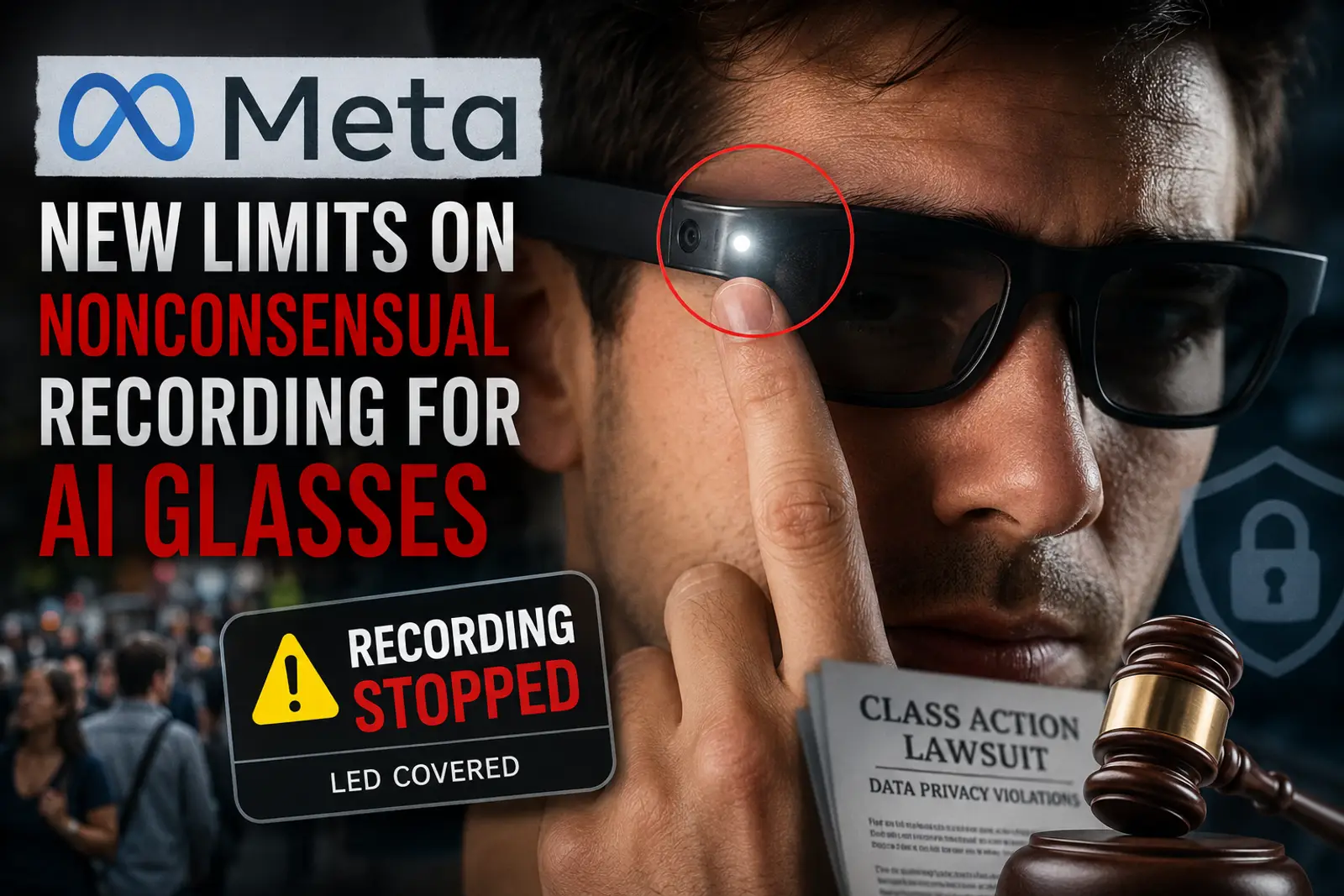
Meta has deployed a critical software update for its AI-powered smart glasses designed to curb covert filming by automatically shutting down the camera if the warning LED light is obstructed mid-recording. The update addresses a significant loophole in previous security measures, which only checked for blocked or modified indicator lights prior to or at the exact moment filming commenced. As wearable technology becomes increasingly pervasive, the capacity for nonconsensual recording has emerged as a primary concern for privacy advocates and everyday bystanders alike. While the technical adjustment makes surreptitious capture more difficult, it arrives amid broader legal and regulatory battles concerning how user data is managed and harvested.
Technical Adjustments Target Mid-Session LED Obstruction Loopholes
The newly introduced firmware update closes a vulnerability that allowed individuals to bypass initial security checks. Earlier iterations of Meta smart glasses featured tamper-detection capabilities that checked whether the white capture LED was blocked before a photo or video session began. However, users discovered methods to circumvent these guards by initiating recording openly and subsequently covering the light indicator. The updated software continuously monitors the LED status throughout the active session, instantly terminating video capture if the light is masked. This builds upon prior hardware-level safeguards introduced in second-generation devices, which included basic detection for blocked or physically altered indicator components.
Commercial Marketing Campaigns Meet Skepticism Over Privacy Protections
Alongside the software enhancement, Meta has initiated a public awareness campaign to educate consumers on the visual cues associated with its wearable devices. High-profile outdoor advertisements, including a prominent billboard in Los Angeles, feature imagery emphasizing the bright white LED indicator that signals active recording. The campaign messaging asserts that the hardware is built to protect the privacy of bystanders as much as the wearer. Nevertheless, these public relations efforts face intense skepticism. Critics and legal observers question whether fleeting glimpses of outdoor advertisements are sufficient to inform the general public about the surveillance capabilities of modern smart eyewear.
Nationwide Class Action Lawsuit Challenges Corporate Data Practices
The deployment of hardware safeguards coincides with a proposed nationwide class action lawsuit advancing through United States courts. The litigation accuses Meta of deceptive marketing practices regarding the privacy risks associated with its AI glasses. Plaintiffs allege that the company fails to adequately disclose that human data annotators review captured media, including sensitive and personal footage, to train underlying artificial intelligence models. Although the legal complaint is distinct from the immediate issue of nonconsensual recording, it highlights broader consumer distrust regarding data retention policies and the degree of control individuals possess over environments captured by third parties.
Persistent Vulnerabilities and Evolving Regulatory Oversight
Despite the implementation of mid-session shutdown protocols and expanded tamper detection, privacy risks remain a persistent challenge for the wearable technology sector. Prior incidents revealed that third-party vendors attempted to market workaround accessories, such as custom vinyl dots promoted on social media platforms, designed to obscure or dim the warning light. Although rigorous testing demonstrated that these products largely failed to bypass updated hardware defenses, the market demand for stealth modifications underscores ongoing friction between privacy expectations and consumer gadgets. Regulatory bodies continue to monitor whether hardware-level interventions and educational campaigns will prove adequate as smart glasses adoption scales globally.