Federal fisheries regulators have announced the structured framework for the 2026 recreational red snapper season in the South Atlantic, balancing angler access with stock recovery goals. The announcement includes a designated federal fishing window alongside targeted exempted fishing permits for regional state agencies. This cooperative management approach aims to refine local data collection methodologies while offering controlled harvest opportunities across participating jurisdictions.
Federal Season Structure And Limits
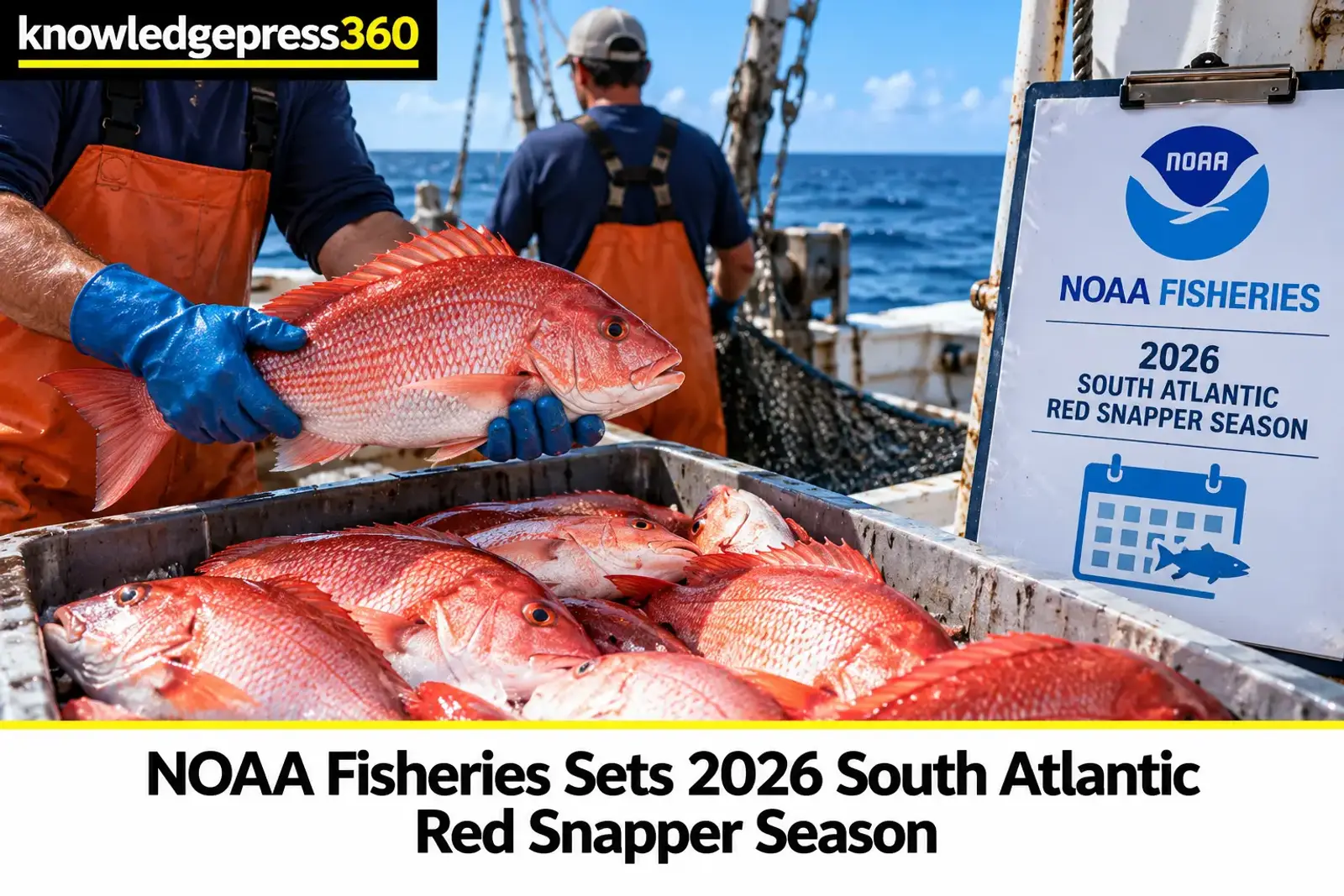
The standard federal recreational red snapper fishing season in the South Atlantic will open for three days, operating from 12:01 a.m. local time on October 9 through 12:01 a.m. local time on October 12, 2026 [1, 5]. This schedule represents a modest one-day extension compared to the previous year's two-day federal allowance [1]. Throughout this brief maritime window, regulations maintain a strict bag limit of one fish per person per day, with no minimum size limit enforced [1].
Fishery managers intend this compressed timeframe to allow recreational participation without placing undue pressure on recovering fish populations. The overarching objective remains the careful stewardship of marine resources in federal waters, ensuring that cumulative catches do not exceed pre-established biological thresholds. Anglers operating during these three days must adhere strictly to federal bag limits and reporting protocols established by oversight bodies.
State Exempted Fishing Permits
Alongside the general federal season, NOAA Fisheries has issued modified Exempted Fishing Permits to the state wildlife agencies of Florida, Georgia, and South Carolina [1, 5]. These specialised permits authorise extended recreational red snapper fishing spans for eligible participants, running from October 9 through October 22, 2026 [1, 5]. This fourteen-day framework allows state authorities to pilot innovative local data collection programs and evaluate alternative management strategies [1].
Participants operating under these state-issued permits are restricted to landing fish solely through their respective EFP allowances rather than stacking them on top of the standard federal season allocation [1]. Explicit harvest numerical caps have been allocated to each participating state to maintain regional accountability [1, 5]. Florida is authorized a harvest limit of 83,720 fish, South Carolina holds a cap of 8,695 fish, and Georgia is permitted a total of 4,859 fish [1, 5].
Legal Background And Adjustments
The newly modified Exempted Fishing Permits were issued following the necessary rescission of an earlier round of permits earlier in the regulatory cycle [1]. That initial framework was halted due to a preliminary injunction issued by the United States District Court for the District of Columbia, which required federal regulators to address specific procedural concerns before moving forward with regional testing initiatives.
By revising and reissuing the documentation, authorities have sought to align the pilot projects with statutory requirements while maintaining collaborative pathways with state partners [1]. This legal adjustment underscores the complex regulatory environment surrounding South Atlantic fisheries, where conservation mandates frequently intersect with regional economic demands from the recreational angling community.
Monitoring Harvest And Future Outlook
A central question moving forward is whether actual recreational harvest totals during the fourteen-day EFP window will remain strictly within sustainable biological projections [1]. Following the conclusion of the October harvest window, NOAA Fisheries and the respective state wildlife agencies will jointly review comprehensive catch data [1, 3, 5]. Officials will use these evaluations to determine whether a secondary fishing season can take place in December 2026 [1, 3, 5].
Observers and participating anglers should closely monitor catch reporting compliance throughout the October fishing period [1]. The findings from these pilot initiatives will likely influence long-term recreational management strategies across the South Atlantic, serving as a critical test case for cooperative federal and state fisheries administration [1, 3].