A global tribute set for the stars
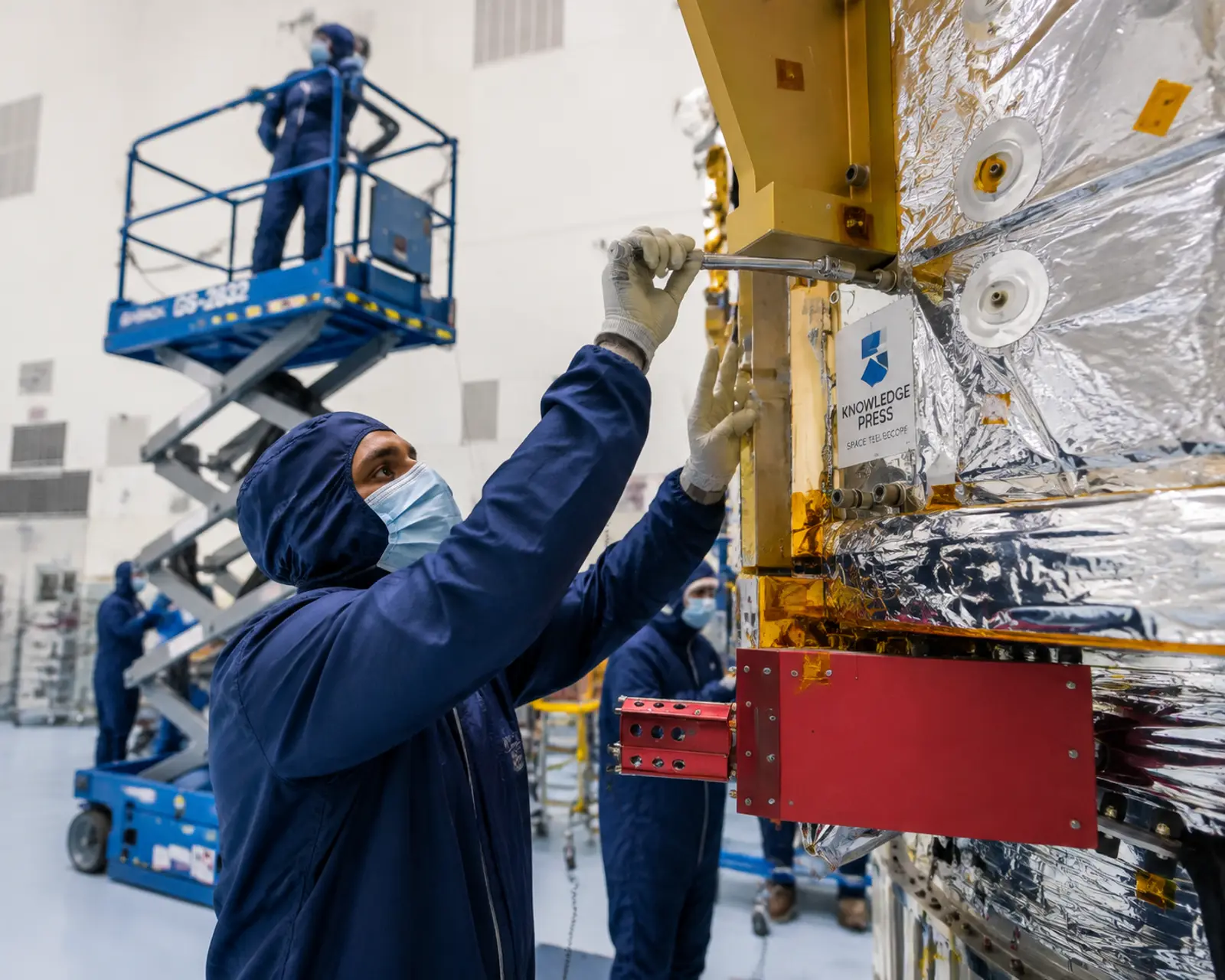
On 27 July, engineers at Kennedy Space Centre in Florida performed a quiet but symbolic act: they installed a memory card holding 1,350,144 individual names into a commemorative plaque destined for the Nancy Grace Roman Space Telescope. The names – submitted by members of the public, school groups and even astronauts slated for Artemis II and Artemis III – will accompany the observatory on its journey to the Sun‑Earth Lagrange point 2 (L2), some one million miles from Earth.
The gesture transforms a cutting‑edge scientific instrument into a time‑capsule of humanity’s collective curiosity. While the telescope will spend its operational life scanning the distant universe, the embedded card will silently record the aspirations of millions who have asked, “Will you take my name to space?”
The Roman Telescope: a tribute to a pioneer
The observatory bears the name of Dr Nancy Grace Roman, NASA’s first chief astronomer and a driving force behind the agency’s modern astrophysics programme. In the 1960s Roman advocated for space‑based telescopes that could peer above Earth’s turbulent atmosphere, a vision that later materialised as the Hubble Space Telescope and now the Roman Telescope. Her legacy is two‑fold: pioneering the technology for deep‑space observation and championing open‑access data for the global scientific community.
Roman’s namesake telescope will be the most powerful wide‑field infrared observatory ever launched. Its 2.4‑metre primary mirror, matching Hubble’s in size but equipped with a vastly larger field of view, is designed to map dark energy, survey exoplanets and trace the formation of galaxies across cosmic time. By situating the telescope at L2, engineers can keep its sunshield permanently pointed toward the Sun, ensuring a stable thermal environment and uninterrupted view of the heavens.
From launch pad to L2: the logistics
NASA and SpaceX have pencilled the launch for no earlier than 07:26 a.m. EDT on 30 August. The vehicle of choice is a Falcon Heavy lifting off from Launch Complex 39A, the historic pad that saw Apollo‑era rockets and later Space Shuttle missions. Once in orbit, the spacecraft will perform a series of burns to place the Roman Telescope into a halo orbit around L2 – a gravitational sweet‑spot where the pull of Earth and the Sun balance, allowing a spacecraft to remain relatively stationary with respect to both bodies.
The memory card, sealed within a plaque on the telescope’s exterior, will be protected from radiation and temperature extremes. Though the card does not carry any operational data for the mission, its presence underscores a growing trend of public engagement: embedding human stories within the hardware that explores the cosmos.
Public participation and the Artemis connection
The inclusion of Artemis crew members’ names alongside those of schoolchildren and enthusiasts highlights the bridging of NASA’s near‑term lunar ambitions with its long‑term astrophysics goals. Artemis II and III aim to return humans to the Moon and establish a sustainable presence, while the Roman Telescope will look far beyond, probing the early universe and searching for distant worlds.
By inviting the public to submit names, NASA taps into a centuries‑old tradition of naming celestial objects after people, but with a modern twist: the names travel not on a plaque on a ground‑based observatory, but on a spacecraft that will sit in a region of space rarely visited by humans.
Why L2 matters for astronomy
The Sun‑Earth L2 point, located roughly 1.5 million kilometres from Earth in the direction opposite the Sun, offers several advantages for space telescopes. First, it provides a thermally stable environment – the Sun, Earth and Moon appear in roughly the same part of the sky, allowing the spacecraft’s sunshield to block stray light continuously. Second, communications are straightforward: a single, high‑gain antenna can maintain a constant line‑of‑sight to Earth, reducing the need for complex relay networks.
Several flagship missions already operate at L2, including the James Webb Space Telescope and ESA’s Gaia observatory. Roman’s addition to this roster will expand the scientific return from the region, delivering unprecedented infrared surveys that complement the visible‑light data from its predecessors.
A symbolic gesture with practical resonance
While the memory card does not influence the telescope’s scientific output, its symbolic weight is significant. It reminds engineers, scientists and the public that space exploration is a shared endeavour, not an isolated technical exercise. The card also serves as a reminder of Dr Roman’s ethos: making space science accessible and inclusive.
The act of embedding names may inspire future missions to consider similar public‑participation elements, perhaps even integrating interactive data streams or citizen‑science payloads. As the cost of launch diminishes and small‑satellite capabilities grow, the boundary between professional and public contributions to space hardware continues to blur.
Looking ahead
When the Roman Telescope reaches L2, it will commence a multi‑year survey of the sky, generating petabytes of data that will be freely available to researchers worldwide – a fitting tribute to its namesake’s commitment to open science. Meanwhile, the memory card will sit silently among the telescope’s components, a quiet reminder that behind every photon captured lies a human story.
The launch, scheduled for late August, will be watched closely by both the scientific community and the millions who submitted their names. Whether the card survives the harsh radiation environment of deep space is secondary to the message it conveys: humanity is aboard, looking outward together.
Concluding perspective
The Roman Telescope’s journey to L2 encapsulates a dual narrative – a cutting‑edge scientific mission and a collective human gesture. By carrying a card with over a million names, the telescope becomes more than a piece of hardware; it transforms into a floating memorial to curiosity, ambition and the legacy of a pioneering astronomer. As the observatory begins its quest to chart dark energy, map exoplanets and unveil the universe’s earliest galaxies, it will also bear the quiet hopes of every individual who asked, “Will you take my name to space?” In doing so, NASA reminds us that the pursuit of knowledge is a shared venture, rooted in the dreams of all who look up.