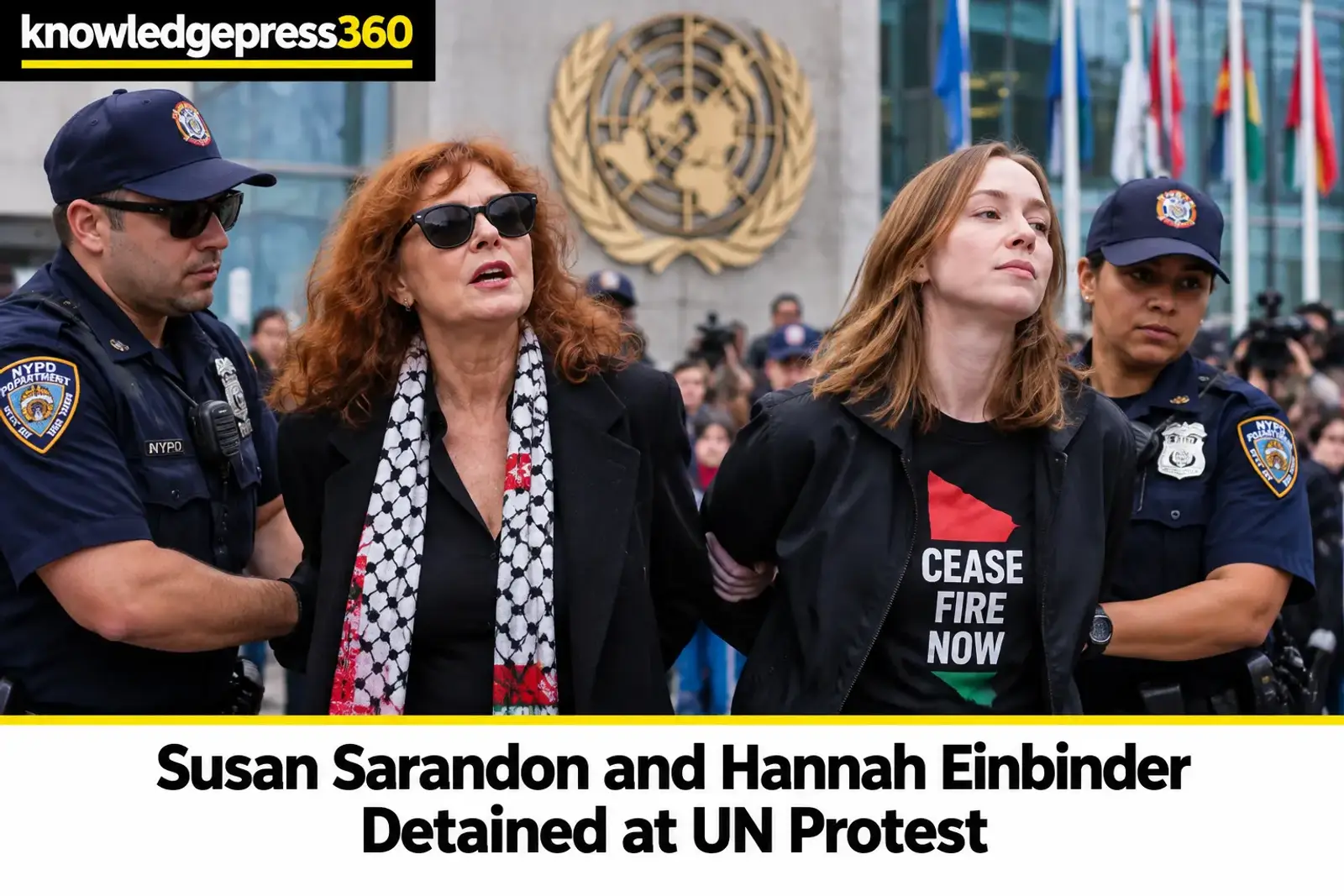
The intersection of high-profile cultural figures, political activism, and intense foreign policy disputes intensified sharply outside the United Nations headquarters in midtown Manhattan. Academy Award-winning actor Susan Sarandon and Emmy-winning actor Hannah Einbinder were among individuals taken into custody by the New York Police Department during an unscheduled demonstration. The September 24, 2026, protest coincided with the arrival of Israeli Prime Minister Benjamin Netanyahu, who was in the city to address the United Nations General Assembly. The unfolding events underscore the growing personal and professional risks public figures face when engaging in high-stakes geopolitical advocacy on American soil. As artists and political campaigners increasingly lend their platforms to contentious international debates, law enforcement agencies face mounting pressure to balance public safety with constitutional rights to assembly. This high-profile intervention highlights a broader global friction point where domestic policing, international diplomacy, and celebrity activism collide in public spaces. Observers tracking the evolving dynamics of modern protest movements will find the New York incident a stark reminder of the mounting tensions surrounding foreign policy controversies. Understanding how authorities manage unscheduled demonstrations near international diplomatic hubs requires examining the specific operational choices made by law enforcement on the ground. Beyond the immediate police response, the demonstration reflects deeper societal divisions regarding foreign military campaigns and the role of cultural icons in shaping public discourse.
Unscheduled United Nations Demonstration
The demonstration outside the international body was organised by the activist group Jewish Voice for Peace to oppose the presence of Benjamin Netanyahu and United States military aid to Israel. Around two hundred participants gathered near the diplomatic compound wearing white T-shirts and carrying banners demanding an end to military support and military campaigns. According to law enforcement officials, officers from the NYPD Community Affairs Bureau intervened because demonstrators were blocking a vital intersection. Police representatives stated that repeated warnings were issued to the crowd, advising participants to disperse and clear the roadway. When numerous protesters failed to comply with dispersal orders, officers moved in to clear the intersection and make detentions. Photographic and video evidence captured Sarandon being handcuffed by police officers, while Einbinder was escorted away with her hands restrained behind her back. Several other prominent public figures were also present at the demonstration to express solidarity, including political figures and musicians. Democratic congressional candidate Darializa Avila Chevalier and New York City Council member Chi Ossé were among those taken into custody during the police intervention. Other notable cultural personalities participating in the rally included boygenius members Julien Baker and Lucy Dacus, Elliot Page, Cynthia Nixon, Saturday Night Live cast member Sarah Sherman, and whistleblower Chelsea Manning. Representatives for Page and Nixon later confirmed their attendance at the rally but clarified that they managed to avoid being detained by law enforcement officers. Inside the General Assembly chamber, parallel friction manifested as international delegates walked out during Netanyahu's address, mirroring the intense opposition voiced on the streets outside.
Cultural Professional Backlash
The arrests highlight the significant professional and personal costs confronting artists who maintain vocal stances on polarizing geopolitical conflicts. Both Sarandon and Einbinder have long been outspoken critics of Israel's military campaign in Gaza and the diplomatic backing provided by Washington. Prior to the New York protest, Sarandon publicly disclosed at the Venice International Film Festival that she has faced severe professional backlash and lost multiple acting opportunities due to her political advocacy. Similarly, Einbinder has argued that the personal imperative to speak out against ongoing humanitarian crises far outweighs potential career consequences. During the demonstration itself, Einbinder addressed the crowd and media, characterizing the visiting leader as an architect of conflict sustained by American funding. This dynamic illustrates a broader transformation within the entertainment industry, where cultural figures are increasingly willing to risk professional standing to amplify foreign policy dissent. While some supporters praise these artists for using their platforms to draw global attention to civilian suffering, critics argue that celebrity-driven protests can sometimes overshadow complex diplomatic realities. The willingness of prominent actors to court arrest demonstrates a profound shift from passive endorsement to active, physical participation in contentious civil disobedience campaigns. As studios and production houses navigate these ideological divides, the long-term impact on the careers of politically engaged performers remains uncertain. The willingness of artists to absorb professional penalties suggests that traditional boundaries between celebrity culture and political radicalism are continuing to dissolve.
Legal And Diplomatic Uncertainty
While the immediate police response concluded with individuals removed from the intersection, significant questions remain regarding the subsequent legal process. Law enforcement agencies have not yet clarified the exact total number of individuals taken into custody during the operation. Furthermore, authorities have yet to confirm whether formal criminal charges or desk appearance tickets will be pursued against Sarandon, Einbinder, and other high-profile detainees. The lack of detailed public disclosures from the judiciary leaves the immediate legal standing of the participants ambiguous as defense representatives review the circumstances of the arrests. Beyond the municipal legal proceedings, the protest underscored the volatile diplomatic atmosphere surrounding the United Nations gathering. Netanyahu's speech drew fierce condemnation not only from street demonstrators and walkout delegates but also from foreign allies who have recently moved to recognize Palestinian statehood. The convergence of domestic civil disobedience and international diplomatic friction creates a complex regulatory environment for municipal authorities tasked with managing large-scale public demonstrations. Legal analysts and civil liberties organisations will closely monitor whether prosecutors decide to advance formal charges against the detained artists, as such decisions could set important precedents for future political protests in urban centers. The interplay between local policing strategies and international political visits ensures that accountability and free speech will remain fiercely contested subjects in the months ahead.