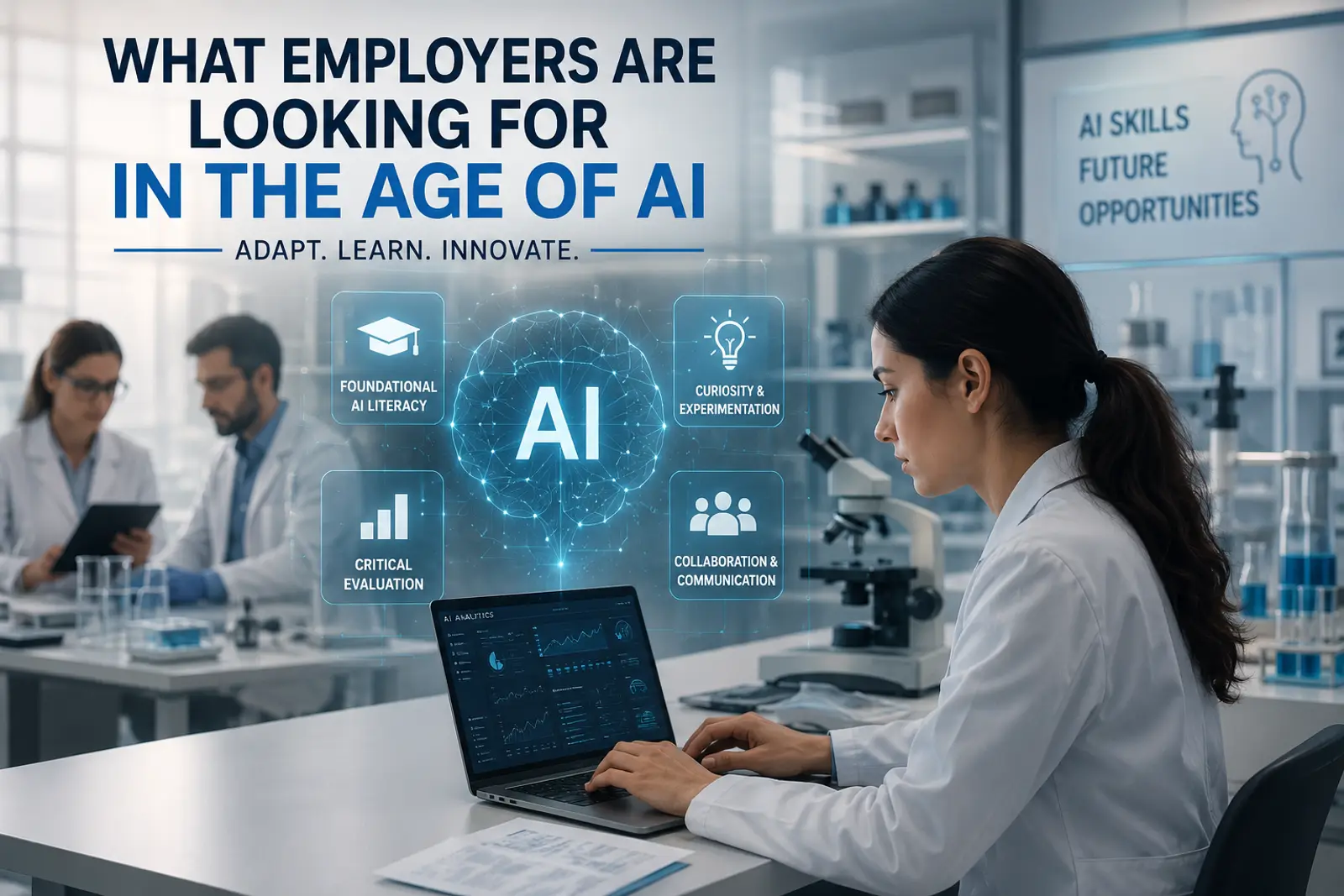
As artificial intelligence rapidly transforms professional and scientific sectors, a distinct shift is occurring in what hiring managers expect from candidates. Rather than prioritizing hyper-specialized technical certifications that risk immediate obsolescence, contemporary employers increasingly value a fundamental willingness to engage with machine learning tools. This transition redefines baseline scientific literacy for the digital age, directly shaping how research institutions evaluate incoming talent and how academic programs prepare future innovators.
Rising Demand for Artificial Intelligence Competency in US Science Roles
Recent market data compiled by the employment platform Indeed highlights a striking divergence in the hiring landscape. Across the United States, science positions listing artificial intelligence as a required competency are climbing sharply, even as overall science hiring contracts. This trend demonstrates that technological literacy is no longer confined to computer science departments. Institutional leaders note that foundational familiarity with machine learning and high-throughput screening has become an essential baseline expectation across specialized disciplines. For instance, Daniel Figeys, chief executive of the UK-based Quadram Institute, emphasizes that food science and gut biology heavily rely on complex data analysis. In such environments, possessing no familiarity with these digital tools serves as a clear professional red flag during recruitment evaluations.
Shifting Educational Approaches at the Massachusetts Institute of Technology
To bridge the widening gap between traditional academic training and modern workplace demands, educational institutions are redesigning their curricula. Computer scientist Regina Barzilay spearheads a specialized instructional program at the Massachusetts Institute of Technology designed to equip scientists with practical artificial intelligence skills. Barzilay compares mastering basic machine learning proficiency to learning fundamental culinary principles, noting that individuals do not need to construct complex algorithms from scratch to benefit from them safely and effectively. Much like using a personal computer requires no deep engineering background, modern researchers are expected to interpret and apply algorithmic outputs rather than build underlying architectures.
Moving Beyond Rigid Software Gatekeeping and Tool Requirements
Recruiters across research hubs emphasize that intellectual curiosity, practical experimentation, and the ability to verify technological outputs matter far more than rigid software gatekeeping. Because the technological landscape evolves at an extraordinary pace, strict requirements for specific software platforms quickly become obsolete. Experts advise professionals to integrate machine learning into daily workflows cautiously, suggesting methods such as prompting large language models for initial drafts while meticulously inspecting the resulting mechanics. However, researchers warn against proposing overly sophisticated automated projects without verifiable competency, trusting chatbot outputs blindly, or attempting to master the entire discipline simultaneously.
Future Uncertainties and Institutional Curriculum Integration
Despite these emerging hiring trends, significant uncertainties remain regarding how long foundational curiosity will remain sufficient before employers demand standardized credentials. Furthermore, economists and researchers continue to evaluate the long-term net impact of generative automation integration on the total volume of entry-level research positions. Moving forward, observers are closely watching how universities incorporate practical digital competencies into core degree requirements and how global job markets react to shifting automation demands across scientific industries.