As global climate discussions intensified in early September 2026, scientific analysis and tangible policy developments laid bare the urgent necessity of treating methane emissions as an immediate, distinct emergency. While carbon dioxide reduction remains the backbone of long-term climate strategies, recent research published in Communications Earth & Environment demonstrates that relying solely on unified carbon-equivalent metrics obscures methane's staggering near-term warming impact [1]. Without dedicated and stringent methane cuts, peak global temperatures will surpass 1.85°C above pre-industrial levels, even if the world successfully achieves ambitious net-zero carbon dioxide targets [1]. Concurrently, high-profile interventions in Central Asia and catastrophic ecological disasters in the Himalayas have underscored both the feasibility of rapid emission mitigation and the devastating human cost of failing to act swiftly [3, 5].
Flaws in Carbon Equivalent Metrics and the Case for Decoupling Methane Strategy
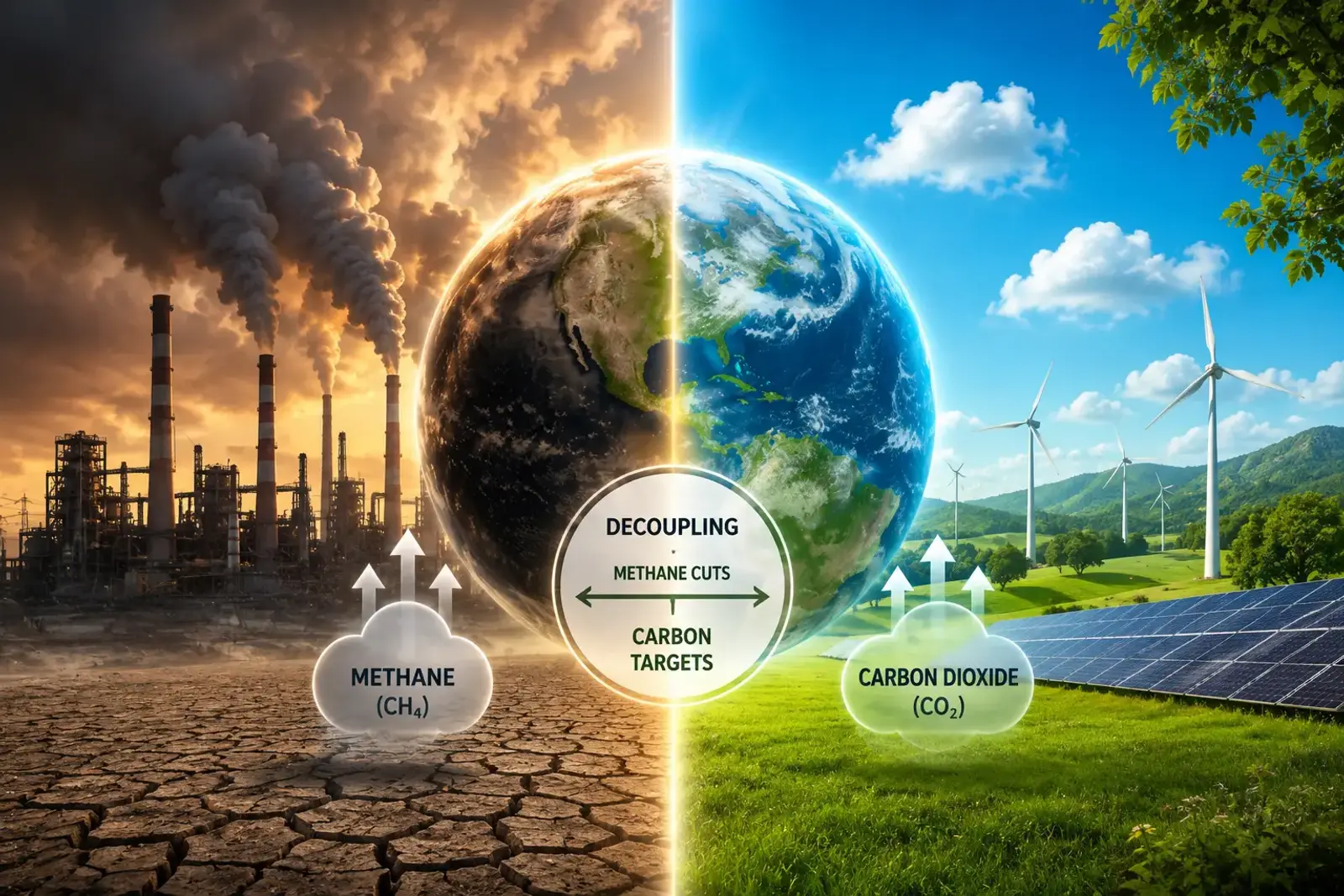
Traditional climate modelling and national net-zero pledges frequently bundle greenhouse gases into a single category known as carbon dioxide equivalent [1]. This standard practice relies on conversion metrics such as GWP100 or GWP20 to equate the warming potency of gases with drastically different atmospheric lifespans [1]. Methane traps heat in the atmosphere far more efficiently than carbon dioxide, though it breaks down within a few decades rather than lingering for centuries [1, 5]. By combining these gases, standard accounting can mask the unique challenges and opportunities presented by short-lived climate pollutants [1].
Researchers arguing for a paradigm shift suggest decoupling carbon dioxide and methane reduction frameworks, using temperature limits as the direct starting point for necessary interventions [1]. When climate models account for methane independently, the data reveals that ambitious carbon dioxide reductions alone are insufficient to safeguard the global climate system [1]. Failing to target methane directly guarantees that peak warming will exceed 1.85°C, jeopardising international agreements designed to hold global temperature increases well below 2°C [1]. Consequently, policymakers face mounting pressure to reform national accounting methods so that short-term methane mitigation runs parallel to long-term decarbonisation [1].
Turkmenistan Begins Fixing Super-Emitter Leaks Following United Nations Alerts
While academic models debate accounting nuances, practical proof that rapid methane mitigation is achievable has emerged from one of the world's most challenging jurisdictions [5]. Recent United Nations data reveals that Turkmenistan has begun plugging massive methane mega-leaks originating from its ageing oil and gas extraction infrastructure [5]. The secretive and authoritarian government engaged with foreign partners following intense international scrutiny, including satellite alerts distributed by the UN Methane Alert and Response System [5]. A single super-emitter leak—spewing tonnes of natural gas per hour from a faulty valve or corroded pipeline—can warm the planet more than the emissions generated by an entire coal-fired power station or a million sport utility vehicles [5].
By repairing corroded pipes, addressing failing flares, and fixing faulty wells, Turkmen authorities have successfully halted several prominent leaks [5]. United Nations officials have hailed this intervention as an encouraging first step, noting that because methane has a short atmospheric lifespan, plugging leaks acts as an immediate climate emergency brake [5]. Nevertheless, experts caution that this progress highlights stark contrasts with other major fossil fuel producers that have ignored similar satellite warnings, leaving the long-term compliance and responsiveness of international actors uncertain [5].
Himalayan Catastrophe Highlights the Devastating Human Toll of Warming Landscapes
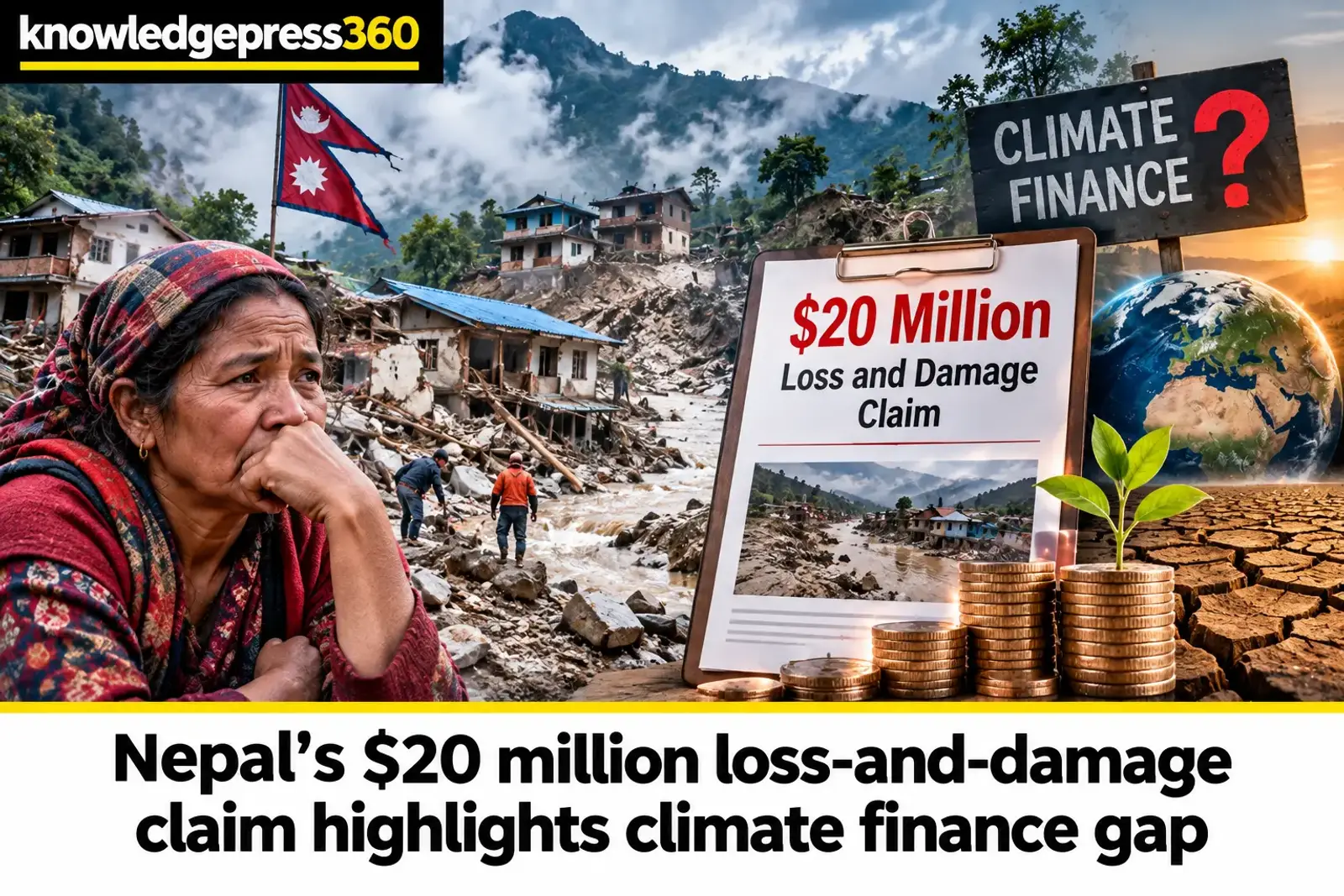
Dramatising the catastrophic stakes of unmitigated global heating, extreme climate impacts struck Asia in late August and early September 2026 with terrifying force [3]. A massive rock and ice avalanche on the north face of the Langtang Himal in Nepal triggered a 4.4-magnitude earthquake, sending a destructive wall of debris downstream at unprecedented speed [3]. The resulting floods and landslides devastated northern Nepal and neighbouring Tibet, leaving over 1,000 people dead, thousands missing, and extensive destruction inflicted upon local infrastructure, including more than forty bridges and a dozen hydroelectric power plants [3].
Scientists attribute the underlying vulnerability of the region to accelerated glacial retreat and the continuous thawing of high-altitude permafrost driven by rising global temperatures [3]. Local communities and environmental advocates have condemned the inaction of polluting nations and fossil fuel industries, framing the disaster as a direct consequence of systemic climate neglect [3]. While emergency rescue teams worked tirelessly to assist thousands of survivors, the disaster underscored the profound limits of adaptation in fragile mountain ecosystems facing compounding climate pressures [3].
Synchronised Mitigation Milestones and the Road Ahead for Global Climate Policy
Looking forward, the dual imperatives of academic modelling and ground-level interventions point toward a clear set of milestones for international climate governance [1, 3, 5]. As nations prepare for upcoming diplomatic summits, the central challenge will be translating the scientific imperative for decoupled methane reductions into binding national commitments [1]. The willingness of nations to adopt strict regulatory frameworks for fossil fuel infrastructure, agriculture, and waste management will determine whether the international community can avoid breaching the critical 1.85°C peak warming threshold [1, 5]. Moving forward, closing the implementation gap between satellite-based detection systems like Mars and domestic enforcement mechanisms will remain the ultimate test of global climate resolve [5].