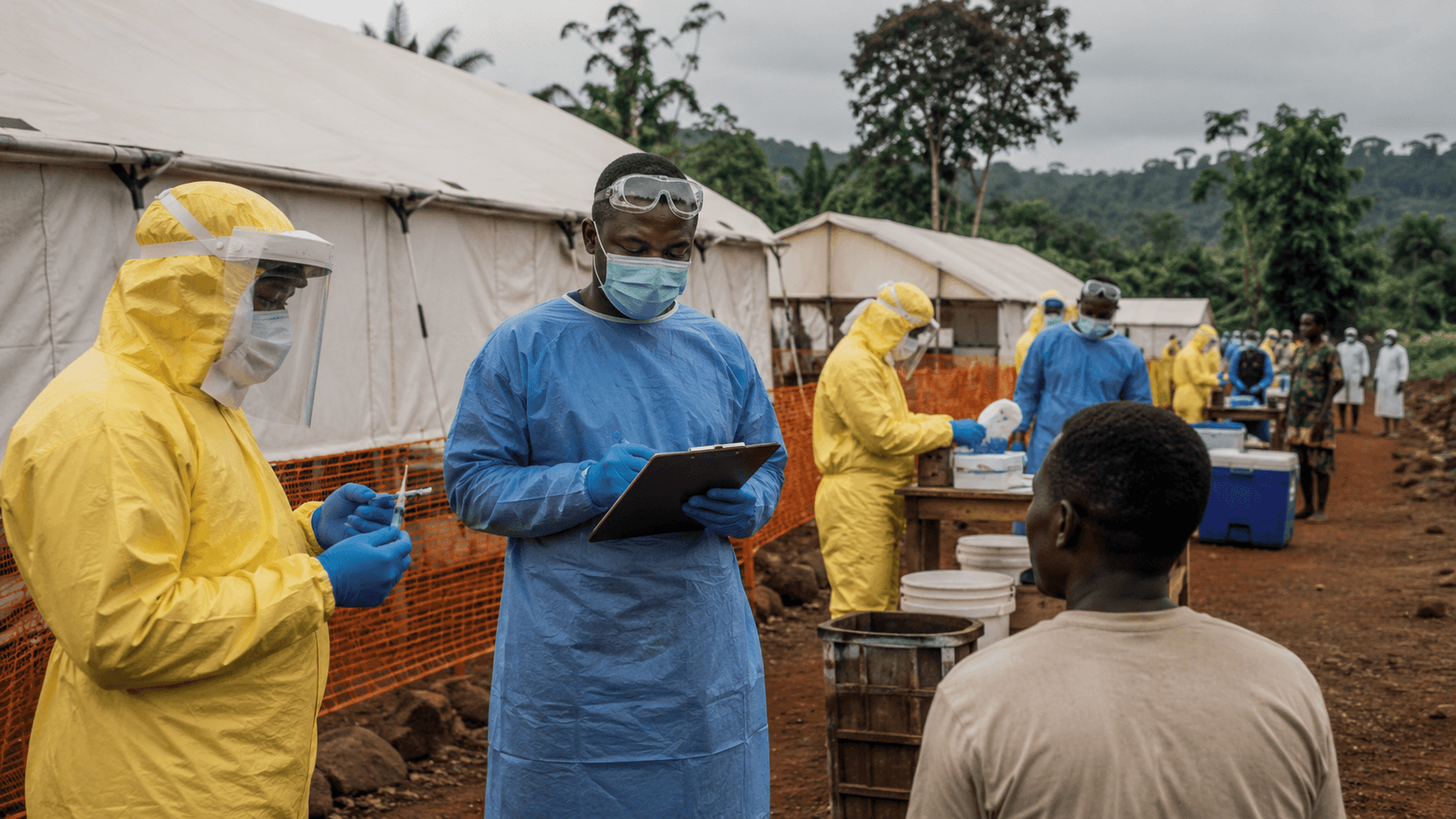
A rapidly expanding crisis in Central Africa
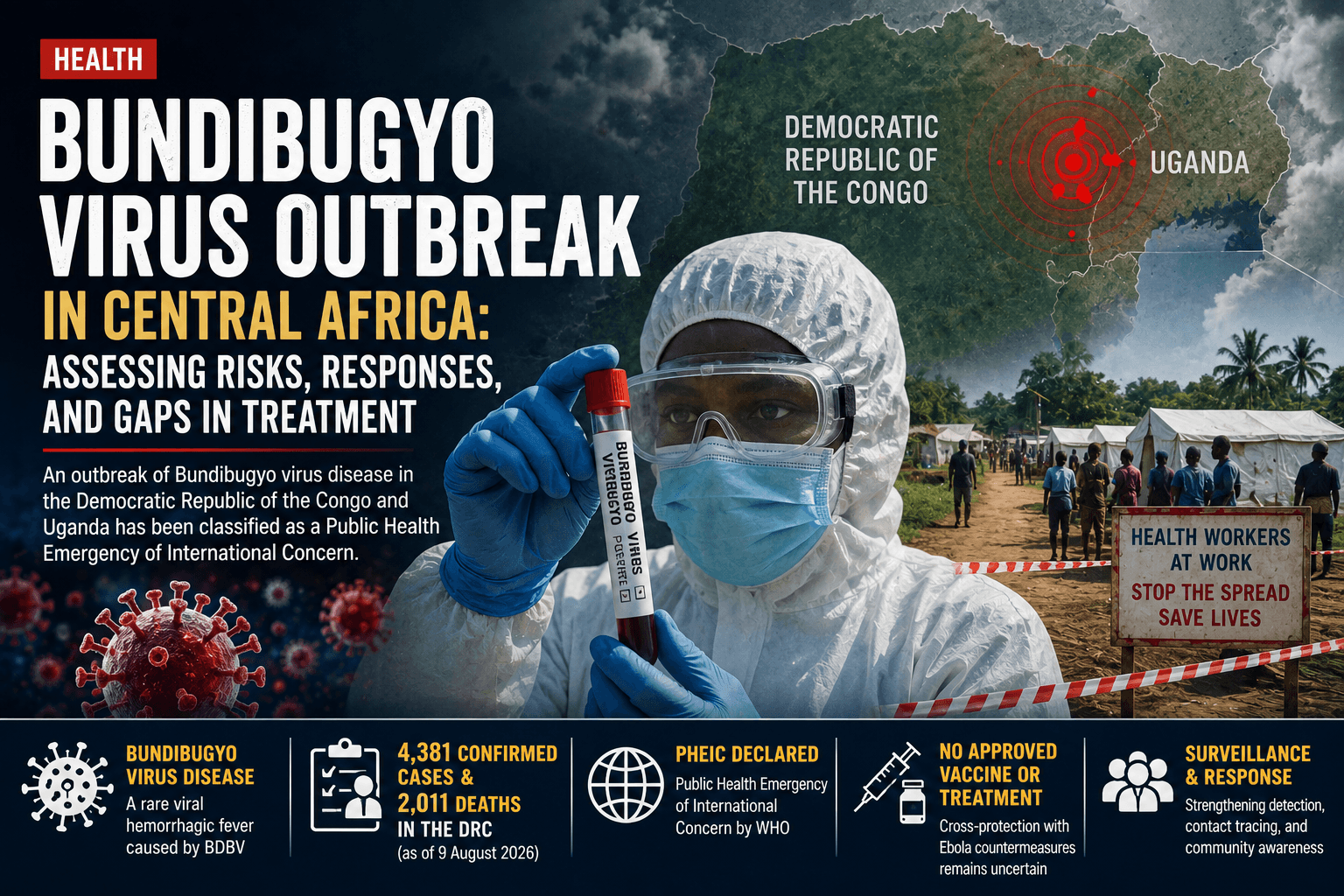
A major public health crisis is unfolding across Central Africa as an outbreak of Bundibugyo virus disease (BVD)—a rare viral hemorrhagic fever caused by the Bundibugyo virus (BDBV)—expands across the Democratic Republic of the Congo (DRC) and neighboring Uganda. Originally declared by the DRC on May 15, 2026, following laboratory confirmations in Ituri Province, the outbreak has escalated substantially. As of 9 August 2026, WHO reported 4,381 confirmed cases and 2,011 confirmed deaths in the DRC, while cases linked to the outbreak have also been detected in Uganda. In response to the escalating epidemiological threat, the World Health Organization classified the outbreak as a Public Health Emergency of International Concern.
This outbreak demands urgent international attention because Bundibugyo virus represents one of the less common species of orthoebolaviruses, with only two prior documented occurrences globally—in Uganda in 2007 and the DRC in 2012. Crucially, there are currently no fully approved therapeutics or licensed vaccines specifically tailored to treat or prevent BVD. While countermeasures exist for the closely related Ebola virus, their cross-protection efficacy against BDBV remains uncertain. Recent scientific investigations, including preclinical evaluations published by the National Institutes of Health regarding cross-reactive antibodies in vaccinated animal models, highlight ongoing efforts to determine whether existing heterologous rVSV-based vaccines can elicit cross-protective humoral immune responses.
Epidemiological surveillance and cross-border dynamics
The outbreak has expanded significantly since its initial detection, with more than 4,000 confirmed cases and over 2,000 deaths reported in the DRC by 9 August 2026, alongside outbreak-linked cases identified in Uganda. The case fatality ratio and the true burden of disease remain subjects of ongoing evaluation. Remote communities in Ituri Province lack robust reporting infrastructure, and local traditional practices may obscure transmission chains that evade formal surveillance networks.
Cross-border movement further complicates containment efforts. The outbreak's proximity to high-volume transit corridors linking the DRC with Uganda, South Sudan, and the broader region has prompted public health interventions. The U.S. Centers for Disease Control and Prevention (CDC) has introduced travel restrictions, enhanced entry screening and 21-day health-monitoring measures for certain travellers arriving from the DRC, Uganda and South Sudan, reflecting concerns about cross-border transmission risk. Regional health ministries are also intensifying border monitoring, active contact tracing, and community engagement campaigns to prevent further dissemination. Nevertheless, population movements and informal transit routes pose ongoing challenges to containing regional spread.