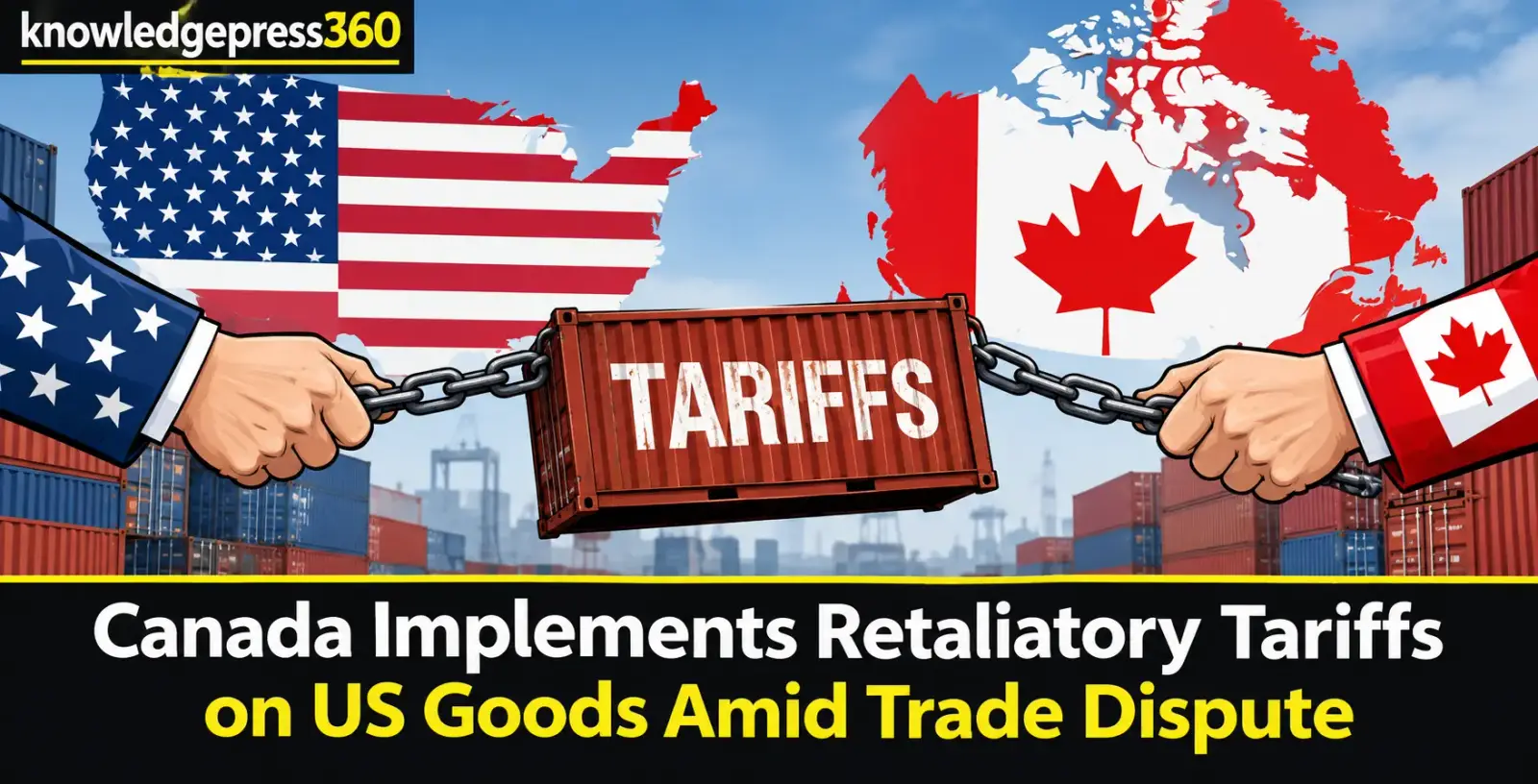
The economic relationship between Washington and Ottawa has deteriorated sharply as Canada implements a wave of retaliatory tariffs targeting billions of dollars in American merchandise. This decisive financial counter-measure marks a critical escalation in an ongoing bilateral trade conflict, raising urgent questions about the stability of North American supply chains, industrial manufacturing, and diplomatic ties between the two neighboring nations. As consumer prices and operational overheads come under scrutiny, both governments face mounting pressure to navigate an increasingly turbulent commercial landscape.
Implementation of Dollar-for-Dollar Counter-Measures Across Seven Hundred Product Categories
Canada's retaliatory tariffs officially took effect at 12:01 AM on Tuesday, introducing sweeping levies that range from 15% to 50% on American imports. These counter-measures cover roughly $20bn to $28bn in US merchandise across approximately 700 product categories. The federal administration in Ottawa structured these tariffs to match Washington's earlier duties dollar-for-dollar, directly penalizing key industrial and consumer sectors in response to the 50% tariffs imposed on Canadian goods by US President Donald Trump's administration on August 22. Affected product lines span critical industrial materials such as steel and aluminum, agricultural equipment, household appliances, electronics, dairy, and various everyday essentials.
Prime Minister Mark Carney defended the implementation of these defensive economic barriers as an unavoidable necessity to protect Canadian workers, families, and businesses following the sudden breakdown of bilateral trade negotiations in Washington. The collapse of talks occurred after friction regarding trade terms, leaving both administrations entrenched in opposing positions. While major Canadian enterprises attempt to absorb the immediate logistical shock, small and medium-sized business owners face difficult choices regarding rising input costs, supply chain adjustments, and potential pricing shifts for domestic buyers.
Broadening Economic Friction and Aerospace Threats Targeting Bombardier
The bilateral trade dispute has rapidly expanded beyond traditional tariff exchanges into broader economic and diplomatic friction. On the eve of Ottawa implementing its counter-measures, President Trump escalated tensions by threatening to block sales of Canadian aerospace manufacturer Bombardier's aircraft within the United States. The proposed restriction carries a caveat requiring the Quebec-based plane maker to relocate its manufacturing operations stateside to maintain market access. Leadership at Bombardier pushed back against the ultimatum, emphasizing that the company supports tens of thousands of specialized jobs and sustains thousands of American supplier businesses across dozens of states.
In addition to aerospace pressures, the diplomatic atmosphere has been strained by a series of symbolic gestures and cultural disagreements. President Trump signed an executive order intended to federally rename Lake Ontario as Lake America, a move promptly dismissed by Canadian officials and the public alike. Additional points of contention include long-standing disputes concerning French language protections and cultural rights within Quebec. Business advocacy groups, including the Canadian Federation of Independent Business, have voiced profound apprehension that small and medium-sized enterprises risk becoming vulnerable collateral damage as the macro-economic standoff deepens.
Economic Uncertainties and Long-Term Vulnerabilities for Small Businesses
Significant uncertainties loom over the long-term economic toll this prolonged trade dispute will exact on both national economies. Economic analysts generally project that American importers and ultimate consumers will absorb the vast majority of the tariff burdens through higher retail prices and increased overhead costs. However, Canadian smaller enterprises face severe logistical hurdles and tightening profit margins that could threaten regional employment figures. To mitigate these domestic risks, the Canadian government has pledged support packages aimed at helping vulnerable commercial operators navigate the turbulent transition period.
Observers are monitoring whether further retaliatory escalation will materialize in upcoming weeks or if diplomatic channels can be salvaged. The adaptability of deeply integrated automotive and manufacturing supply chains remains a primary concern for industry leaders on both sides of the border. While Prime Minister Carney retains robust domestic political support for standing firm against Washington's protectionist stance, the sustained economic drag threatens to strain municipal and provincial economies if a negotiated resolution remains out of reach.
Outlook for Renewed Diplomatic Negotiations and Market Adaptability
Looking ahead, the primary milestone for market participants and trade analysts will be observing whether political pressures can force a return to serious diplomatic negotiations between Washington and Ottawa. With the new tariff regime now fully operational, upcoming quarterly economic data releases will provide crucial insight into how effectively North American supply chains are absorbing the added costs. Policymakers in both capitals must soon decide whether to pursue de-escalation strategies or risk embedding these punitive trade barriers into the long-term bilateral framework, making the coming weeks a decisive turning point for continental commerce.