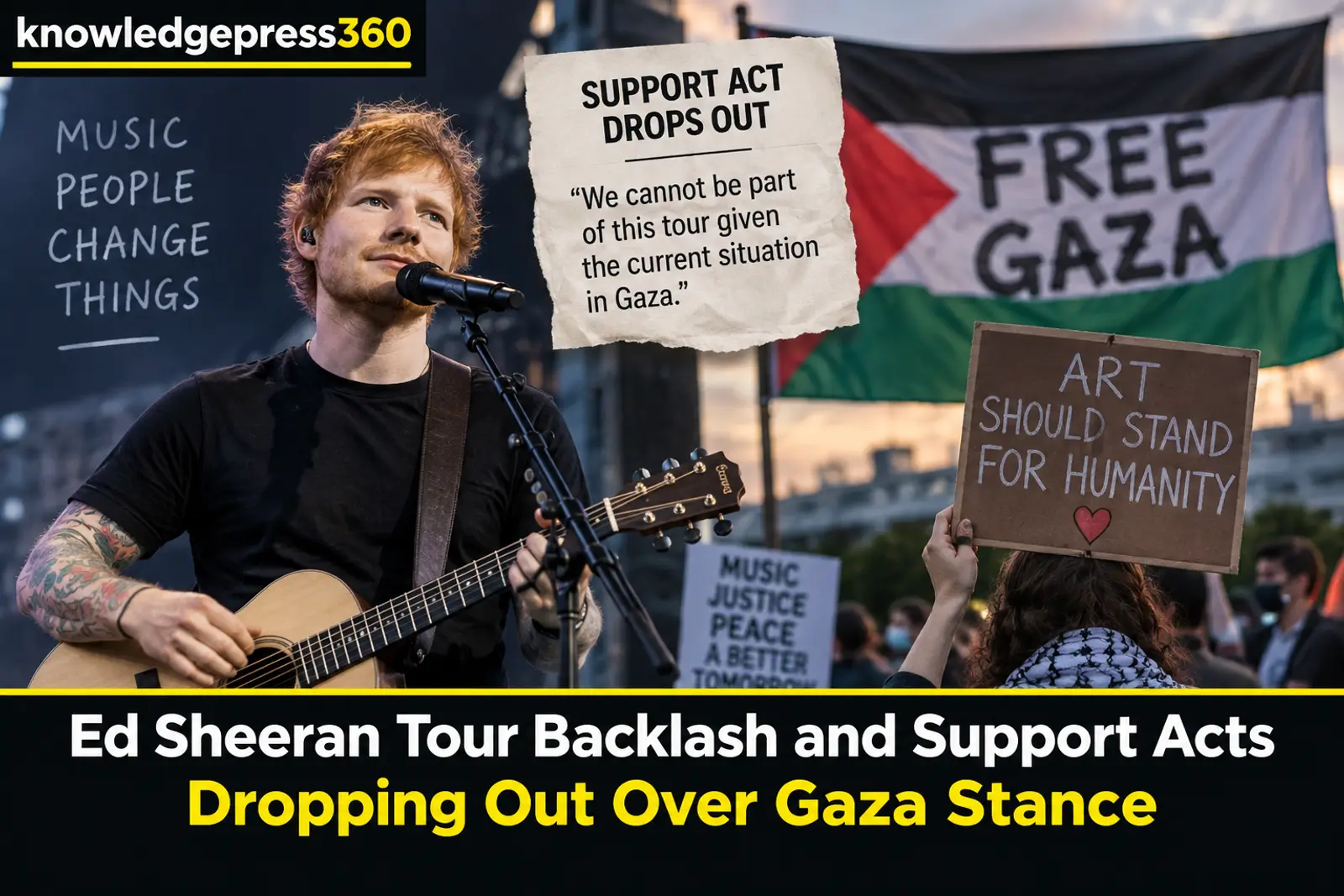
Ed Sheeran’s high-profile North American stadium tour has descended into profound turmoil following the abrupt removal of opening rapper Macklemore and the subsequent withdrawal of every remaining support act in solidarity. The cultural firestorm erupted after Macklemore took the stage at MetLife Stadium in New Jersey on September 4 and 5, using his allocated performance time to deliver pro-Palestinian remarks and perform his track "Hind’s Hall," a song that criticizes the censorship of demonstrations surrounding the Israel-Hamas conflict. Shortly after these performances concluded, tour promoters and several major stadium venues intervened. Venue owners asserted that the manner of the rapper's political advocacy had crossed corporate and contractual boundaries, triggering an industry clash over free expression on live entertainment stages. This escalating controversy matters deeply because it lays bare the intense ideological polarization confronting modern live music, where artists, corporate venue owners, and concert promoters find themselves locked in disputes over geopolitical neutrality, censorship, and the responsibilities of global celebrities.
Macklemore Ejected Over Gaza Remarks
The immediate catalyst for the widespread tour crisis was the direct ejection of Macklemore from the remaining U.S. stadium dates. Following his performances at MetLife Stadium, multiple venues informed tour organizers that they would refuse to host upcoming concerts if the rapper remained on the bill. New England Patriots billionaire Robert Kraft, who owns Gillette Stadium near Boston, publicly confirmed that he personally barred Macklemore from performing at his venue. Kraft defended the decision by stating that while individuals possess the right to advocate for various causes, passionate political messaging on a commercial stage should not obscure the actions and responsibility of Hamas. Promoters ultimately acted on these venue ultimatums, removing Macklemore from his contractual opening slot. This corporate intervention mobilized activist groups and cultural commentators, igniting a public debate over whether venue operators should possess the authority to censor politically charged artistic expression.
Support Acts Quit In Protest
The removal of the rapper triggered a swift and decisive domino effect across the entire tour roster, as every remaining support act abandoned the schedule in strict protest. Artists including Finneas, Danish pop band Lukas Graham, singer-songwriter Aaron Rowe, and Sheeran’s Irish backing band, Beoga, announced their immediate departure from the remaining dates. These supporting musicians cited deep opposition to the censorship of Macklemore and expressed solidarity with the Palestinian people. Their collective walkout left the headline performer facing a depleted touring lineup and logistical pressure. Commentators and industry analysts noted that this mass departure transformed a localized dispute into an industry-wide crisis, signaling that supporting musicians are willing to sacrifice major commercial opportunities to take a public stand on contentious geopolitical issues.
Sheeran Defends Apolitical Stage Policy
Faced with public criticism, Ed Sheeran issued a public statement seeking to distance himself from the venue-driven decision while defending his apolitical concert philosophy. Sheeran clarified that dropping Macklemore was executed entirely by promoters and venue management rather than by his own volition. He emphasized his commitment to keeping his concerts free of partisan messaging, describing the live music environment as a place of safety, sanctuary, and open dialogue. Despite these clarifications, Sheeran's stance met with public condemnation from cultural figures, online commentators, and fellow artists. Critics argued that choosing neutrality and silence during an active humanitarian catastrophe is untenable. Observers also pointed out perceived contradictions between Sheeran's current insistence on strict apoliticism and his past participation in benefit concerts, though corporate supporters defended venue boundaries against divisive platforming.
Industry Repercussions And Future Touring
As the tour attempts to navigate its altered landscape, industry observers are closely monitoring the long-term fallout for live entertainment logistics. The exact extent of behind-the-scenes coordination among various stadium owners in implementing these bans remains ambiguous, leaving open questions about future venue policies. Furthermore, the long-term financial and reputational repercussions for major touring acts facing similar ideological divides are yet to be fully realized. This controversy serves as a warning for the live music sector, illustrating how rapidly geopolitical conflicts can destabilize commercial tours and force artists, promoters, and venue operators into direct confrontations over freedom of speech, corporate control, and moral accountability.