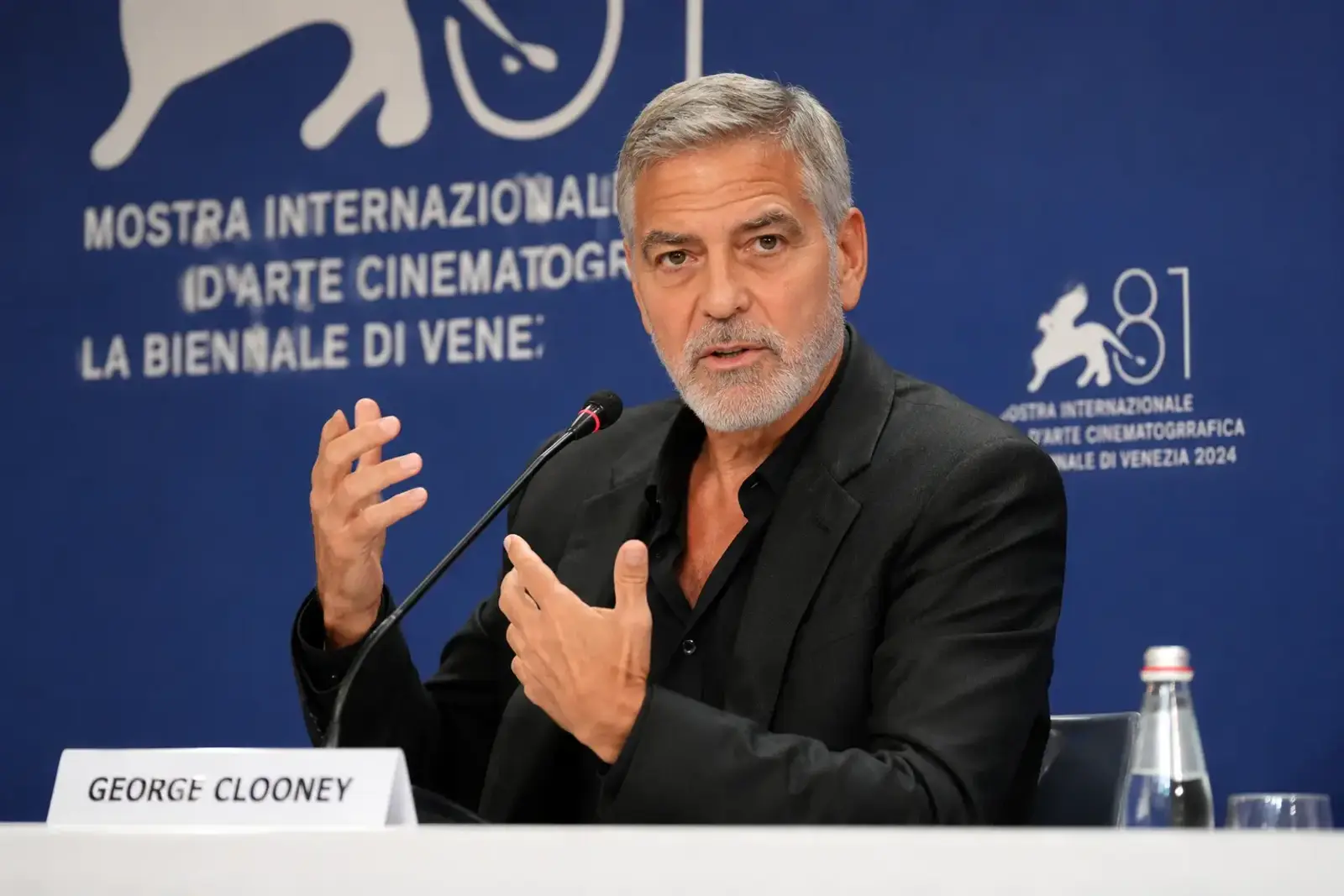
During the opening ceremony of the Venice Film Festival, actor, director, and producer George Clooney used his acceptance speech for the Golden Lion for Lifetime Achievement to deliver a critique of political authoritarians. As cultural institutions worldwide face pressures from shifting political landscapes and corporate consolidation, Clooney's remarks offer a reminder of the role that art and journalism play in challenging state and corporate overreach. His address resonated far beyond the festival palazzo, sparking conversations about the protection of creative freedom and the resilience of democratic discourse in an era marked by rising populism and media concentration.
Acceptance Speech Warning Against Authoritarians at the Venice Film Festival
Reflecting upon a 45-year career in the entertainment industry during the September 2026 festival, Clooney accepted the prestigious Golden Lion with characteristic self-deprecation before pivoting to sociopolitical commentary. He asserted that contemporary political and financial elites actively exploit fear to divide society, drawing a line between modern populist strategies and historical patterns of authoritarian control. According to the filmmaker, the primary targets of any authoritarian regime are never mainstream politicians; instead, repressive forces systematically move to silence independent journalists, probing writers, and artists who refuse to offer simplistic answers.
Clooney maintained that while cinematic works cannot single-handedly halt military conflicts, reduce inflation rates, or alter election outcomes, they remain indispensable cultural instruments. By cultivating empathy, films remind audiences that total strangers possess shared human experiences and vulnerabilities. He stated that stories are inherently dangerous to individuals who peddle in fear, noting that those who attempt to ban books, suppress music, and censor cinema have never occupied the heroic side of history.
Public Defense of Mark Ruffalo Amid Paramount and Warner Bros Discovery Merger Backlash
Beyond his reflections on global politics, Clooney used his platform in Venice to address industry controversies, specifically offering a public defense of fellow actor Mark Ruffalo. Ruffalo found himself at the center of a public storm after launching social media attacks against the proposed $111 billion Paramount acquisition of Warner Bros Discovery. The actor criticized the merger over potential job losses and corporate consolidation, while also targeting the business ties of the Ellison family, whose scion David Ellison serves as Paramount chief executive, pointing to Oracle connections with the Israeli military following the 7 October Hamas attack.
These online statements triggered a backlash from Paramount executives and critics who accused Ruffalo of invoking antisemitic tropes. Ruffalo steadfastly rejected these accusations, maintaining his criticism of the corporate deal and Oracle's business associations. In the wake of the dispute, over 170 Jewish artists, academics, and public figures rallied behind the actor by signing an open letter warning against attempts to silence critics. Speaking to reporters ahead of his award ceremony, Clooney explicitly defended Ruffalo's right to speak freely, describing him as a good man while echoing broader industry anxieties regarding job security and corporate media monopolies.
Industry Concerns Regarding Corporate Consolidation and Technological Integration
Clooney's commentary in Venice shed light on structural anxieties currently gripping Hollywood, transcending the immediate fallout from the Paramount and Warner Bros Discovery negotiations. The actor voiced skepticism regarding the wave of corporate mergers, warning that swallowing up competing studios inevitably leads to widespread job insecurity and diminishes creative diversity. When major conglomerates control larger shares of production and distribution, the commercial pressures placed on storytellers tend to stifle unconventional voices and independent filmmaking.
Compounding these financial and organizational concerns is the disruptive integration of advanced technologies across the entertainment sector. While studios turn to algorithmic tools and digital systems to streamline production and cut costs, creative professionals worry about the devaluation of human artistry and copyright protections. The ultimate regulatory feasibility of media megamergers, alongside the long-term impact of artificial intelligence integration, remains uncertain, leaving industry unions and guild members to navigate an unstable working environment.
Future Regulatory Hurdles and Creative Resilience in the Global Film Industry
As the dust settles on the Venice Film Festival, the entertainment sector faces a critical juncture regarding antitrust scrutiny, artistic expression, and technological adaptation. Regulatory bodies across multiple jurisdictions will soon decide whether mega-acquisitions like the Paramount-Warner Bros Discovery deal comply with competition laws, a process that will set precedents for future media consolidation. At the same time, cultural figures and trade unions must establish frameworks to protect creative freedom and secure fair compensation against the backdrop of advancing automation.
Clooney's prominent stance in Venice serves as a rallying cry for artists navigating these turbulent currents. By connecting the defense of free speech to the broader struggle against corporate homogenization and political authoritarianism, the discourse within the global film community has shifted toward collective accountability. Whether industry leaders heed these warnings as regulatory decisions approach will determine the future independence and cultural integrity of cinema for generations to come.