The intersection of global politics and international entertainment has reached another critical juncture as public broadcasters grapple with the human cost of armed conflicts. When cultural institutions attempt to project an image of continental unity, deep geopolitical divides often expose structural fractures within these beloved traditions. This tension has once again placed the spotlight on one of the world's most-watched musical spectacles, challenging organisers to defend the core values of neutrality and inclusivity against a backdrop of devastating humanitarian crises.
Ireland Refuses 2027 Eurovision Participation
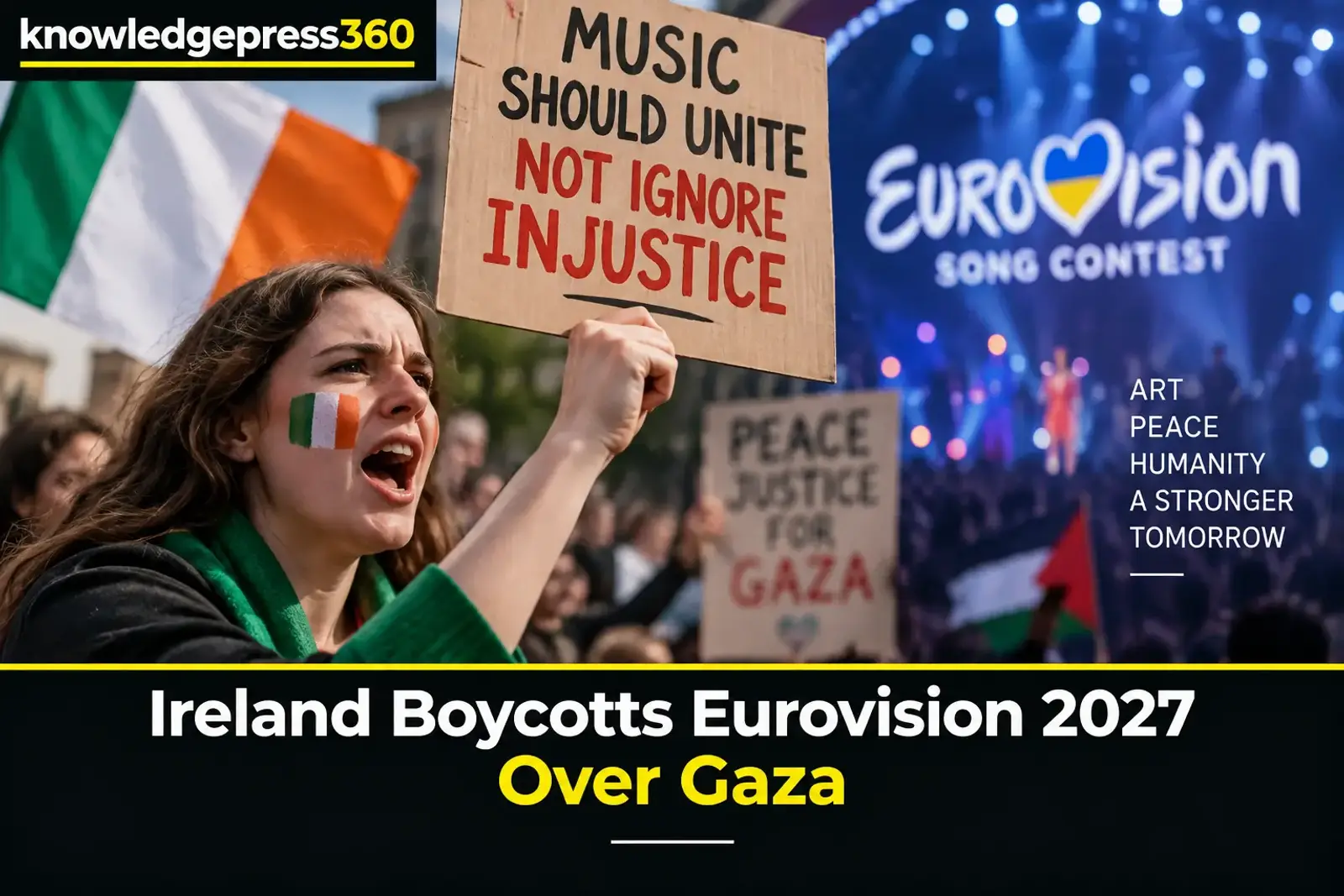
Ireland will skip the Eurovision Song Contest for the second consecutive year and refuse to broadcast the event, national broadcaster Raidió Teilifís Éireann announced on Thursday, September 17, 2026. The decision stems from what the broadcaster termed the appalling and ongoing loss of civilian lives in Gaza, alongside an escalating humanitarian crisis that continues to threaten vulnerable populations. In an official statement, the Dublin-based organisation stressed that Irish participation remains entirely unjustifiable under current conditions.
Beyond the immediate humanitarian devastation, RTÉ highlighted severe misgivings regarding press freedom inside the Palestinian territory. The broadcaster noted that the continued denial of independent access for international journalists seeking to report from the region forms a central pillar of its refusal to engage. This decisive stance cements a second successive year of Irish absence, following a turbulent 2026 season where Ireland joined forces with Iceland, the Netherlands, Slovenia, and Spain to boycott the competition over Israel's ongoing involvement.
Growing Broadcaster Boycott Wave
The deepening crisis for event organisers extends beyond the Irish withdrawal, marked by coordinated actions from fellow European public service networks. Dutch broadcaster AVROTROS announced its own boycott in August 2026, explicitly criticising the contest's claimed neutrality. AVROTROS argued that the musical competition can no longer be viewed as an unbiased platform while a participating nation remains deeply embroiled in a large-scale military conflict. These successive departures threaten to isolate the European Broadcasting Union further as it struggles to maintain member solidarity.
The 2027 edition of the contest is scheduled to take place in Burgas, Bulgaria, following the nation's historic victory in May 2026. Semifinals are currently planned for May, culminating in the grand final at Arena Burgas on May 15, 2027. Yet, the mounting pressure from national networks casts a long shadow over the preparations. Eurovision director Martin Green expressed deep regret over the Irish decision while affirming that network organisers respect the broadcaster's autonomy and hope to maintain an open dialogue for future reconciliation.
EBU Policy Pressures And Unresolved Questions
In an effort to quell mounting dissatisfaction, the European Broadcasting Union has introduced various regulatory adjustments, including trimmed online and telephone voting limits per individual. Furthermore, organisers recently instituted a policy rendering broadcasters ineligible to host the competition if their respective state is involved in an active armed conflict or a sensitive geopolitical situation. Despite these administrative maneuvers, critics argue that the measures fail to address the core ethical dilemmas raised by boycotting nations.
Uncertainties persist regarding how the European Broadcasting Union will enforce or modify its host eligibility rules moving forward, as well as whether additional public broadcasters across the continent will join the widening boycott wave. While dialogue remains open with various Dutch media organisations in hopes of securing alternative representation from the Netherlands, the long-term integrity of the pan-European song contest faces an unprecedented test of cultural diplomacy.