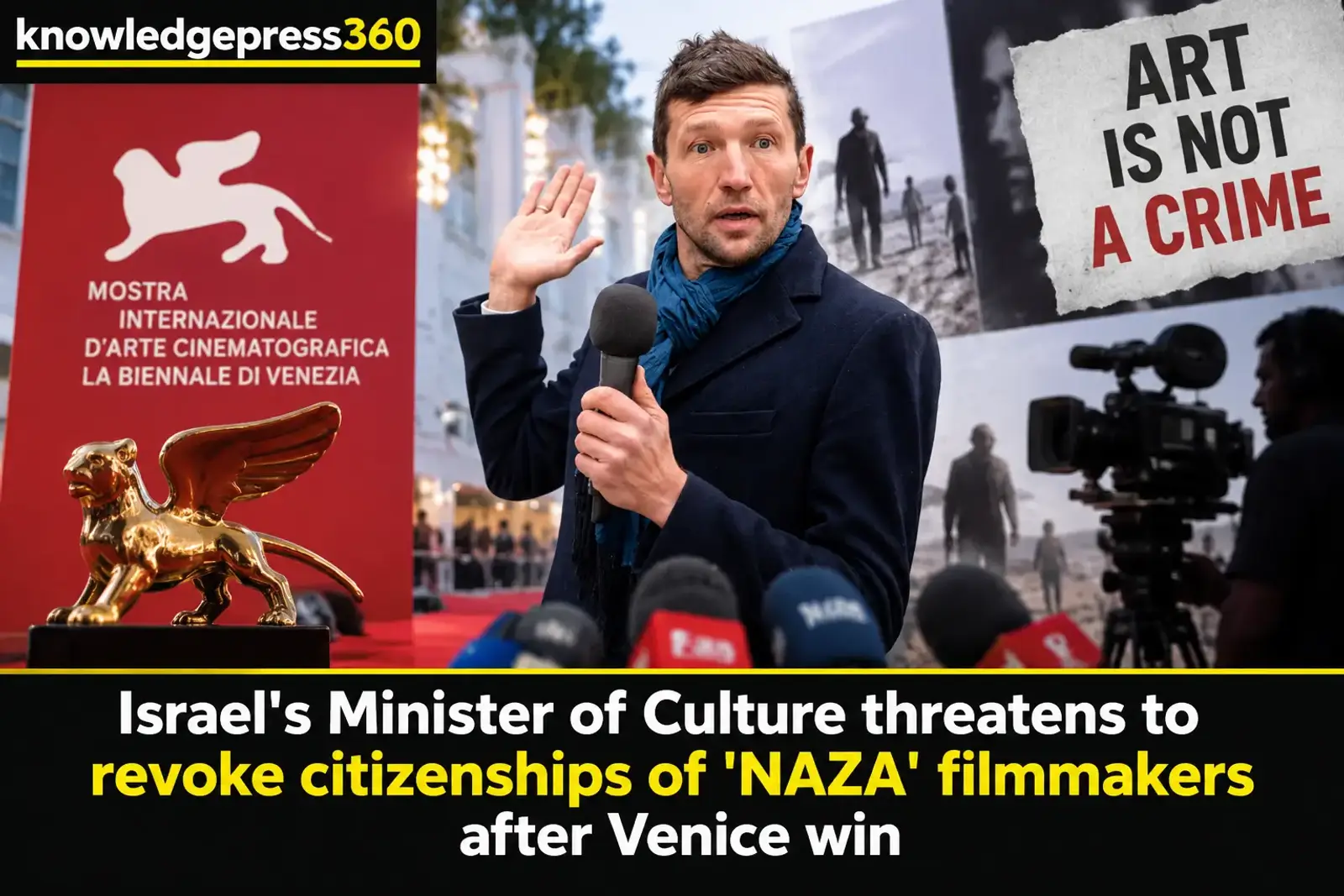
The intersection of art, politics, and state security has entered a volatile new phase following sweeping condemnation from Israeli officialdom directed at a newly acclaimed documentary. Israel's Minister of Culture, Miki Zohar, has publicly threatened to pursue the immediate revocation of Israeli citizenship for co-directors Yuval Abraham and Rachel Szor. This drastic political maneuver follows their feature-length documentary film securing the Special Jury Prize at the 83rd Venice International Film Festival, where it debuted to extraordinary international attention and a lengthy standing ovation. The escalating dispute underscores profound societal fractures regarding artistic freedom, wartime accountability, and the boundaries of dissent within democratic nations engaged in active military campaigns. By targeting the creators' national status, the controversy elevates domestic culture wars into high-stakes legal and political territory. Understanding the implications requires examining the core allegations contained within the film, the institutional reactions it has provoked, and the constitutional hurdles facing ministerial threats of banishment. As international film communities rally behind the awarded directors, domestic authorities remain steadfast in their condemnation, setting the stage for a protracted clash over state loyalty and freedom of expression. Examining the verified developments reveals how deeply cinematic depictions of military strategy can rattle the highest echelons of government.
Venice Triumph Sparked Ministerial Backlash
The eighty-minute documentary, titled NAZA, captured the prestigious Special Jury Prize at the 83rd Venice International Film Festival after receiving a remarkable standing ovation from festival attendees. Directed by Yuval Abraham and Rachel Szor—both of whom previously contributed to the acclaimed documentary No Other Land—the film focuses sharply on military systems and targeting mechanisms utilised by the Israel Defense Forces in the Gaza Strip. The title itself derives from a military acronym referring to expected civilian casualties in an airstrike. The production relies extensively on testimony from twenty-four anonymously interviewed military and intelligence insiders. These concealed sources discuss complex surveillance architectures, artificial intelligence applications, and acceptable civilian casualty limits associated with modern warfare. Following the international screening and subsequent award announcement, cultural and political figures in Israel reacted with swift indignation. Minister of Culture Miki Zohar publicly condemned the project as vile, characterising the work as an act of treason and self-loathing designed to appease international critics. Alongside Zohar, other prominent right-wing politicians launched blistering attacks against the co-directors. In response to the backlash, Abraham argued during his acceptance speech that denying uncomfortable realities only allows crimes to persist, asserting that citizens and international audiences alike must confront difficult truths regarding military actions and foreign funding.
Military Rejection and Anonymous Testimony
The central controversy surrounding the documentary hinges upon its reliance on anonymous insider accounts and the severe nature of its allegations regarding targeting protocols. The Israel Defense Forces categorically rejected the claims presented in NAZA, issuing statements that criticised the film's reliance on unverified, anonymous sources. Military officials maintained that strike decisions are invariably made by human personnel rather than automated systems, pushing back against the chilling narrative constructed by the twenty-four interviewed insiders. According to the documentary's subjects, surveillance and telecommunications data are integrated to identify potential targets, with some interviews claiming high-level authorisation could be granted for operations anticipating significant civilian collateral to eliminate a single high-value adversary. These contrasting positions highlight a deep chasm between official military doctrine and the critical perspective offered by whistleblowers within the security apparatus. While international critics and festival juries praised the investigative courage required to bring such testimonies to light, domestic authorities viewed the project as a deliberate assault on national morale during a time of conflict. This fundamental disagreement over the veracity and intent behind the film fuels ongoing debates regarding wartime censorship and the ethical responsibilities of documentary filmmakers covering active combat zones.
Legal Hurdles Facing Citizenship Revocation
While Minister Zohar announced immediate plans to strip Abraham and Szor of their Israeli citizenship, constitutional realities present substantial obstacles to executing such a threat. Under established Israeli law, citizenship revocation for disloyalty is a complex legal process that cannot be enacted unilaterally by a cabinet minister. Instead, any formal move to deprive an individual of citizenship requires strict judicial oversight, comprehensive legal proceedings, and authorisation from other senior government officials and courts. Legal experts note that unilateral ministerial decrees lack the binding authority to bypass established statutory safeguards protecting basic civic rights. Consequently, uncertainties persist regarding whether formal legal avenues for citizenship revocation will ever be initiated or successfully withstand judicial review in the Supreme Court. Furthermore, the broader ramifications for state funding and institutional support for Israeli cinema remain precarious as cultural institutions navigate increasing political pressure. The standoff tests the resilience of domestic legal frameworks against politically charged demands for retribution, creating an unpredictable environment for filmmakers daring to challenge state policies.
Future Milestones for Cinema and State
As the dust settles on the Venice Film Festival, several critical developments will determine the trajectory of this unprecedented cultural dispute. Observers are closely watching for any formal legislative or administrative actions initiated by Israeli authorities regarding the threatened citizenship proceedings. Additionally, responses from international film institutions, human rights organisations, and global funding bodies will play a pivotal role in shaping how filmmakers navigate political hostility abroad. The wider commercial distribution and public reception of NAZA across international markets will also test whether global acclaim translates into sustained protection for documentary artists tackling sensitive geopolitical subjects. Ultimately, the outcome of this clash will serve as a defining precedent for artistic independence, government oversight, and the legal protections afforded to dissenting voices within democratic societies facing prolonged security crises.