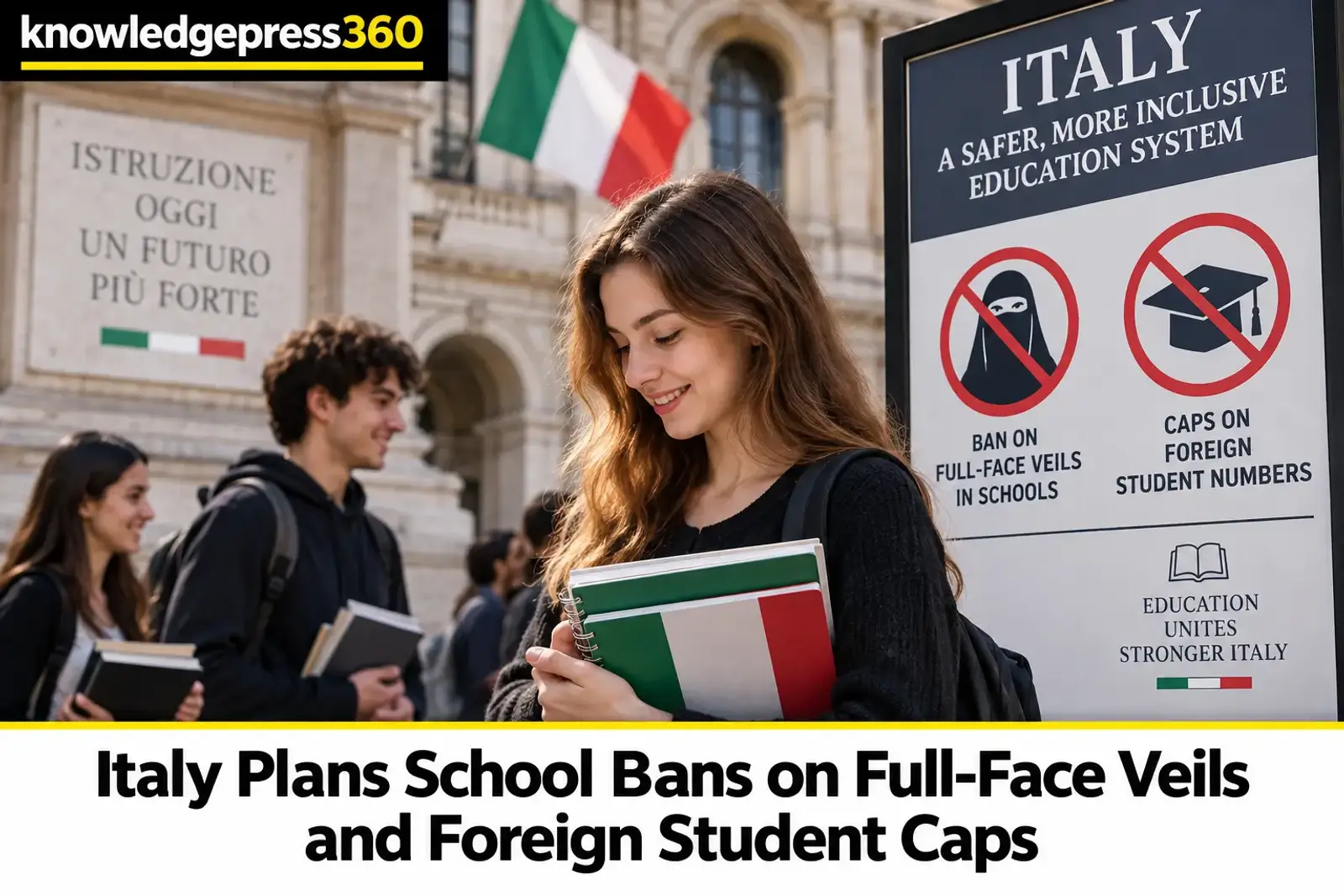
Italian Prime Minister Giorgia Meloni has unveiled a sweeping legislative package designed to reshape educational integration standards across the country [3, 4, 5]. Speaking in Rome before the youth wing of the Brothers of Italy party, the prime minister outlined aggressive proposals that include strict prohibitions against wearing full-face coverings within educational facilities [3, 4, 5]. The initiative touches upon deeply sensitive European debates surrounding immigration, national identity, and public religious symbols, positioning the government firmly on the conservative side of cultural policy as political alignments shift ahead of the 2027 general elections [3, 4, 5]. By targeting specific garments and introducing mandatory parental language requirements, the executive branch aims to address perceived shortcomings in the current assimilation framework [3, 4, 5]. This development matters because it signals a major tightening of state oversight in public institutions, drawing immediate praise from nationalist supporters alongside sharp criticism from civil rights advocates who question the implications for personal freedoms and religious expression [4]. The proposed legislation arrives at a time when policymakers across the continent grapple with how best to manage diverse demographic shifts without fracturing social cohesion [4].
Veils Banned and Classroom Caps Proposed
The core of the newly announced policy centers on three distinct yet interconnected measures aimed at schools and colleges throughout Italy [3, 4, 5]. Prime Minister Meloni detailed plans to legally prohibit both burqas and niqabs on school grounds, specifically distinguishing these full-face coverings from traditional headscarves such as the hijab, which leave the wearer's face entirely visible [3, 4]. Alongside the garment restrictions, the government intends to establish formal numerical caps on foreign-born students within individual classrooms [3, 4, 5]. Proponents argue that high concentrations of non-native speakers in a single room hinder rapid language acquisition and impede effective teaching [5]. According to data provided by the research group Fondazione ISMU, non-Italian citizens currently comprise approximately 11.6 percent of the total student population in Italian schools [5]. Officials suggest that limiting enrollment numbers per class will prevent what the administration characterizes as systemic neglect of linguistic development, ensuring that teachers can adequately support every child [5]. Furthermore, the legislative framework mandates that parents of foreign students who experience severe integration difficulties must attend Italian language classes themselves [3, 4, 5]. This requirement is intended to bridge the communication gap between immigrant households and the broader educational community, fostering an environment where families are actively encouraged to engage with local culture and language standards [3, 4, 5].
Constitutional Hurdles and Legislative Process
While the announcement has energized the ruling party base, the path from proposal to statute involves stringent legal and procedural hurdles [3, 4, 5]. Under the Italian legislative mechanism, the proposed measures must first secure formal clearance from the Council of Ministers before being submitted to parliament [3, 4]. Once officially introduced, lawmakers face a compressed sixty-day window to debate, amend, and approve the package for it to become binding law [3, 4]. This accelerated timeline reflects the administration's urgency in demonstrating decisive action on immigration management [4]. However, the plan faces significant uncertainties, particularly regarding potential constitutional challenges and necessary legislative amendments [4]. Legal scholars and opposition politicians have raised questions about how the strict ban on face veils interacts with constitutional protections for religious freedom and personal expression [4]. Additionally, the government has not yet clarified the exact numerical thresholds that will govern the classroom caps for foreign students, leaving educational administrators uncertain about how the policy will be implemented on the ground [5]. Critics argue that vague parameters could lead to administrative chaos and arbitrary enforcement across different regions, while supporters maintain that definitive limits are essential for restoring order and academic focus in crowded urban classrooms [4, 5].
Upcoming Cabinet Review and Political Stakes
As the national debate intensifies, attention now shifts to the formal presentation of the bill before the Italian Cabinet [3, 4, 5]. The coming weeks will determine whether the executive branch can maintain parliamentary discipline and secure the necessary votes within the mandated sixty-day legislative window [3, 4]. Observers are closely watching how coalition partners and opposition factions will position themselves ahead of the crucial 2027 general election cycle [3, 4, 5]. The legislative battle over school veils and foreign student limits is expected to serve as a bellwether for the broader political landscape in Italy, testing the limits of nationalist policymaking within a diverse European democracy [4]. The ultimate success or failure of these proposals will likely redefine the national conversation on integration for years to come, setting a precedent for how public institutions handle cultural and religious diversity [4].