Middle East geopolitical stability faces a severe test following a sharp escalation of hostilities that combines territorial expansion in vital maritime corridors with critical infrastructure attacks. The dual shocks threaten global energy markets and compound an already severe humanitarian emergency in the region. As militant forces consolidate positions along critical trade arteries and key oil export routes remain paralyzed, international observers warn of cascading economic and security consequences. Understanding the full scope of these developments requires examining both the territorial shifts in the Red Sea and the physical damage inflicted upon major petroleum transit facilities.
Houthi Forces Seize Red Sea Islands
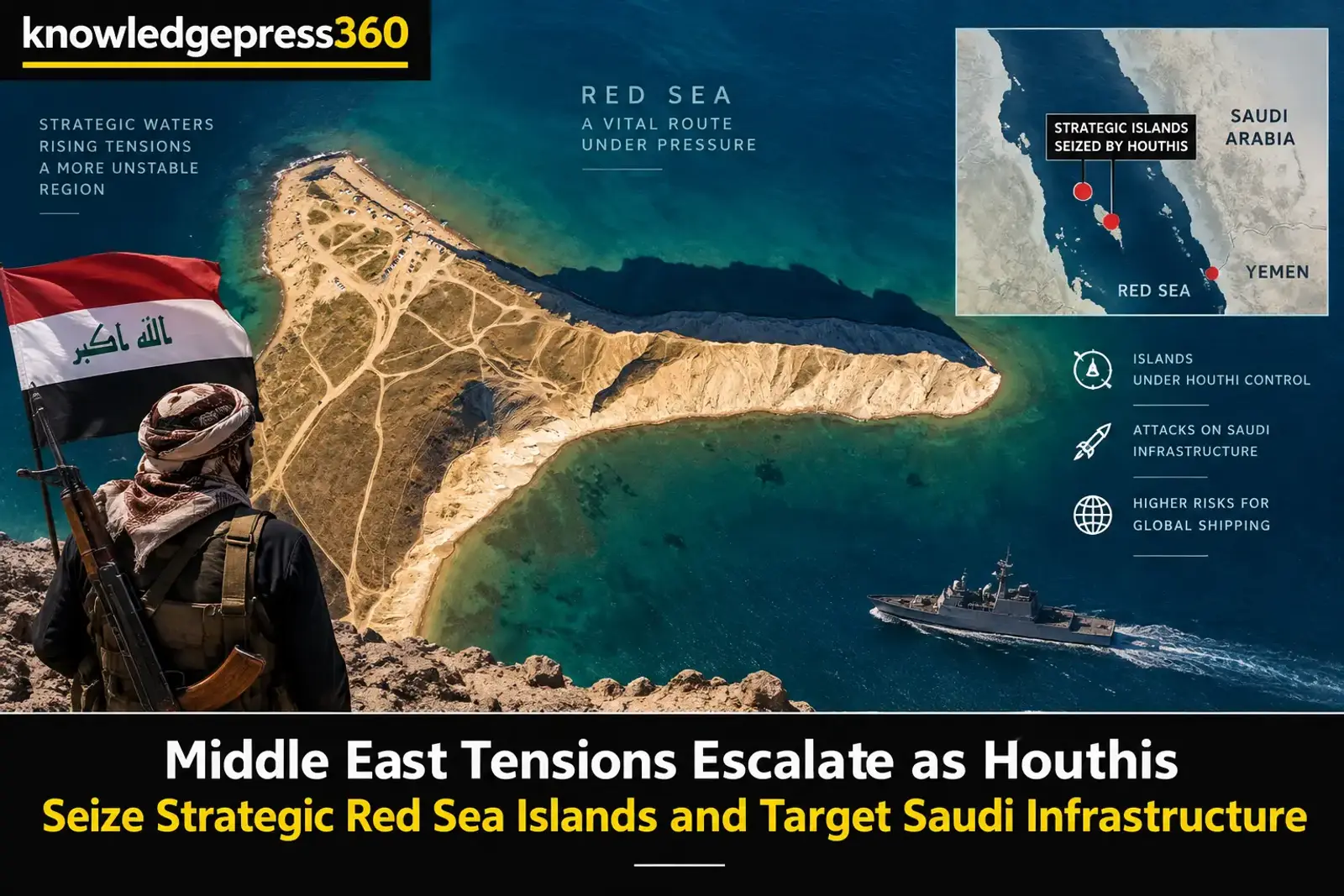
Yemen's Houthi movement has intensified its territorial campaign by capturing the strategic Greater Hanish and Lesser Hanish islands in the Red Sea. This aggressive expansion follows earlier advances that brought the port of Mokha and Perim island under militant control, effectively cementing dominance over Yemen's entire coastline along this crucial maritime passage. The newly occupied archipelago sits approximately 160 kilometres north of the Bab al-Mandab strait, a vital global chokepoint handling roughly 12 percent of worldwide trade and 11 percent of maritime oil. Furthermore, these positions place the group roughly 32 kilometres from foreign military installations stationed in Djibouti across the water, raising immediate strategic concerns for international defense planners monitoring regional security dynamics.
Drone Strikes Cripple Saudi Pipeline
Compounding the maritime crisis, new satellite imagery reveals extensive damage and heavy scorching at a pumping station along Saudi Arabia's critical East-West oil pipeline. The facility was targeted by drone strikes, prompting an immediate shutdown of the conduit that has remained offline since Friday. Prior to the attack, this pipeline played a vital role in global energy logistics by transporting approximately 4 million barrels of crude oil daily across the kingdom to the Red Sea export hub of Yanbu, successfully bypassing the heavily restricted Strait of Hormuz. Industry analysts indicate that if repair operations fail to restore functionality swiftly, Saudi Arabia could exhaust its readily available export stocks within days, risking a severe global oil supply shock.
Deepening Humanitarian Crisis in Yemen
The military escalation has triggered an acute humanitarian catastrophe inside Yemen, compounding the economic fallout felt worldwide. According to data released by the International Organization for Migration, nearly 94,000 people have fled their homes this month alone due to intense fighting between Houthi forces and government troops. Local infrastructure has buckled under the strain, with humanitarian organizations reporting that roughly 200 schools have been repurposed as emergency shelters in the south-western regions to accommodate displaced families. Additionally, more than 2,000 refugees have risked dangerous sea crossings to reach Djibouti, where local reception facilities struggle to provide adequate food and water to the sudden influx of arrivals.
Global Shipping and Supply Chain Fallout
International commercial shipping lines continue to navigate a complex operational landscape as the security paradigm shifts across the Red Sea. Although Houthi leadership maintains that commercial vessels outside Saudi-linked operations face no threats, maritime operators remain deeply skeptical and continue rerouting cargo vessels around Africa's Cape of Good Hope. This precautionary measure introduces significant delays and drives up global freight costs, placing additional strain on supply chains already fractured by concurrent conflicts. Market watchers are closely monitoring diplomatic channels and repair timelines at the damaged Saudi facility to gauge whether the current energy crunch will deepen into a prolonged global shortage.