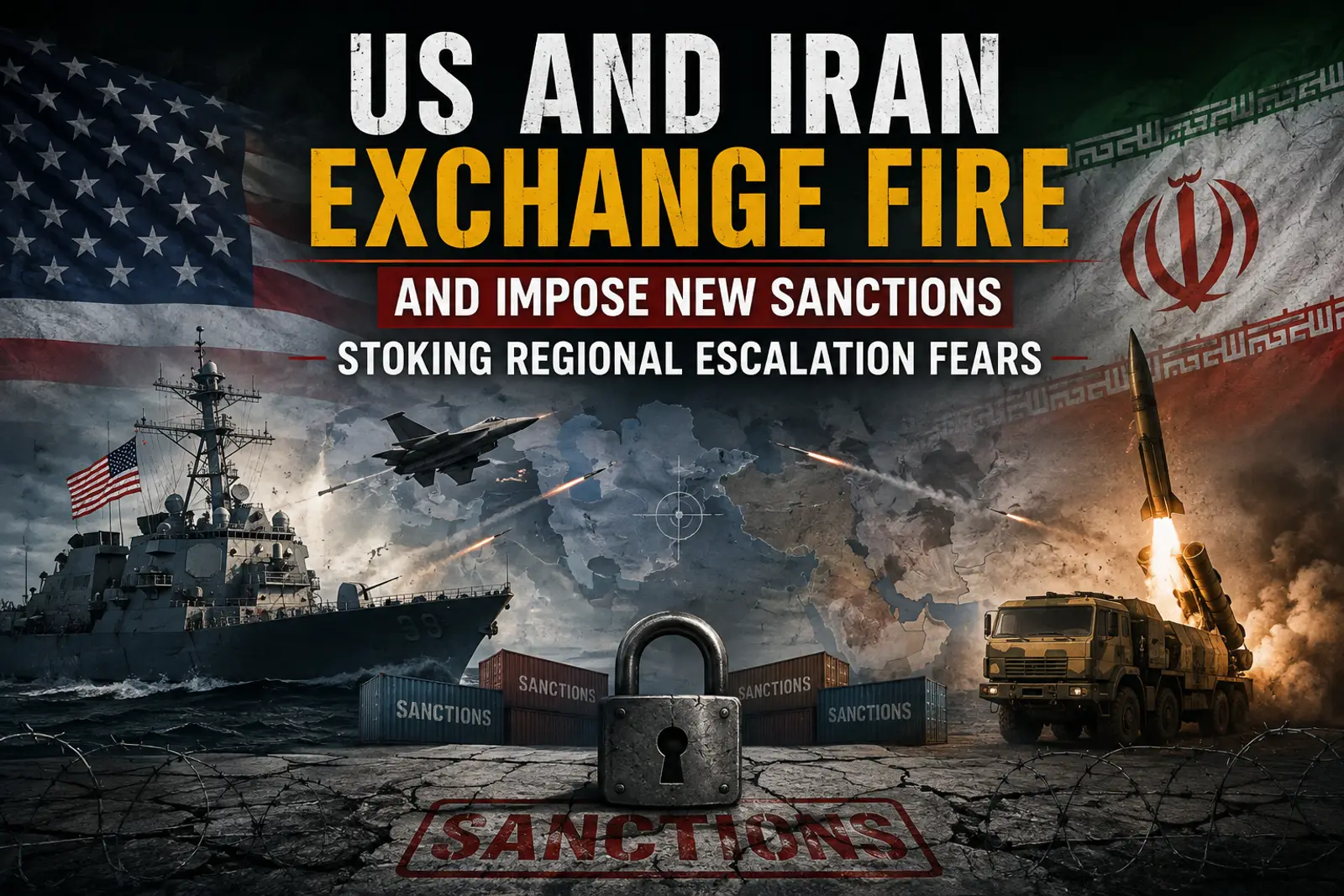
The expiration of a temporary sixty-day truce has given way to renewed military confrontation, as the United States and Iran exchange direct strikes for the first time in a month. This sharp deterioration in regional security shatters a tentative lull that had held since mid-August, reigniting deep international concerns over the safety of global energy transit routes and the stability of the wider Middle East. With commercial shipping already under immense strain and diplomatic channels facing severe headwinds, the latest escalation underscores the fragility of the current geopolitical landscape and highlights the urgent need to understand the mechanics and immediate fallout of this renewed conflict.
United States Central Command Strikes Larak Island Following Mine Deployment Detection
The latest cycle of violence began when United States Central Command launched precise military operations late Sunday against Iranian military assets situated on Larak Island in the Strait of Hormuz. According to military briefings, these operations targeted rocket launchers and radar installations after intelligence detected active preparations by Iranian forces to deploy fresh naval mines within the vital waterway. Washington maintained that the action was necessary to protect international shipping lanes and loosen Tehran's control over maritime traffic. This deployment detection shattered weeks of relative quiet and immediately provoked retaliatory measures from the Iranian military apparatus, demonstrating how quickly fragile ceasefires can dissolve when underlying territorial and economic grievances remain unresolved.
Islamic Revolutionary Guard Corps Targets Airbases in Jordan with Ballistic Missiles
In direct retaliation for the United States strikes on Larak Island, the Islamic Revolutionary Guard Corps launched a wave of ballistic missiles targeting foreign military installations across the region. The strikes specifically focused on the United States-operated King Hussein and Al-Azraq airbases in Jordan, causing substantial alarm among regional governments. Jordanian armed forces confirmed that their air defense systems successfully intercepted eight incoming missiles that penetrated the national airspace. Meanwhile, the United Arab Emirates defense ministry reported tracking and intercepting a separate drone over its territorial waters. The international benchmark for petroleum, Brent crude, reacted swiftly to these developments, climbing past ninety-one dollars a barrel as markets priced in the renewed threat of a protracted energy crisis.
Global Energy Markets and Shipping Lanes React to Renewed Hostilities
The immediate economic fallout of the exchange was felt across international markets, with Brent crude rising more than one percent to trade above ninety-one dollars a barrel, extending gains from the previous trading session. This upward pressure on energy prices reflects acute anxieties regarding the security of the Strait of Hormuz, a critical maritime chokepoint that historically handles approximately one-fifth of global seaborne energy supplies. Shipping monitoring platforms noted a measurable decline in transit volumes, dropping from one hundred and twenty-one to one hundred and seven transits during the final week of August. Compounding these challenges, many commercial vessels continue to traverse the perilous waters with their Automatic Identification System transponders turned off, operating entirely dark to evade potential interception or projectile fire.
Persistent Uncertainties Surrounding Damage Assessments and Retaliation Plans
Despite the severity of the weekend exchanges, significant questions remain unanswered regarding the true extent of the damage sustained at the Jordanian airbases and whether any military personnel suffered casualties during the missile barrages. Furthermore, statements from United States leadership vowing a response have created deep uncertainty about whether Washington will escalate its military campaign or pursue further kinetic strikes. While Iranian state media offered conflicting accounts regarding the initial sequence of events involving naval mines, diplomats continue to weigh whether regional mediation efforts can bridge the profound gaps dividing Washington and Tehran.
Monitoring Future Shipping Metrics and Diplomatic Backchannels in the Strait
As the region navigates this dangerous juncture, observers will closely monitor upcoming maritime traffic statistics, fluctuations in dark vessel transits through the Strait of Hormuz, and any signs of movement in backchannel diplomatic talks mediated by regional actors. Whether international intermediaries can successfully revive paused memorandums of understanding or persuade Washington to adjust its strict blockade on Iranian oil exports remains the central question for avoiding a wider multi-nation conflagration in the weeks ahead.