Military exchanges between the United States, Iran, and aligned regional factions have escalated sharply, pushing international benchmark Brent crude oil prices back above one hundred dollars a barrel for the first time since July [2, 3, 5]. This latest surge in geopolitical hostility threatens to complicate global economic stability, putting renewed pressure on central banks striving to tame persistent inflation [2]. As maritime transit corridors face severe disruptions and regional security deteriorates, policymakers and financial markets alike are forced to reckon with the widening aperture of a conflict that has now entered its sixth month [2].
Maritime Strikes and Tanker Destruction
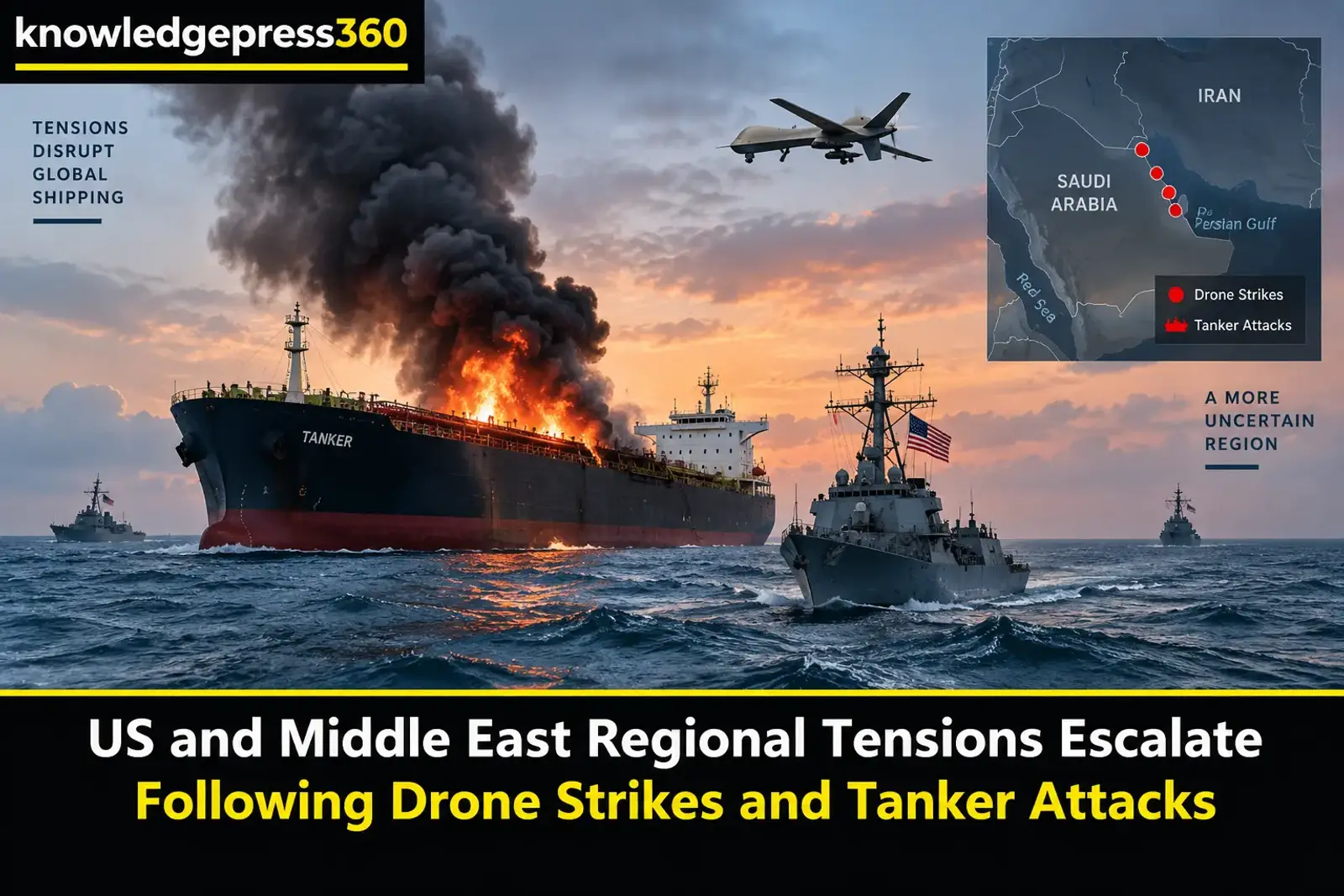
The most recent cycle of violence ignited after United States Central Command reported destroying five Iranian oil tankers, identified as the Kaviz, Charminar, Horizon 1, Riesco, and Derya [2, 5]. This military action was executed in direct retaliation for preceding missile attacks directed at a United States Navy warship operating in the region [2, 5]. In response to the sinking of its vessels, Iran's Islamic Revolutionary Guard Corps claimed responsibility for launching retaliatory missile strikes targeting the Muwaffaq Salti Air Base in Jordan [2, 5]. Jordanian armed forces confirmed that they successfully intercepted twenty incoming missiles, though two landed in unpopulated areas without causing casualties [5].
Concurrently, Yemen's Iran-aligned Houthi movement expanded the theater of operations by striking southern Saudi Arabian cities, including Khamis Mushait, Abha, Najran, and Jazan, using a barrage of drones and missiles [2, 3, 5]. According to Saudi coalition statements, these raids wounded seventy-three civilians and triggered substantial fires at vital energy installations and utility sites [2, 3]. The conflict has severely restricted maritime traffic through the Strait of Hormuz, a critical global choke point carrying roughly twenty percent of worldwide oil and liquefied natural gas shipments [2]. Furthermore, the Islamic Revolutionary Guard Corps announced controversial plans to enforce a new prohibited zone for commercial shipping extending past the strait into the Arabian Sea [5].
Conflicting Claims and Disputed Accounts
Discrepancies have emerged between official military disclosures from Washington and Tehran regarding the scope of the maritime damage [5]. While the Islamic Revolutionary Guard Corps claimed its naval forces successfully attacked two United States Navy destroyers and eight oil tankers in the Strait of Hormuz, causing heavy damage, United States Central Command explicitly dismissed these assertions as entirely false [5]. Independent verification of commercial maritime damage remains constrained, leaving analysts to parse conflicting strategic messaging while monitoring physical flows through the corridor [2, 3].
International condemnation of the escalating hostilities has been swift [3]. Turkey and the European Union strongly criticized the Houthi drone and missile offensive against Saudi Arabia, warning that such aggressive actions severely undermine diplomatic efforts to secure a lasting political settlement in Yemen [3]. Meanwhile, regional mediators such as Qatar and Oman have intensified diplomatic outreach, urging all involved parties to return to the negotiating table before maritime dangers spiral out of control and trigger broader economic fallout [2, 3].
Economic Pressures and Inflation Risks
The escalation in Middle Eastern hostilities arrived as major global economies were already navigating stubborn inflationary pressures, with the United States Personal Consumption Expenditures price index lingering comfortably above the Federal Reserve target [2]. Energy market analysts warn that sustained oil prices above one hundred dollars a barrel could severely complicate anticipated monetary easing cycles, push bond yields higher, and inflate operational costs across worldwide supply chains and technology sectors [2, 3]. Whether the oil price spike will prove durable depends heavily on the duration of maritime shipping restrictions and the success of naval escorts operating within the Persian Gulf [2, 5].
As the broader confrontation approaches its autumn milestone, market participants will closely watch whether regional diplomatic channels can deescalate tensions or if further military exchanges will entrench the energy shock [2, 3, 5].