A hidden threat to an essential service
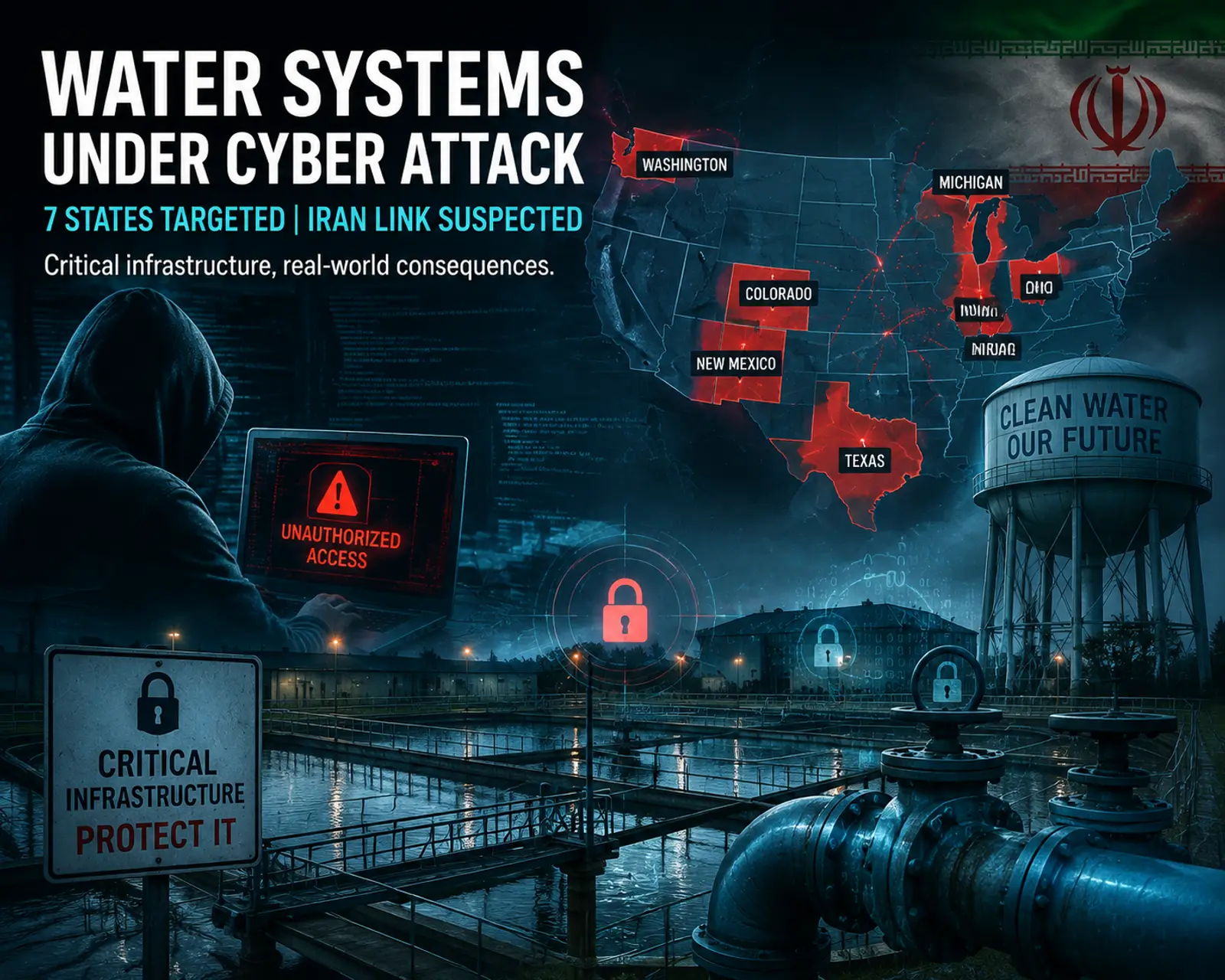
The reliability of clean water is a cornerstone of modern life, yet recent investigations reveal that this vital service has become a target for sophisticated cyber adversaries. Over the past month, water utilities in seven U.S. states reported unauthorised access to their supervisory control and data acquisition (SCADA) systems – the digital nervous system that monitors pumps, valves and chemical dosing. While the breaches have not yet caused widespread service disruption, the potential for manipulation of water quality or supply underscores a growing vulnerability in municipal infrastructure.
The pattern emerging across state lines
The states affected – Colorado, Indiana, Michigan, New Mexico, Ohio, Texas and Washington – share little in common geographically, but the technical fingerprints of the intrusions are strikingly similar. forensic analysis by the FBI and the Cybersecurity and Infrastructure Security Agency (CISA) identified identical malware families, command‑and‑control server addresses and attack timelines. The intrusion vectors largely involved phishing emails that delivered credential‑stealing tools, which were then used to log into remote access portals that many utilities still operate with legacy authentication methods.
Iranian involvement: evidence and implications
U.S. authorities have not formally assigned blame, but senior officials have hinted at a likely link to Iran’s cyber‑espionage apparatus. The rationale rests on three pillars: first, the malware variants match those previously attributed to the Iranian APT34 group; second, the command‑and‑control infrastructure is hosted in ranges historically used by Iranian actors; third, the timing of the attacks coincides with heightened diplomatic friction over nuclear negotiations, a pattern observed in earlier Iranian cyber campaigns targeting energy and transportation sectors.
While the evidence is compelling, it remains circumstantial. No public indictments have been filed, and Iran has denied involvement. Nevertheless, the attribution signals a shift in Iranian tactics toward targeting civilian infrastructure that, while less politically symbolic than power grids, can still inflict public anxiety and economic costs.
The weak points in municipal cyber defences
The attacks expose several systemic shortcomings. Many water utilities still rely on outdated operating systems and unpatched software, a legacy of budget constraints and the long life cycles of industrial control hardware. Remote access solutions, often deployed during the COVID‑19 pandemic to enable off‑site monitoring, were frequently configured without multi‑factor authentication or network segmentation, creating a single point of failure.
Training gaps also played a role. Phishing simulations suggest that a significant proportion of staff failed to recognise malicious links, allowing credential harvesters to gain footholds. In several cases, the compromised accounts belonged to senior engineers who possessed privileged access to SCADA environments, magnifying the potential impact of a breach.
Response measures and the road ahead
In the wake of the incidents, state regulators have issued emergency directives mandating immediate patching of known vulnerabilities, the deployment of network‑level firewalls for industrial protocols, and a review of remote access policies. Federal agencies are accelerating the rollout of the Cybersecurity Framework for Water Utilities, a set of best‑practice guidelines that emphasise asset inventory, continuous monitoring and incident‑response planning.
Some utilities have already taken proactive steps. A mid‑size utility in Indiana announced the migration of its SCADA network to a dedicated, air‑gapped environment, while a consortium of Texas water providers is piloting an AI‑driven anomaly detection system to flag irregular sensor readings in real time. These initiatives illustrate a broader trend toward embedding security directly into operational technology, rather than treating it as an afterthought.
Looking forward: building resilience in an uncertain landscape
The episode serves as a stark reminder that critical infrastructure is no longer insulated from geopolitical conflict. As nation‑state actors expand their toolkits, the line between espionage and sabotage blurs, and civilian services become collateral battlegrounds. Strengthening water‑system security will require sustained investment, cross‑jurisdictional collaboration and a cultural shift that prioritises cyber hygiene at every organisational level.
Future resilience will hinge on three interlocking strategies. First, modernising legacy equipment through secure, upgradable platforms will reduce the attack surface. Second, embedding robust identity‑and‑access management – including multi‑factor authentication and least‑privilege principles – will limit the damage of compromised credentials. Third, fostering a shared threat‑intel ecosystem among utilities, state agencies and federal partners will accelerate detection and response to emerging threats.
If these measures are adopted promptly, the water sector can transform a wake‑up call into a catalyst for lasting security. Until then, the silent infiltration of water‑system networks remains a potent reminder that even the most basic public service can be weaponised in the digital age.