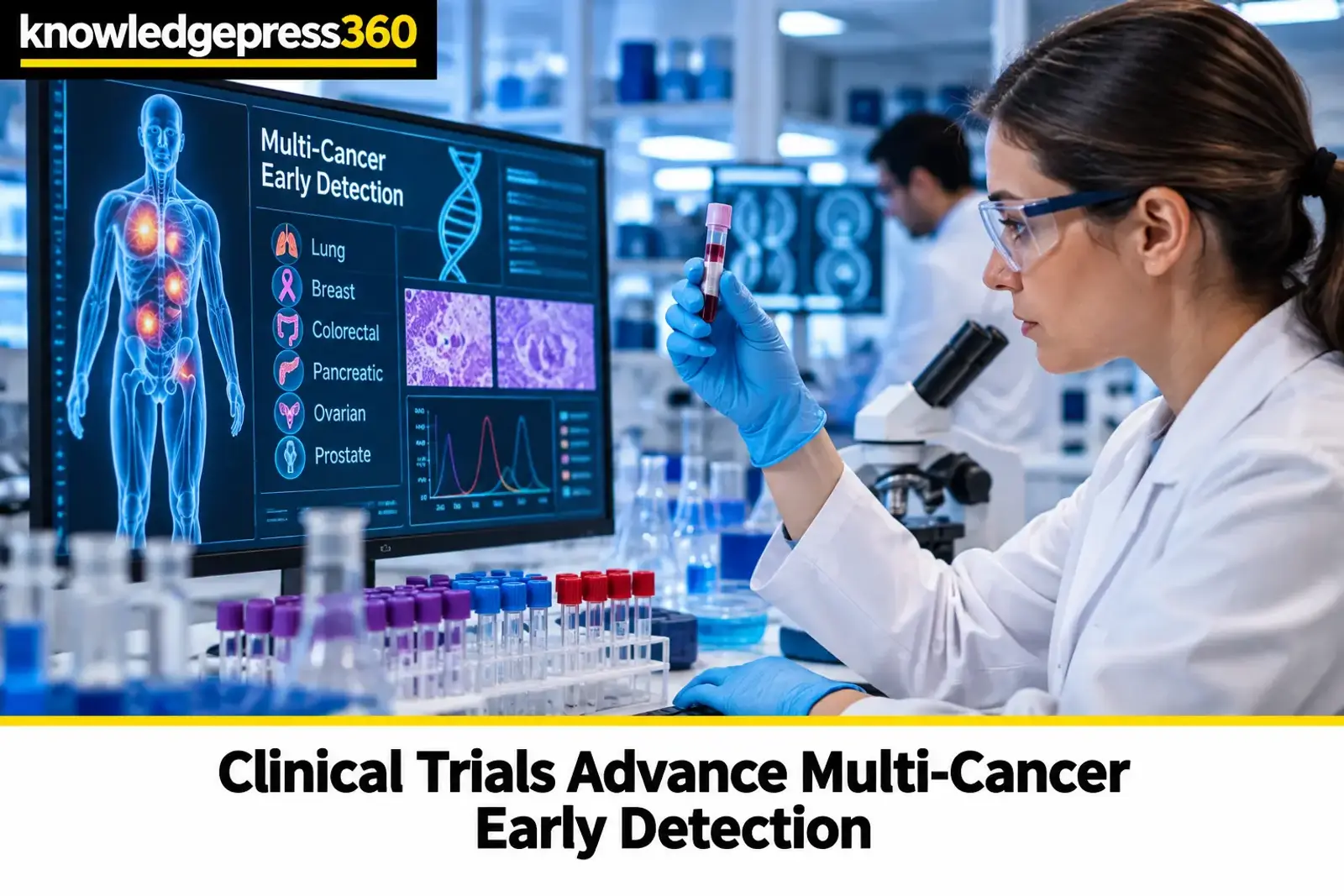
The landscape of modern oncology stands on the brink of a transformative shift as recent clinical data sheds light on blood-based screening technologies. Traditional screening paradigms cover only a fraction of prevalent malignancies, leaving the vast majority of cancer mortality driven by aggressive diseases that typically remain undetected until advanced symptoms emerge. Addressing this critical vulnerability, recent scientific publications have detailed the extensive findings of major prospective evaluations assessing multi-cancer early detection tests. These developments matter acutely because closing the diagnostic gap could fundamentally alter patient outcomes, shifting treatment paradigms from late-stage intervention to early, proactive management when curative options remain viable.
The PATHFINDER 2 Study Design
Central to the current regulatory discourse is the PATHFINDER 2 study, a prospective, interventional trial that enrolled 35,878 participants aged 50 or older without clinical suspicion of cancer. Conducted across multiple prominent medical institutions including the OHSU Knight Cancer Institute, the investigation served as a foundational pillar supporting regulatory submissions for GRAIL’s Galleri test. Researchers evaluated co-primary endpoints focusing on test performance metrics and safety profiles following twelve months of patient follow-up. By integrating the blood-based assay alongside standard guideline-recommended screenings for breast, colorectal, cervical, and lung malignancies, the trial aimed to determine whether cell-free DNA analysis could reliably identify hidden tumors. The overarching objective was to demonstrate feasibility and accuracy in real-world clinical settings without causing undue diagnostic harm to healthy individuals.
Performance Metrics And Safety Findings
Detailed results published in Nature Medicine revealed compelling performance data among the 32,007 performance-analyzable participants. The overall cancer detection rate stood at 0.54 percent, accompanied by a robust positive predictive value of 60.3 percent and an impressive specificity of 99.64 percent. Furthermore, episode sensitivity reached 39.3 percent across all cancers, climbing significantly to 69.8 percent for a prespecified subgroup of twelve aggressive cancers. Cancer signal origin prediction accuracy achieved an exceptionally high rate of 91.3 percent, enabling physicians to direct subsequent diagnostic workups with notable precision. Safety evaluations demonstrated that only 0.6 percent of safety-analyzable participants underwent invasive procedures following a positive test result, with the vast majority of those interventions being non-surgical and unaccompanied by serious study-related adverse events.
Regulatory Review And Divergent Evidence
These encouraging research outputs coincided with rigorous evaluations by federal regulators, where Food and Drug Administration staff members released comprehensive briefing documents ahead of an advisory committee meeting. Agency officials expressed no major concerns regarding the safety, accuracy, risks, or benefits of the Galleri test, explicitly acknowledging that multi-cancer diagnostics address profound unmet medical needs by targeting lethal malignancies lacking standard screening frameworks. Nevertheless, scientific scrutiny remains high as researchers analyze broader international datasets. Data from the parallel NHS-Galleri trial presented divergent sensitivity and predictive metrics compared to the PATHFINDER 2 cohort, alongside distinct variations regarding stage shift reductions. These subtle discrepancies highlight the complexities inherent in evaluating novel screening technologies across diverse patient populations.
Future Regulatory And Clinical Milestones
As the medical community looks ahead, stakeholders are closely monitoring upcoming advisory committee votes and subsequent regulatory determinations concerning commercial test approval. Resolving uncertainties surrounding long-term clinical utility, cost-effectiveness, and the psychological impact of false-positive results will dictate how rapidly these diagnostics integrate into routine clinical pathways. Researchers emphasize that while blood-based assays represent a monumental leap forward, they are designed to complement rather than replace established screening guidelines. The coming months will prove decisive in establishing whether multi-cancer early detection tests transition from promising investigative tools into standard pillars of preventive healthcare.