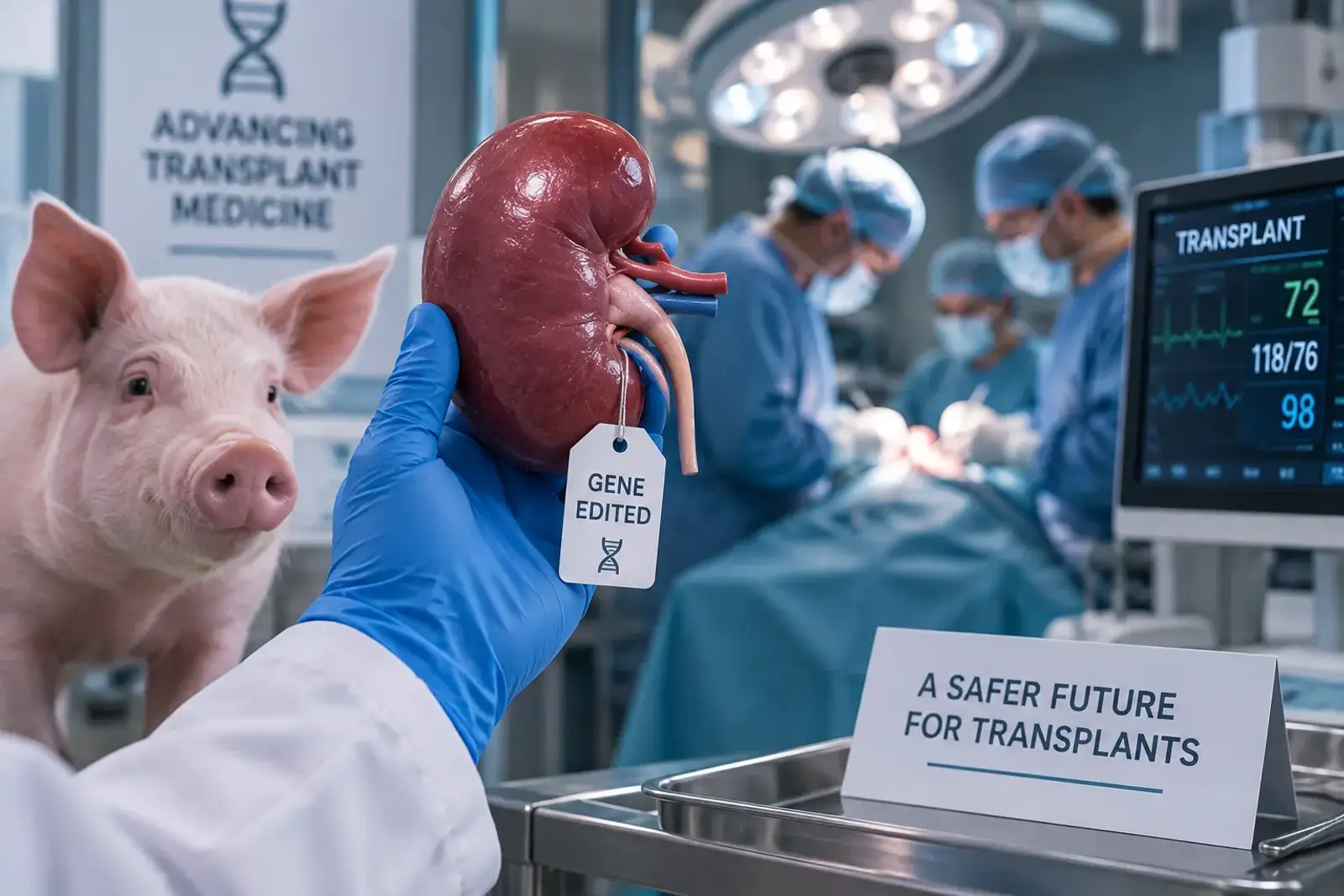
Medical history has entered a new chapter as clinical researchers confirm that patients who received genetically engineered animal organs have successfully transitioned to human donor kidneys [1]. This unprecedented achievement addresses one of the most stubborn bottlenecks in modern medicine: the severe, persistent shortage of human organs that leaves many individuals stranded on grueling dialysis waiting lists [1]. By demonstrating that cross-species transplants can act as a viable bridge without sensitising the patient's immune system against future human organs, biotech pioneers and hospital surgical teams have unlocked a promising avenue for saving lives. The milestone brings the realm of xenotransplantation firmly into the domain of clinical reality, offering tangible relief to patients facing difficult prognoses [1].
Tim Andrews and the Record-Breaking Xenograft at Mass General Brigham
The viability of this approach was underscored by the landmark case of Tim Andrews, a 66-year-old resident of New Hampshire who faced kidney failure driven by type 2 diabetes and an O-positive blood type [2, 5]. Given his specific blood profile, medical professionals estimated he could face a prolonged wait for a human organ, a timeline that exceeds the typical expectancy for patients reliant on chronic dialysis [5]. In response, medical researchers at Mass General Brigham secured special regulatory clearance to perform a radical procedure [2]. On January 25, 2025, surgical teams transplanted a genetically modified pig kidney into Andrews [2, 5]. The organ was harvested from a Yucatan miniature pig engineered via CRISPR-Cas9 technology to feature 69 precise genetic changes [2, 5]. These alterations were designed to remove rejection-causing genes, insert human compatibility markers, and deactivate potentially dangerous animal retroviruses [2, 5]. The xenograft functioned continuously for an impressive 271 days, granting Andrews nearly a year free from the exhausting routine of dialysis [2, 5].
Overcoming Immune Obstacles and Transitioning to Human Donors
One of the central anxieties troubling transplant surgeons has always been the immunological aftermath of xenotransplantation. Clinical specialists worried that introducing an animal organ into the human body might provoke antibodies that would complicate or rule out a subsequent human-to-human transplant [1]. However, recent announcements from biotech firm eGenesis and medical researchers have dispelled those fears [1]. After the initial pig kidney suffered vascular damage and was removed in October 2025, Andrews underwent 82 days of dialysis before receiving a standard human kidney transplant in January 2026 [2, 5]. This sequence marks a documented instance of a patient successfully transitioning from a gene-edited animal organ back to a typical human donor kidney without developing complicating immune sensitization [1, 2]. Documented extensively in medical literature including The Lancet, this outcome proves that xenografts can serve as an effective holding pattern [5].
Lingering Uncertainties and the Long Road to Commercial Availability
Despite the jubilation surrounding these recent surgical successes, substantial hurdles remain before interspecies procedures become commonplace [1]. Approximately 100,000 people in the United States alone await organ transplants annually, yet only a fraction receive them [1, 2]. While xenotransplantation offers a powerful theoretical solution, medical experts urge caution, noting that widespread commercial availability remains years away [1, 2]. Researchers are still grappling with the long-term durability of xenografts under various immune conditions, the management of heavy-duty immunosuppressive drug regimens, and the intricate hurdles of regulatory approval [1]. The exact timeline for broader clinical adoption is yet to be determined as scientists work to refine the genetic modifications and ensure patient safety over extended periods [1].
Future Milestones and the Horizon of Modern Xenotransplantation
As the medical community digests these pioneering findings, the focus shifts toward upcoming clinical trials and regulatory milestones [1]. Researchers are currently tracking the health profiles of the first wave of recipients to gather comprehensive data on long-term tissue acceptance and viral safety [1]. The successful bridge established by eGenesis and Mass General Brigham paves the way for larger, more diverse clinical studies designed to standardise genetic protocols [1]. While widespread commercial availability is not imminent, the steady accumulation of clinical evidence brings humanity closer to a day where waiting lists no longer dictate life and death [1, 2].