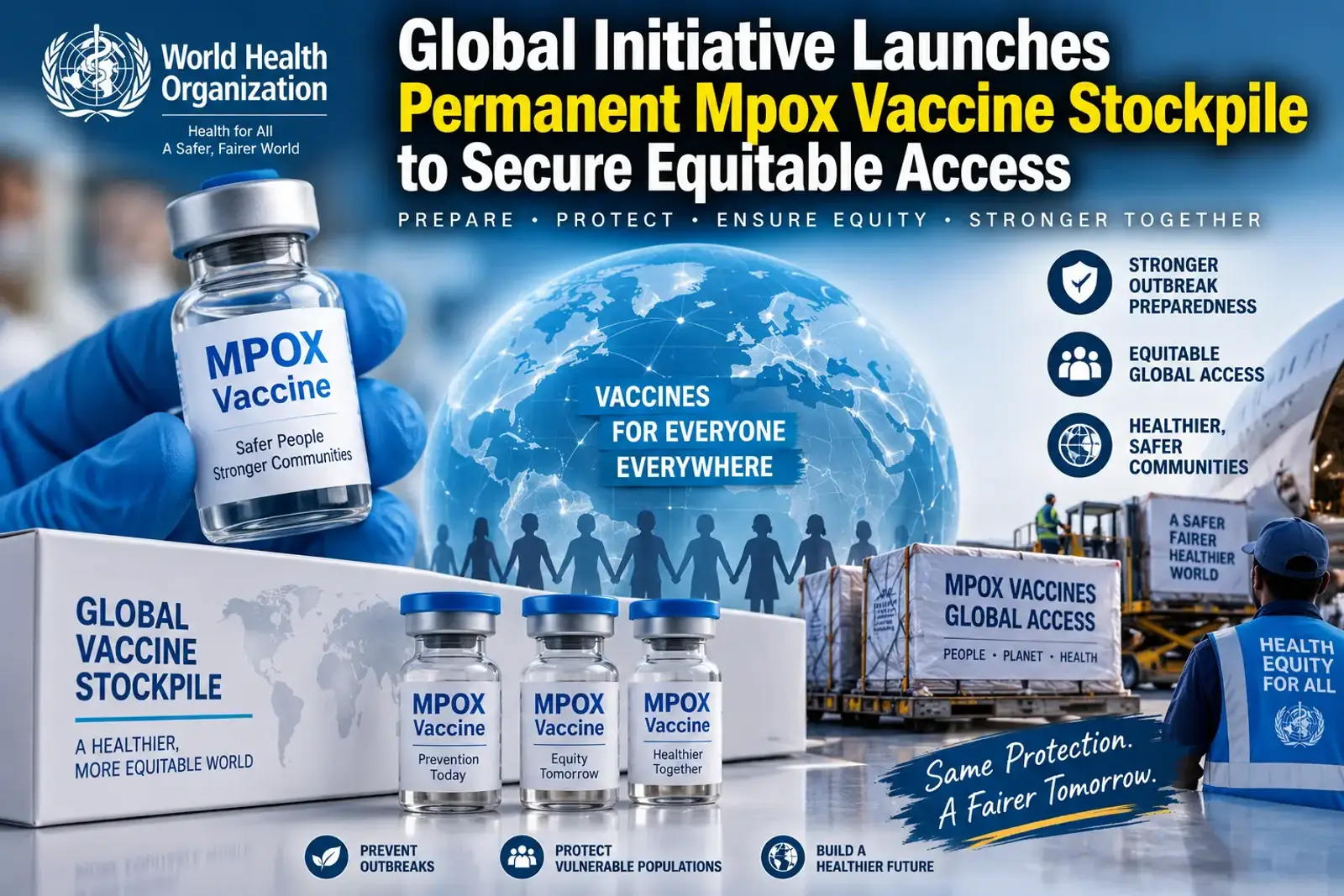
International health authorities have initiated a critical new operational framework designed to secure rapid and equitable distribution of mpox vaccines worldwide. This development marks a pivotal shift from ad hoc emergency responses to a structured, permanent global mechanism aimed at protecting vulnerable populations and curbing transmission across heavily impacted regions. By establishing a dedicated, centrally managed stockpile, global health agencies intend to eliminate the severe allocation disparities that hindered past outbreak responses, ensuring that low-income and severely affected nations can access life-saving immunisations without facing prohibitive delays or market competition.
Establishment of the International Coordinating Group Stockpile for Mpox
The formal launch of the permanent mpox vaccine stockpile follows key approvals granted by the Board of Gavi, the Vaccine Alliance, in 2025. Financing for the initiative is provided by Gavi, while operational management falls under the established framework of the International Coordinating Group on Vaccine Provision. The ICG brings together four major humanitarian and health organisations, namely the World Health Organization, UNICEF, the International Federation of Red Cross and Red Crescent Societies, and Médecins Sans Frontières. This coalition adapts a collaborative distribution model with a long history, as the original ICG framework was established in 1997 following severe meningitis outbreaks across the African continent to coordinate emergency supplies of vaccines and therapeutics.
This permanent reserve directly builds upon temporary access mechanisms that were hastily arranged during the 2024 mpox Public Health Emergency of International Concern. During previous phases of transmission, procurement bottlenecks left many developing nations struggling to secure adequate doses while wealthier countries locked in bilateral agreements. The new initiative institutionalises a transparent allocation system, ensuring that supplies are dispatched rapidly based on epidemiological need rather than purchasing power. International health experts emphasise that while vaccination is an essential pillar of outbreak control, it must operate in tandem with robust surveillance, diligent contact tracing, and comprehensive clinical case management to achieve maximum public health impact.
Epidemiological Burden and Outbreak Scale Across Global Regions
The urgency behind the new stockpile is underscored by persistent global transmission figures spanning several years. Comprehensive public health tracking indicates that between January 1, 2022, and July 31, 2026, a total of 145 countries and territories reported 190,683 confirmed cases of mpox alongside 529 deaths. The epidemiological burden remains heavily concentrated, with approximately two-thirds of all reported cases occurring within the African Region. In these areas, the viral disease spreads primarily through close physical contact between individuals, though ongoing animal-to-human transmission events in certain parts of Africa continue to sustain the underlying risk of novel outbreaks.
Clinical manifestations of the virus can be severe, particularly among children, pregnant individuals, and people living with compromised immune systems. The stark concentration of morbidity and mortality in lower-income regions highlighted systemic vulnerabilities in global vaccine manufacturing and distribution during earlier infection waves. Public health advocates argue that a permanent, pre-funded reserve is the most effective safeguard against these historical inequities. By pre-positioning supplies and streamlining bureaucratic hurdles, the initiative aims to shorten the timeframe between outbreak detection and targeted immunisation campaigns, thereby protecting high-risk populations before transmission chains widen significantly.
Logistical Hurdles and Manufacturing Scale Limitations
Despite the robust institutional backing of the ICG partners, substantial operational challenges threaten to complicate the rollout of the vaccine stockpile. Chief among these concerns is the speed at which pharmaceutical manufacturers can physically scale production to meet unpredictable surges in global demand. Because specialised biological manufacturing requires stringent quality controls and lengthy production cycles, sudden outbreaks can rapidly outpace available stock levels. Furthermore, health planners face formidable logistical hurdles when attempting to distribute fragile vaccine supplies to remote, rural, or conflict-affected settings where cold-chain infrastructure is weak or entirely absent.
Navigating regulatory approvals across diverse national jurisdictions also presents administrative friction that can delay emergency shipments. While the ICG has decades of experience managing stockpiles for diseases such as yellow fever, cholera, and meningitis, the unique cold-chain requirements and specific target demographics of mpox vaccines introduce distinct operational hurdles. Local health systems must possess adequate human resources and infrastructure to administer doses effectively once they arrive at national borders. International monitors note that bridging the gap between global procurement and last-mile delivery will require sustained financial investment and close cooperation between local authorities and humanitarian partners.
Monitoring Distribution Rates and National Health Integration
As the initiative commences active operations, public health observers will closely monitor initial distribution rates from the stockpile to gauge its responsiveness during active outbreaks. A critical metric of success will be the speed with which requests from affected countries are evaluated, approved, and fulfilled by the ICG coordination team. Additionally, analysts will assess how effectively national health ministries integrate incoming vaccine supplies into their broader containment strategies, ensuring that immunisation efforts are successfully paired with community engagement and diagnostic scaling.
Future milestones will depend heavily on the willingness of donor governments to maintain long-term funding streams and the capacity of vaccine developers to expand global production output. As the initiative matures, lessons learned from early deployment phases will likely shape the standard operating procedures for managing future zoonotic threats. The ultimate test of the permanent stockpile will be its ability to suppress transmission chains swiftly in the world's most vulnerable communities, preventing localized flare-ups from escalating into large-scale international health emergencies.