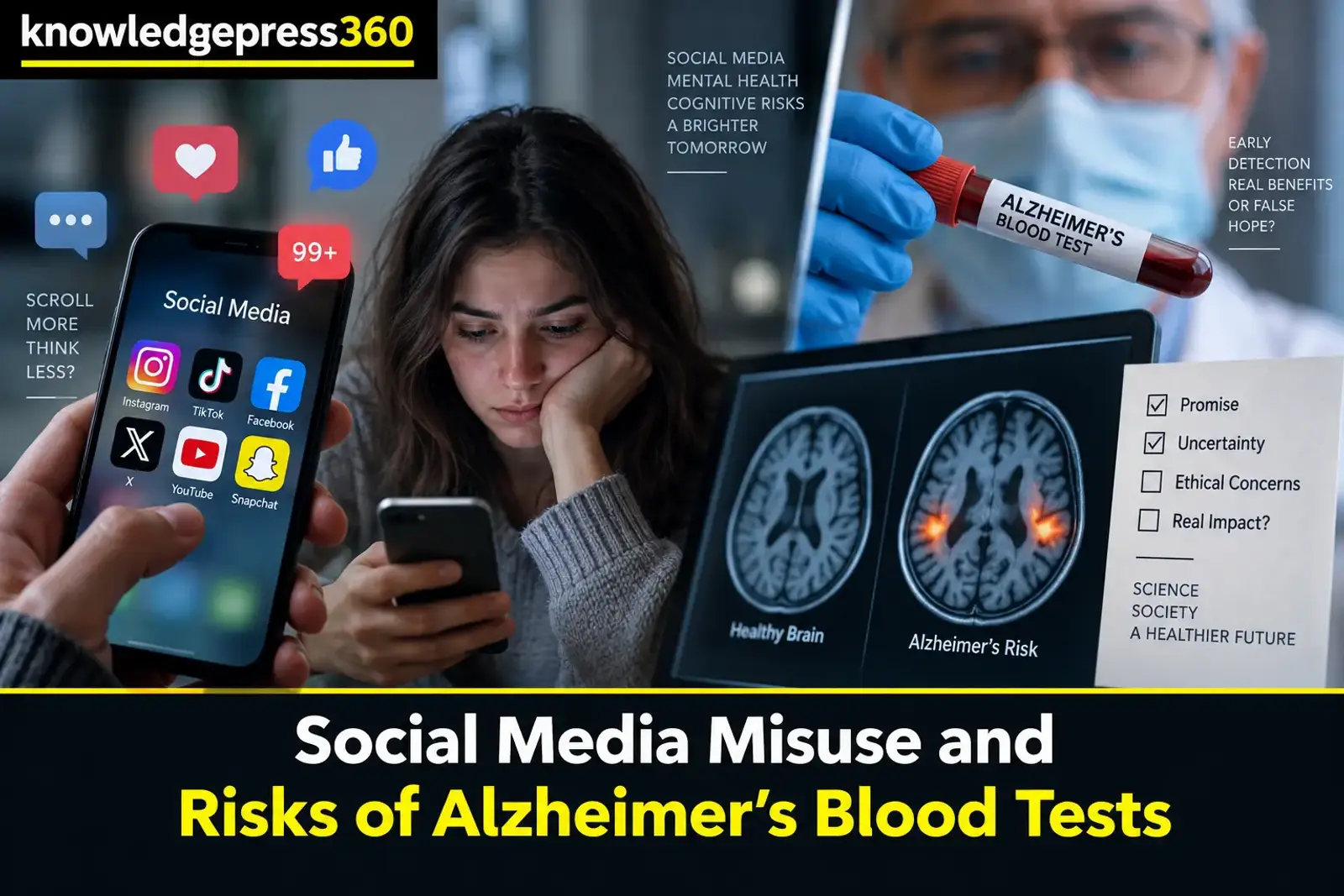
A newly published investigation reveals that mainstream social media platforms are actively driving the harmful misuse and misinterpretation of emerging Alzheimer's disease blood tests. While blood-based biomarkers represent a major scientific leap forward for diagnosing cognitive decline, their digital promotion often bypasses clinical reality. The findings underscore a pressing public health challenge as digital networks increasingly shape medical expectations and patient decision-making around neurodegenerative conditions.
Misleading Marketing Across Platforms
Researchers at the University of Sydney turned their focus to digital spaces to understand how cutting-edge diagnostics are framed for the general public. Their investigation examined 188 distinct posts mentioning Alzheimer's or dementia blood tests across major platforms including Facebook, Instagram, and TikTok. Together, the accounts responsible for this content commanded a massive combined global audience exceeding 114 million followers. The sheer scale of these digital footprints ensures that misleading assertions regarding early diagnostics reach vast numbers of vulnerable individuals looking for clarity on cognitive health.
Among the key insights generated by the study, more than one-third of the social media posts analysed actively promoted these blood-based biomarker tests for asymptomatic individuals. Blood tests such as p-tau217 and p-tau181 are specifically designed to detect abnormal proteins associated with brain changes, offering a far faster and more accessible alternative to traditional lumbar punctures or brain imaging. However, global clinical consensus dictates that these diagnostics should never be utilised on healthy people who display no outward symptoms of cognitive decline. Despite this clear medical guideline, digital content creators frequently present the technology as a universal screening tool for anyone wishing to check their brain health.
Financial Incentives Drive Misinformation
The dissemination of inaccurate medical guidance online is heavily influenced by commercial motivations rather than objective clinical science. Investigators discovered a striking correlation between the commercial backing of an account and the promotion of inappropriate screening practices. Specifically, accounts with explicit financial interests were found to be more than three times as likely to push blood testing for individuals without any symptoms. This profit-driven push often omits critical context, such as the absolute necessity of comprehensive clinical assessments alongside biomarker screening.
Furthermore, the quality of information provided across these influential channels remains remarkably low. The analysis demonstrated that only 36 per cent of the evaluated posts included any supporting evidence for their bold claims, and fewer than a quarter of those referenced a specific scientific study. When commercial entities or independent influencers promote diagnostic tools without acknowledging fundamental clinical limitations, they create a distorted perception of certainty. This environment leaves everyday users ill-equipped to evaluate the genuine utility and appropriate context of advanced neurological diagnostics.
Psychological Risks of Asymptomatic Testing
Targeting healthy populations with complex neurological evaluations introduces profound psychological and emotional hazards. Dementia remains one of the most feared health conditions among adults, making individuals naturally receptive to new methods that promise early detection or definitive answers. Yet, testing asymptomatic patients can trigger severe anxiety and emotional distress, particularly when dealing with a progressive condition that currently lacks a definitive cure. A patient might test positive for biological markers of disease without ever going on to develop clinical symptoms that impact their daily life.
This reality creates difficult care pathways and potential overdiagnosis, complicating the lives of individuals and their families unnecessarily. The limited evidence surrounding screening benefits for healthy people means that a positive result often yields more uncertainty than actionable medical guidance. While the full extent of psychological and financial harm experienced by those misled online remains difficult to quantify, the risks are substantial enough to warrant urgent concern from medical professionals worldwide.
Regulatory Challenges and Future Steps
Addressing the digital spread of misleading medical claims requires coordinated action from public health institutions, platform regulators, and medical professionals. The effectiveness of current regulatory enforcement and digital platform interventions remains variable, leaving significant gaps where commercial interests can exploit public anxiety. As diagnostic technology continues to evolve at a rapid pace, establishing robust guardrails for online health communication will be essential to protect consumers from misinformation.
Future efforts must focus on translating complex biomarker science into clear, accessible, and evidence-based guidance for the wider public. Clinicians and peak neurological bodies face the ongoing task of countering viral misconceptions with accurate information regarding who truly stands to benefit from blood-based testing. Ensuring that patients understand both the capabilities and the severe limitations of modern diagnostics will remain a central priority for healthcare systems navigating the digital age.